
5 Day Trip to Iceland Across the Golden Circle, South Coast and Reykjavík
Eight nights in South Iceland still feels short to many visitors, so five days asks for real choices. The landscape can remind you of the Scottish Highlands and New Zealand and yet it matches neither.
Iceland has about 394,000 residents spread over 103,125 square kilometers, and it received 2.3 million foreign overnight visitors in 2024. That ratio explains the busy waterfalls and the need to book early.
Here is a 5 day trip to Iceland that uses Reykjavik as one base and the area around Vik as another, with the Golden Circle and the south coast in between. Reynisfjara needs respect, so read that section before you go.
The 5 Day Trip to Iceland Route in One Table
| Day | Base | Main stops |
|---|---|---|
| 1 | Reykjavík | Blue Lagoon and the capital |
| 2 | Reykjavík | Þingvellir, Geysir and Gullfoss |
| 3 | Vík area | Seljalandsfoss, Skógafoss and Reynisfjara |
| 4 | Vík area | Jökulsárlón or a slow day on the coast |
| 5 | Reykjavík or Keflavík | Reykjanes peninsula and the flight home |
Pick the stops that fit your energy. Iceland rewards a loose plan more than a packed one.
Day 1 Starts With a Soak Near the Airport and an Easy Evening in Reykjavík
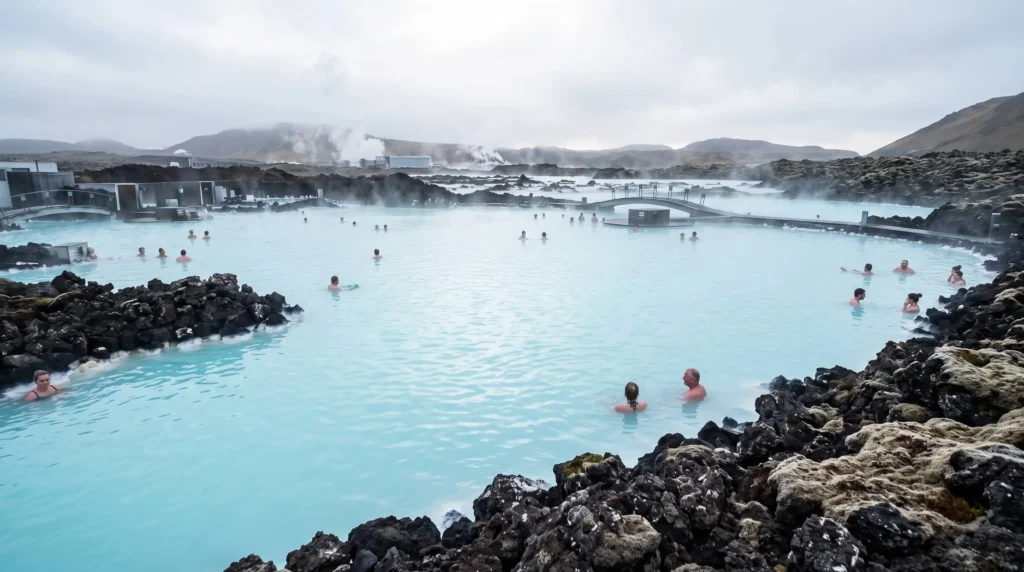
The Blue Lagoon sits on the Reykjanes Peninsula about 20 kilometers from Keflavík International Airport. It is a man-made lagoon fed by water from the nearby Svartsengi geothermal power plant. The milky blue color comes from silica and the water stays between 37 and 39 degrees Celsius.
Volcanic activity and earthquake swarms forced several temporary closures between 2023 and 2025. Lava reached the Blue Lagoon on November 22, 2024 and destroyed the car park while the lagoon itself survived behind protective barriers. It has since reopened, so confirm the current status before you book. As of mid October 2026 there was no active eruption, but magma was still collecting beneath Svartsengi and the eruption site is closed to the public.
Day 2 Is a Golden Circle Loop of Three Real Stops
The Golden Circle runs about 300 kilometers from Reykjavík and covers three main stops. Þingvellir National Park sits in a rift valley between the North American and Eurasian plates and became a UNESCO World Heritage Site in 2004. Iceland’s parliament met there from 930 until 1798.
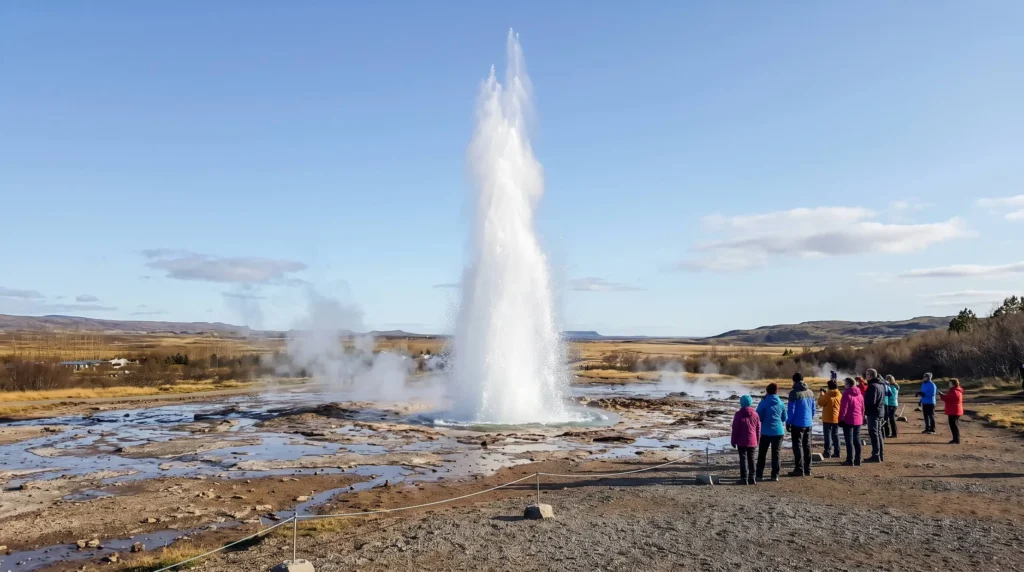
Strokkur geyser erupts every 5 to 10 minutes, which makes it the reliable star of the Haukadalur area. Gullfoss drops in two stages of 11 and 21 meters on the Hvítá River. It became a permanent conservation site in 1979 thanks in part to Sigríður Tómasdóttir, who fought a hydroelectric plan.
Geysir and Gullfoss draw about 59 percent of all tourists and Þingvellir draws about half. Go early and the crowds thin out.
Costs may also rise. Iceland’s government has published draft legislation for a nature and infrastructure fee of about ISK 4,500 for non-resident visitors to Þingvellir, Geysir and Gullfoss. It is a proposal, not yet a confirmed charge, so check the latest news before you plan the Golden Circle.
On Day 3 Two Waterfalls Frame the South Coast
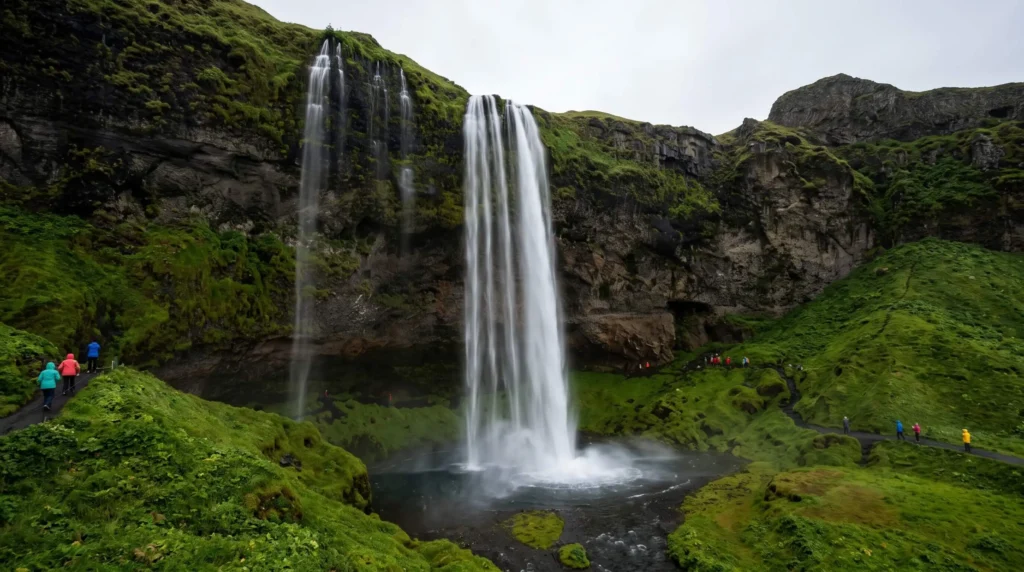
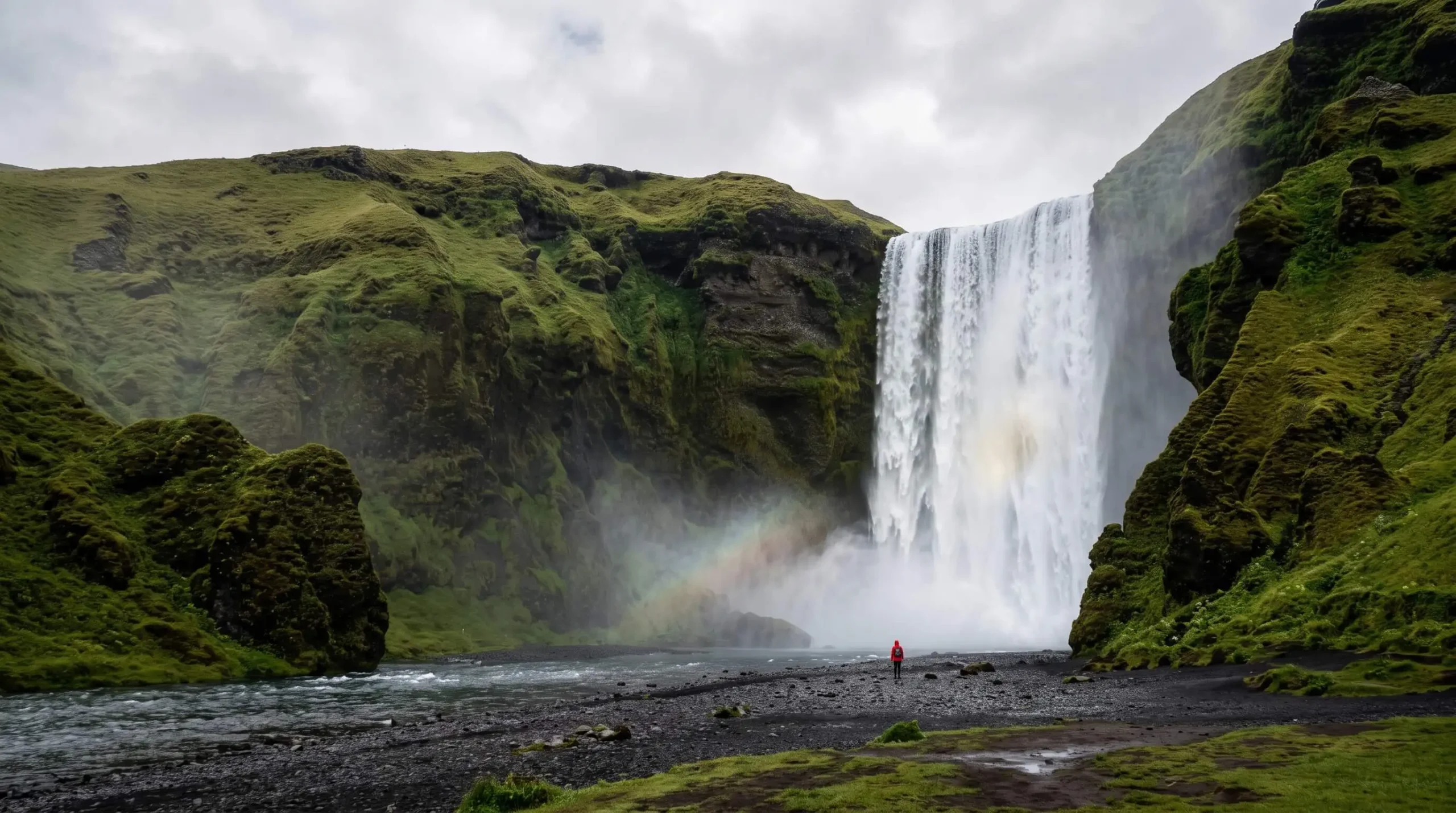
Seljalandsfoss falls 60 meters beside Route 1 and you can walk behind it into a small cave. Skógafoss is also 60 meters tall and 25 meters wide. Its spray often makes rainbows on sunny days and soaks anyone who stands too close.
A 527-step staircase leads to the top of Skógafoss and the start of the Fimmvörðuháls trail. Bring a waterproof layer even in summer.
Reynisfjara Needs Respect and These Are the Rules Locals Repeat
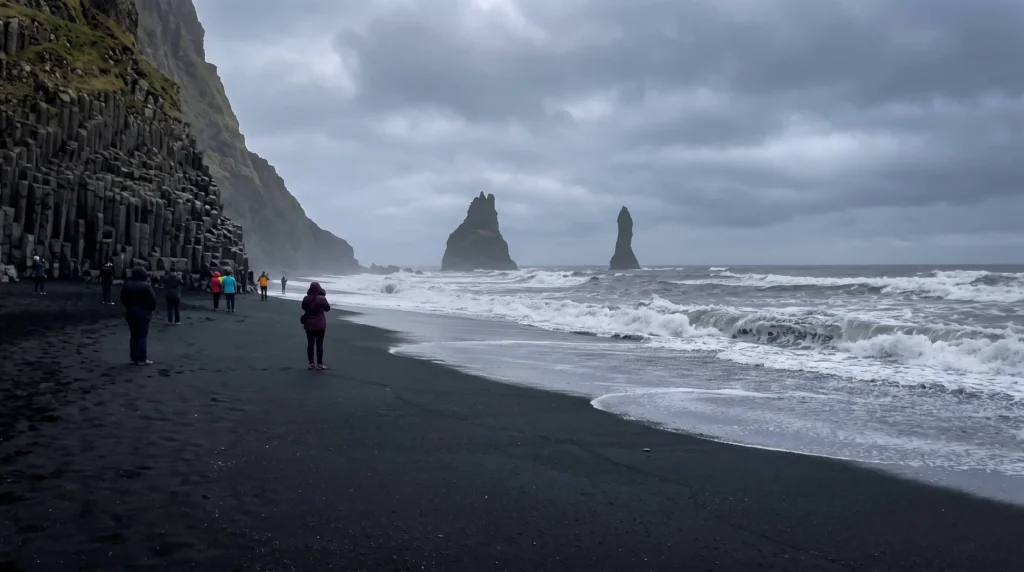
Reynisfjara is a black sand beach near Vík with basalt columns and the Reynisdrangar sea stacks. It is also notorious for sneaker waves that surge far up the beach without warning. At least twelve rescues and six deaths were recorded between 2007 and August 2025, according to Wikipedia’s Reynisfjara entry.
Locals share plain advice about the beach. Look for footprints in the sand and if there are none then a wave recently washed that stretch. Use a zoom lens for wave photos and go past the basalt columns only when the tide is far out. For a city based trip, see our guide to Italy.
Authorities now run a warning light system and close the cave and columns during red warnings. Never turn your back on the sea.
Read the Footprints
No footprints on the lower sand means a wave has recently covered it. Back up and shoot your photos from a safe distance with a zoom lens.
On Day 4 Jökulsárlón Is a Long Drive for a Short Look
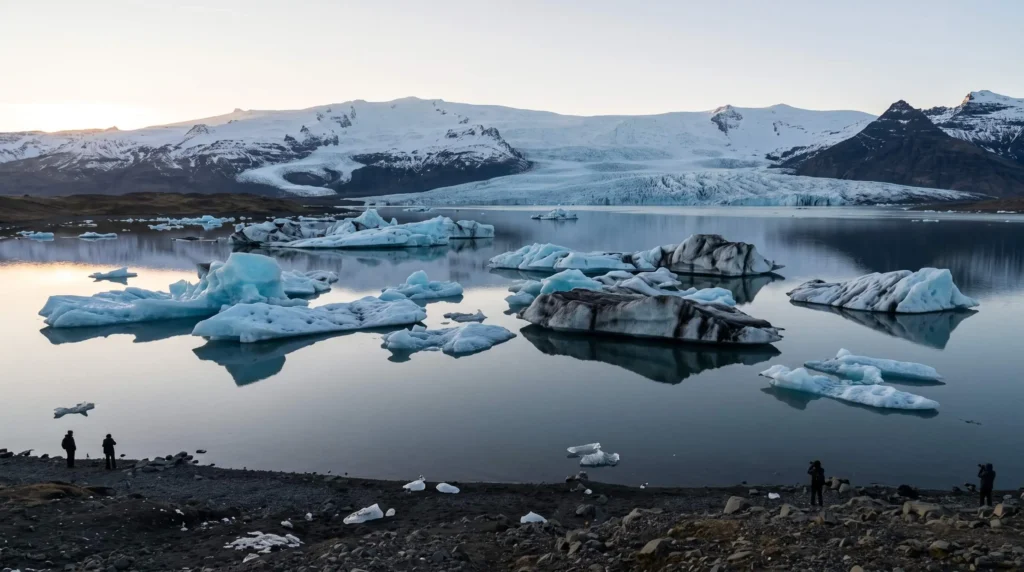
The glacial lagoon began forming in the 1930s as the glacier Breiðamerkurjökull receded. It now covers about 25 square kilometers and is the deepest lake in Iceland at more than 284 meters. Blue and white icebergs drift out toward Diamond Beach, a black sand shore scattered with ice.
Prefer sun to ice? Our Portugal guide covers a warm train trip.
Boat tours have run since 1985 and the lagoon lies inside Vatnajökull National Park, a UNESCO World Heritage Site since 2019. The drive from Reykjavík is long, so many five-day travelers skip it and spend the day around Vík instead.
Day 5 Covers Reykjanes and the Flight Home
Leave the last day light. The Reykjanes Peninsula sits between Reykjavík and Keflavík and puts you close to the airport. Return the rental car with time to spare since more than 98 percent of visitors fly in and out through the same airport. Flights, tours and the Ring Road were running as normal during the current unrest.
Driving the Ring Road in a Rental Car
Route 1 runs 1,309 kilometers around the island and was completed in 1974. It is paved with mostly two lanes and limits of 90 kilometers per hour on open stretches. About 26 single-lane bridges remain, mostly on the glacial plains of the south and the Eastfjords.
Route 1 gets top priority for snow removal in winter yet some mountain passes still close. Check road conditions on the Icelandic Road and Coastal Administration’s traffic site and weather with the Icelandic Met Office. Many travelers weigh a rental car or camper van against a guided bus tour.
Northern Lights Need Darkness Not Cold
The Northern Lights season runs from autumn through spring. In summer the midnight sun means the sky never gets dark enough. With small-group Northern Lights tours it helps to ask operators about their cancellation and re-try policies.
The Cost Question Everyone Asks
Prices change too often to print, so budget with current quotes. The big buckets are flights, a rental car or tours, fuel, lodging, food and entry to places like the Blue Lagoon. Iceland has a reputation for being expensive.
Self-driving usually gives you the most flexibility while guided tours remove driving stress. Ask for the all-in price including insurance before you book either one.
For rough budgeting, one 2026 cost guide puts the Blue Lagoon or Sky Lagoon near $100 to $150 or more, glacier hikes at $100 to $200 or more, and whale watching at about $118 to $150 or more. American arrivals fell about 21 percent in June 2026 versus last year, which may help with hotel and tour availability.
Picking Your Month Between Summer Light and Winter Dark
Iceland receives the most tourists from June to August. Winter visits have grown in recent years. Pick summer for long days and winter for aurora chances. Summer crowds are heaviest at Reynisfjara and Wikipedia’s Reynisfjara entry explains the geology behind the black sand.
Frequently Asked Questions
Choose Fewer Stops and Stay Longer at Each
Five days in Iceland works best when you let go of the checklist. Pick the Golden Circle and the South Coast and give each of them time.
Keep exploring through Europe and Things to Do.


