
Portugal Itinerary for 10 Days From Lisbon to Porto and the Douro
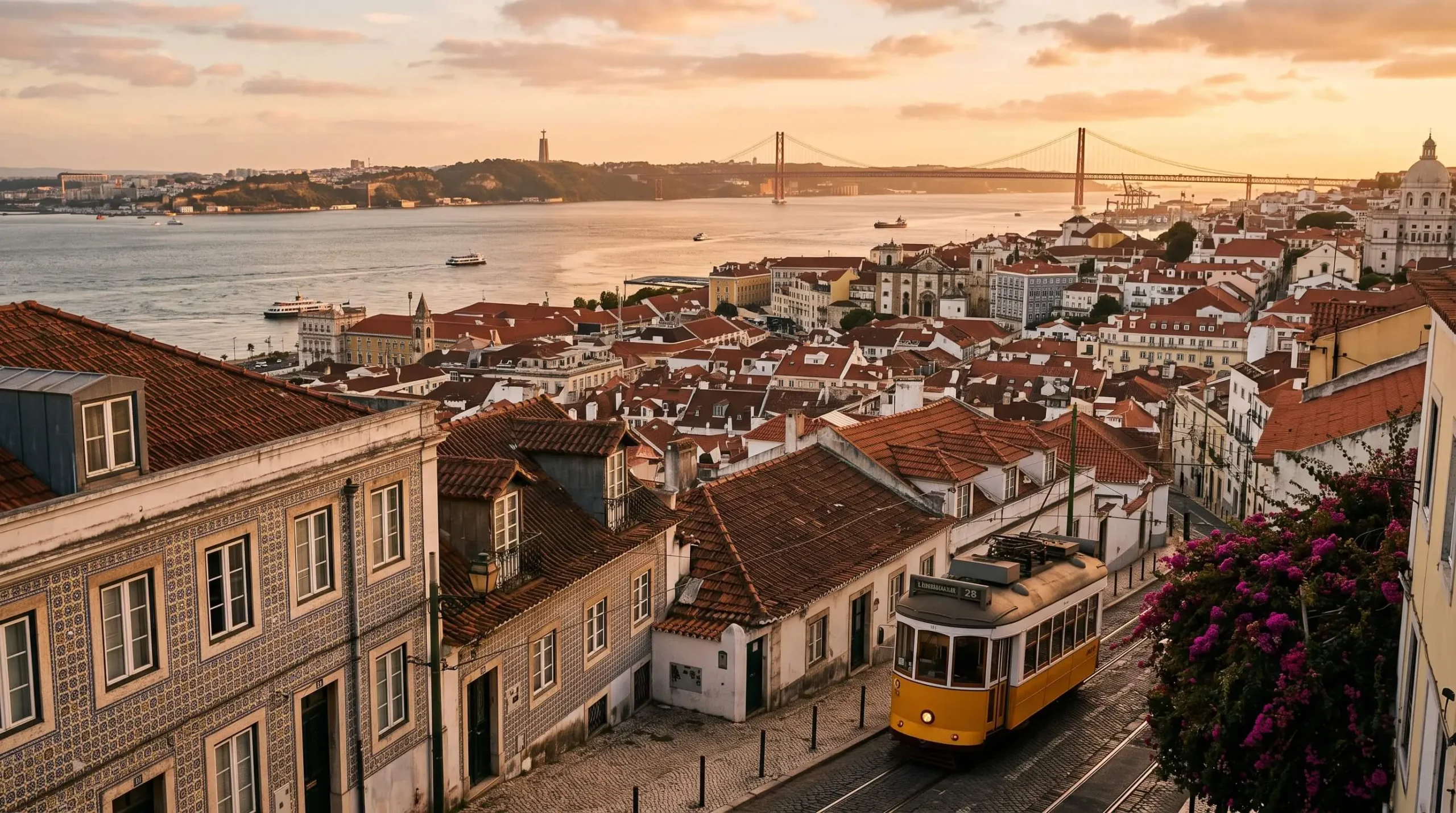
Portugal looks small on a map. That is exactly where trip planning goes wrong. Lisbon and Porto sit about 2 hours and 42 minutes apart on the fast train, so the whole country feels like one easy loop. Then you try to squeeze in the Algarve as well and a full day disappears into the road.
This plan keeps the loop honest. It runs 10 days from Lisbon to Porto with a Sintra day trip, a night in Coimbra and a slow day in the Douro Valley. Trains do most of the moving, so you spend the trip looking out a window instead of at a GPS.
Short on time or long on it? The last sections show how to trim this portugal itinerary to 7 days or stretch it to 14 with Évora and the Algarve.
A Portugal Itinerary Built Around Trains
| Days | Base | Highlights |
|---|---|---|
| 1 to 3 | Lisbon | Alfama, Belém and Tram 28 |
| 4 | Sintra | Palaces on a day trip from Lisbon |
| 5 | Coimbra | The old university and an overnight stop |
| 6 and 7 | Porto | Ribeira, Dom Luís I Bridge and São Bento station |
| 8 | Douro Valley | Terraced vineyards and river views |
| 9 and 10 | Porto and Gaia | Port cellars and the flight home |
Fly into Lisbon and out of Porto if the fares allow it. That one choice saves you a full day of backtracking.
Lisbon Rewards Comfortable Shoes on Days 1 to 3
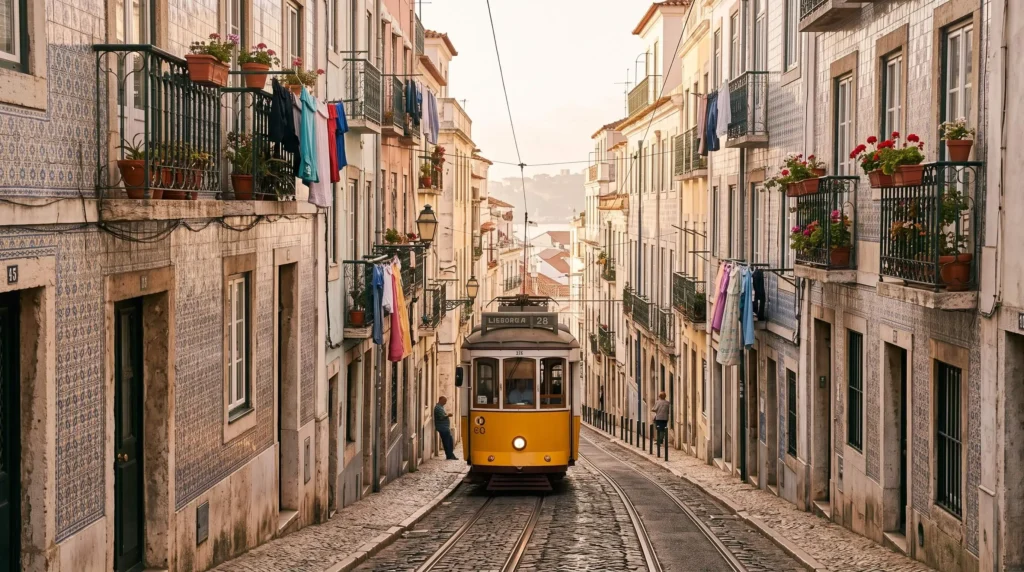
Start in Alfama, the oldest district in Lisbon. It survived the 1755 earthquake that destroyed about 85 percent of the city’s structures, so these lanes are older than the tidy grid downtown. Many place names here come from Arabic, a trace of the city’s Moorish past.
Give the second day to Belém on the western edge of the city. Belém Tower and the Jerónimos Monastery are both UNESCO World Heritage Sites. Both show off the Manueline style of the 16th century.
Save the third day for the parts of Lisbon that need no ticket. Ride Tram 28 through the old quarters, then wander the Pombaline streets of the lower town that were rebuilt after the earthquake under the Marquis of Pombal. Finish at a hilltop viewpoint with something cold in your hand.
Current listing prices help with the budget. Belém Tower is about $17, Jerónimos Monastery about $20 and Castelo de São Jorge about $19, while the Santa Justa Lift is near $7. Pena Palace in Sintra is about $22.
Plan Around the Hills
Lisbon is built on steep hills. The metro and trams save your legs. Wear shoes with grip, since worn old stone can get slippery.
On Day 4 Sintra Is a Pick-Two Palace Town

Sintra sits about 30 kilometers northwest of Lisbon. The commuter train takes roughly 35 to 45 minutes. UNESCO listed the town’s cultural landscape in 1995. Four big names compete for your day: Pena National Palace, the Castle of the Moors, Sintra National Palace and Quinta da Regaleira.
You will not see all four properly. Pick two, leave time to walk between them and accept that the rest is a reason to return. Start early, since the hills are steep.
Pena Palace uses timed entry, and one guide says same day walk-ups get turned away all summer, so book the first slot online. Trains leave Rossio station about every 20 minutes for around €2.55 each way. The 434 bus from Sintra station to Pena costs about €4.25 one way, or you can walk uphill for about 40 minutes.
On Day 5 Coimbra Breaks the Long Ride North
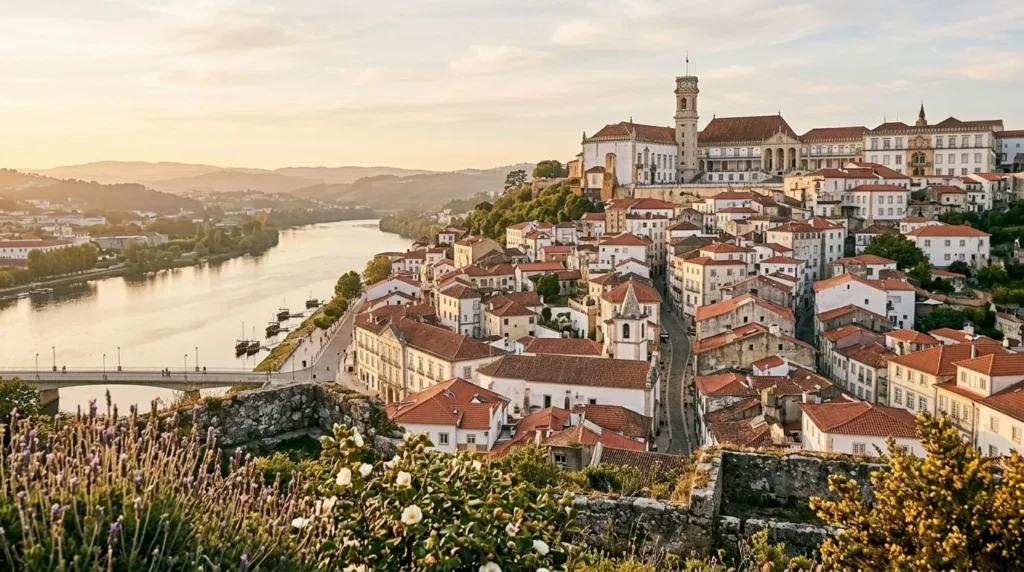
Coimbra sits roughly halfway between the two big cities, 197 kilometers from Lisbon and 116 from Porto. The University of Coimbra earned UNESCO status in 2013 and traces its roots to 1290. It settled here for good in 1537, which makes it the oldest university still running in Portugal.
The Baroque Joanina Library is the highlight, so check visiting arrangements before you go. The main train stop, Coimbra-B, sits on the Lisbon to Porto line with a short connection into the center. Stay the night and the old town is yours after dark. Another train friendly trip is described in our guide to Italy.
Porto Packs a Lot Into Steep Streets on Days 6 and 7
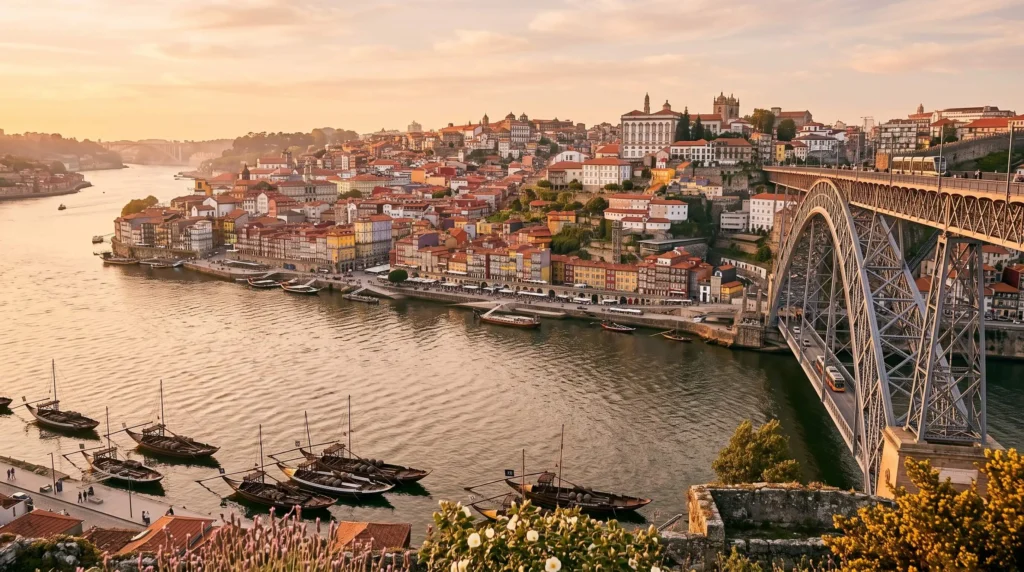
Porto’s historic center, the Dom Luís I Bridge and the Monastery of Serra do Pilar share one UNESCO listing from 1996. The bridge opened in 1886 with two decks. The upper deck carries pedestrians and metro trains, so walk across the top for the view of the Ribeira waterfront.
Give a slower hour to São Bento station on the other day. It was built between 1900 and 1916 and is covered in large azulejo tile panels showing Portuguese history. Livraria Lello needs timed entry, so book your slot before you arrive.
Porto’s famous bookshop charges around $9 for entry, and the cathedral is near $4.50. Many of the best views, such as the upper deck of the Dom Luís I Bridge, cost nothing.
Prefer fire and ice after the sun? See our guide to Iceland.
Airport Link
Francisco Sá Carneiro Airport sits 15 kilometers northwest of Porto and connects to the city by metro Line E.
On Day 8 Take the Douro Valley Slowly
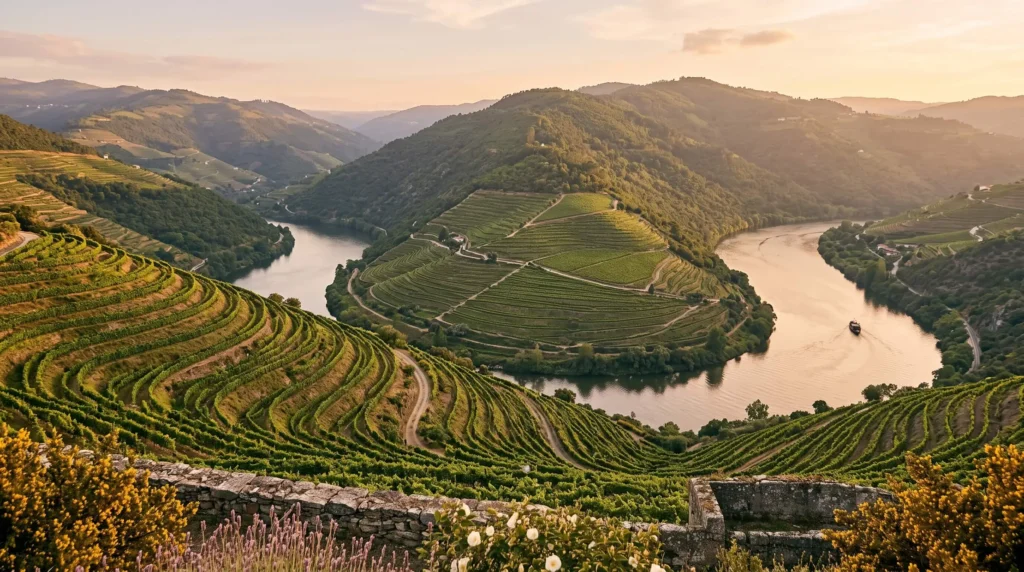
A royal charter of 1756 defined the Douro as the first formally demarcated wine region in the world. UNESCO added the Alto Douro in 2001. Vines climb the valley in terraces. The village of Pinhão anchors Cima Corgo, the largest Douro wine subregion.
A rail line runs up the valley, so this is a day you can do without a car. One guide lists the train from Porto Campanhã to Pinhão at about 2 hours 15 minutes and €14 each way. The Douro makes as much table wine as it does fortified wine. Order something that is not port with lunch.
Wind Down in Vila Nova de Gaia on Days 9 and 10
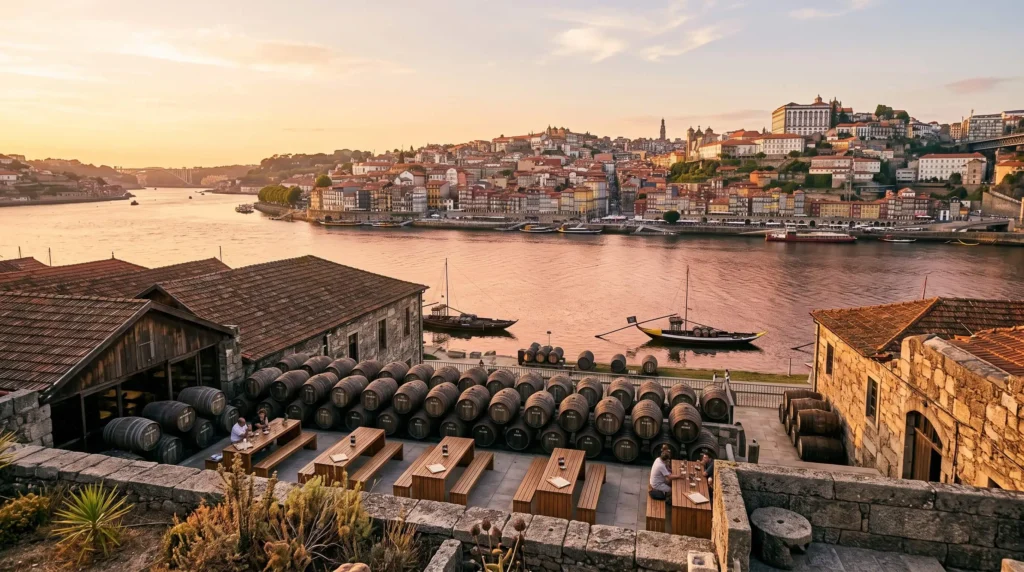
Cross back over the river to Vila Nova de Gaia, where port has been aged and prepared for export since the 18th century. Walk between the cellars at an easy pace and taste more than one style before you buy a bottle. Leave the last morning empty for packing and the metro ride to the airport.
Trimming It to 7 Days or Stretching It to 14
For 7 days, drop Coimbra and the Douro day. Keep three days in Lisbon, the Sintra day trip and three days in Porto. That is the cleanest two-city version of this route. Seats on the fast train are easiest to book ahead on the national rail operator’s official site.
One guide advises booking Lisbon to Porto seats at least a week ahead in summer.
For 14 days, add the south. Évora sits about 140 kilometers from Lisbon. Its historic center earned UNESCO status in 1986. The Roman temple and the Chapel of Bones inside the Church of Saint Francis are the two stops people remember.
The Algarve takes the rest of the time. Its south-facing coastline runs about 155 kilometers, with Lagos, Sagres and Benagil Cave near Lagoa among the best-known stops. Faro airport sits 4 kilometers from the city center, so you can finish at the beach and fly home from there.
What US Travelers Should Sort Before Booking
A valid US passport lets you stay in Portugal and the rest of the Schengen Area for up to 90 days in any 180-day period without a visa. The State Department’s Portugal page says your passport needs three months of validity beyond your departure date. It also lists two blank pages and a Level 1 advisory, which means normal precautions.
The European travel authorization called ETIAS is planned to launch in late 2026. US citizens will need to apply online before they travel. Check the official page for the current start date before you buy flights.
Portugal is also getting busier with American visitors, according to an April 2026 market report, and a February 2026 State Department notice told travelers to take more care around anti-tourism protests in parts of Europe. Book the main timed entries early and keep a flexible day for strikes or protests.
Frequently Asked Questions
Portugal Rewards the Slower Version
Ten days is enough to feel the country change as you move north. Lisbon is tiled hills, Porto is granite and river. The Douro is a landscape shaped by terraces. Choose fewer stops and sit down longer at each.
Browse Europe and Things to Do when you want a second trip on the list.


