
Beach Fishing Cart Buying Guide for Soft Sand and Heavy Gear
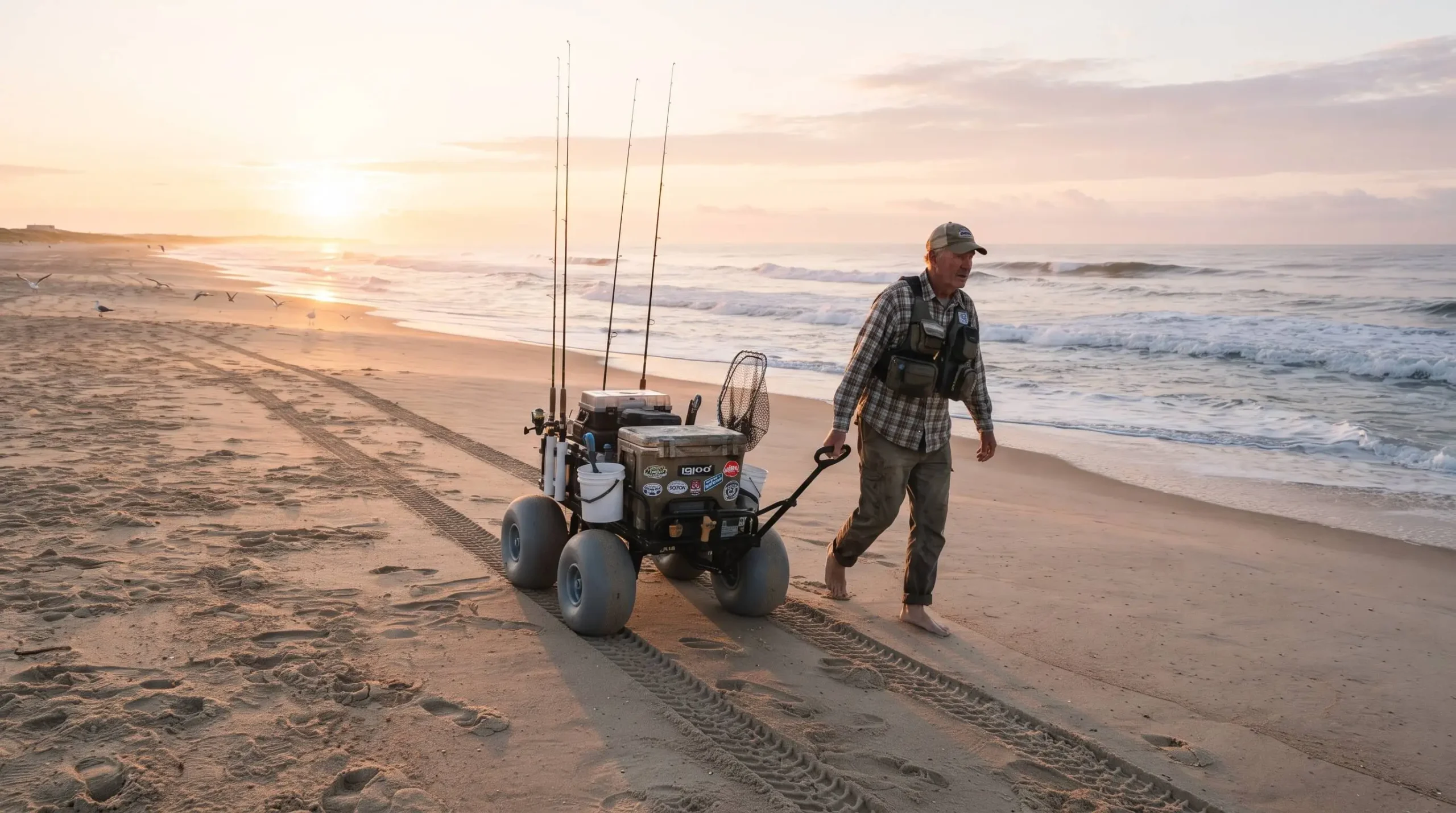
The wheel you choose decides whether a loaded cart glides to the surf line or digs in at the first dry patch.
Wheel type, frame material and a verified weight rating settle most of the decision. Salt air rusts steel quickly, and many carts claim more capacity than they carry.
I explain how to choose a beach fishing cart by sand type, frame and rod holders, plus how it folds into your vehicle.
How to Choose a Beach Fishing Cart for Your Beach
| Where you fish | Wheel choice | Why it works |
|---|---|---|
| Soft dry sand | Large balloon tires, 12 inches or more | They float over the surface and cut pulling effort |
| Packed wet sand and piers | Poly wheels or smaller balloon tires | Durable and easy to roll on firm ground |
| Mixed trails and boardwalks | Balloon wheels on a sturdy frame | They handle sand and hard surfaces on one trip |
Match the cart to the sand you actually fish. The sections below cover each part in turn.
Balloon Tires Do the Heavy Lifting in Soft Sand
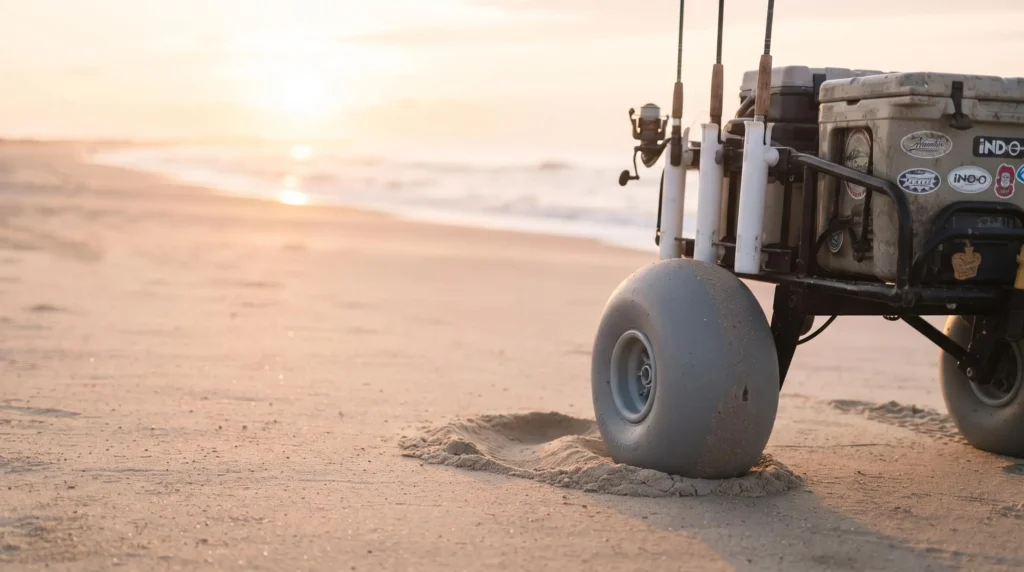
Balloon tires are wide and run at low pressure, so they float over loose sand instead of cutting into it. Guides suggest at least 9 inches and many anglers prefer 12 inches or more. Narrow rubber wheels and knobby hard plastic wheels tend to dig in quickly.
Do not assume that an all-terrain label means sand ready. Gravel and dirt are very different from deep dry sand.
Two Wheels or Four
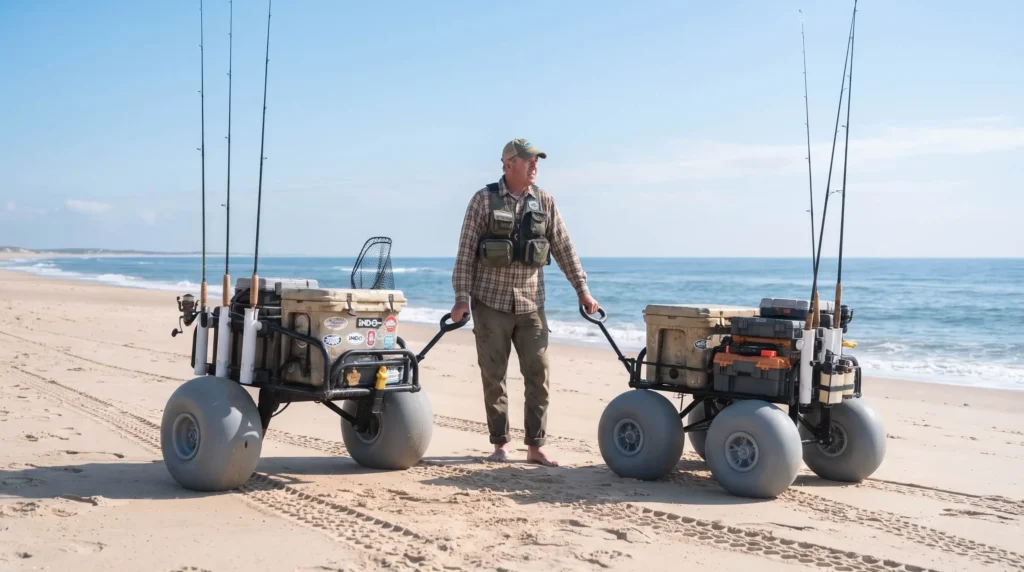
A two wheel cart is lighter and easier to pull over soft sand. The trade-off is less stability when it is full. A four wheel cart stays upright more easily but can be harder to steer through deep ruts.
Think about your usual load and how far you walk. A long dune crossing favors a light cart, while a short walk with heavy gear favors stability.
Aluminum Beats Steel Near Salt Water
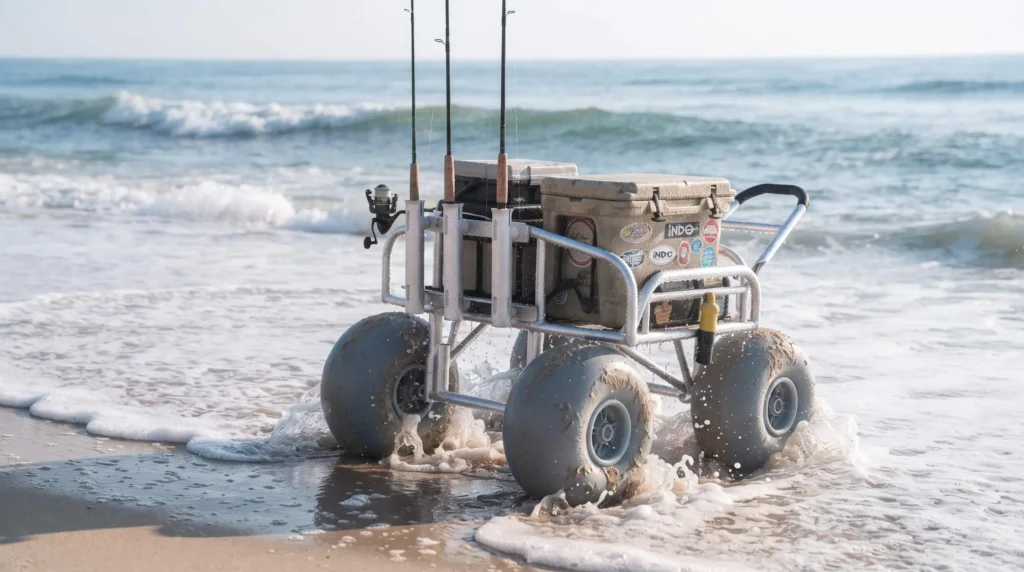
Aluminum stays light and resists the salt that eats steel. Steel frames can carry more weight but need careful rinsing. Even powder coating does not stop rust forever. Some anglers remove the wheels after each trip and rinse them separately.
If you buy steel, plan on a freshwater rinse after every outing. Ask the seller what the frame is made from because listings often disagree.
Capacity Numbers Need a Reality Check
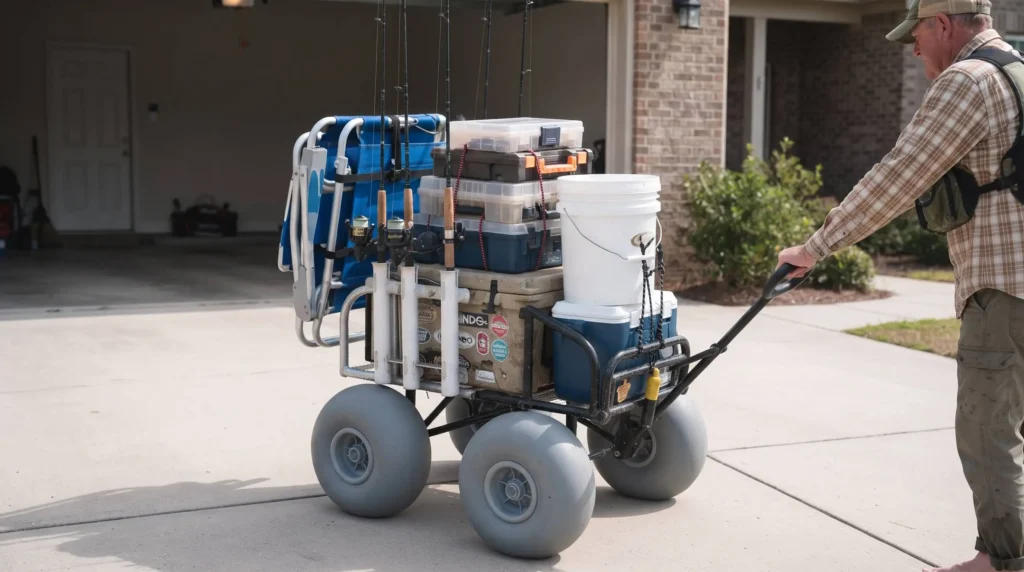
Weight ratings for the same cart can differ from seller to seller. Use the lowest figure you find and keep a margin. A cart at its limit on soft sand is a lot of work to pull.
Roundups show the problem. One lists the Fish-N-Mate 310 with 15 inch wheels as a 310 pound cart while another says it carries up to 250 pounds.
Remember that wet gear, ice and fish add weight. Test it loaded in your driveway before you rely on it at the beach.
Rod Holders, Coolers and Storage
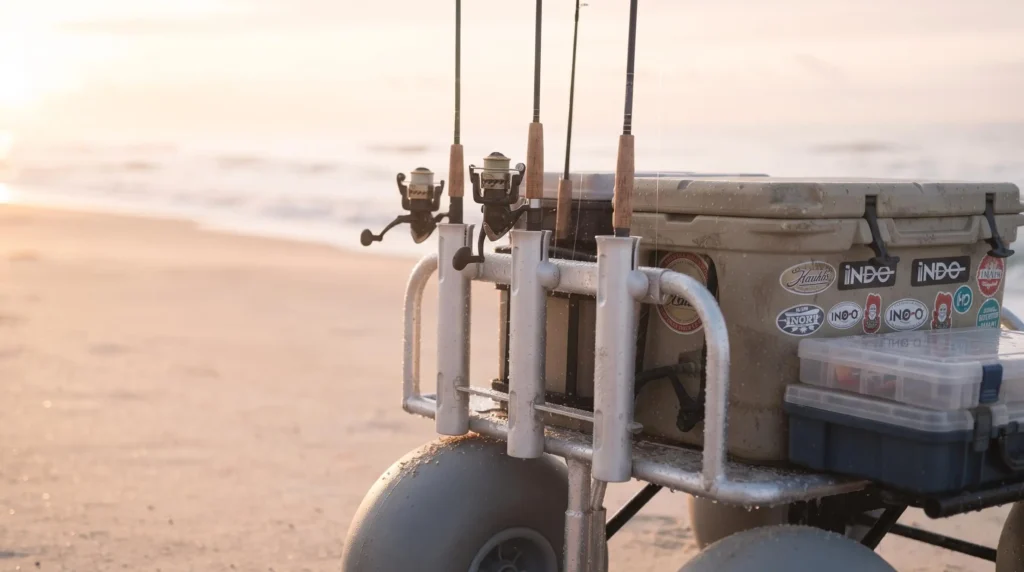
Look for four or more rod holders and check what they are made of. Metal tubes hold up better than thin plastic liners. Some carts add a cooler platform, tool holders and a bait tray.
Popular roundups name budget carts like the Bonnlo, with 13 inch balloon wheels and eight rod holders, and mid range aluminum carts like the VEVOR. Buyers report wheel wobble and tire upkeep on some models.
Current shopping results show the price ladder. VEVOR style aluminum or steel carts with 13 inch tires and eight rod holders sell for roughly $90 to $165, the Offshore Angler Deluxe lists near $250 to $330, and a Fish-N-Mate pier cart runs about $265. Cheaper listings often come with weak reviews, so read the low star comments before you buy.
Think about how you carry rods, because tall rods can catch on dune grass. A cart with a low deck and sturdy holders keeps everything stable. Planning a fishing trip around a destination? Our guide to Cedar Key covers a small Gulf coast town built around the water.
Anglers who fish soft sugar sand often pick a Fish-N-Mate style cart. The smaller Jr holds five rods and the Sr holds eight, but the included cutting board takes one holder, so count your rods first. Its orange poly tires work well in soft sand, black rubber tires dig in, and a liner or floor stops small items falling through the open bars.
Folding, Handles and Fitting It in Your Vehicle
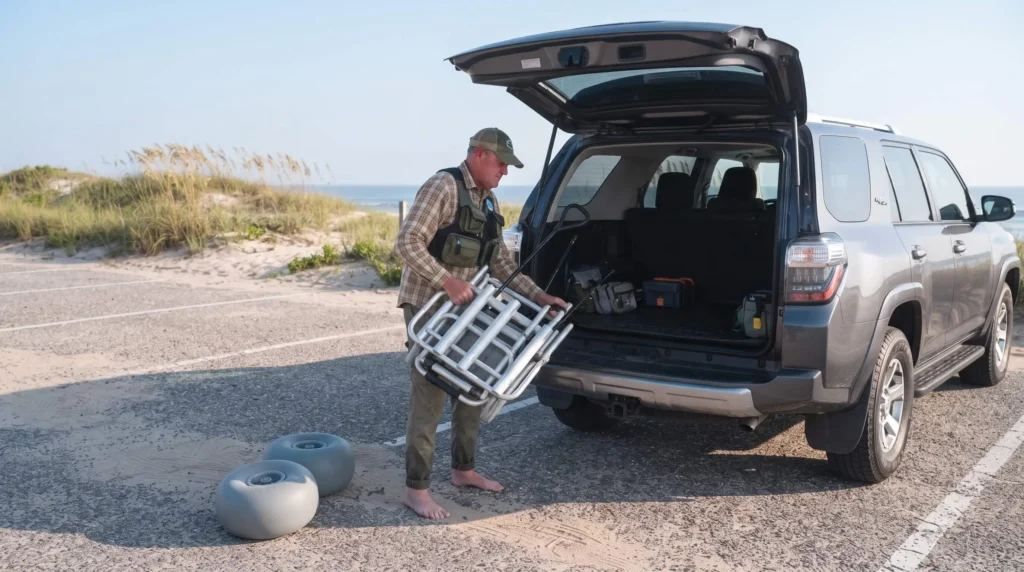
A folding design helps with storage and fits in more trunks. Test the fold before you buy and look for a design you can operate with one hand. An adjustable handle lets you set a comfortable height for the pull.
Look at the small comforts too. Quick release wheels and handle let the cart pack into a closet, and a handle extension helps tall anglers. A front wheel only matters if you pull the cart down a boardwalk or sidewalk, because it is unnecessary on sand. On the water side, keep the cooler light, since extra ice weight hurts most in soft sand.
Some carts include a hitch for pulling behind a vehicle on beaches where that is allowed. Check local rules because many beaches restrict vehicles. Our guide to South Padre Island covers a long Texas beach where this kind of gear gets plenty of use.
Check Tire Pressure on the Beach
Low pressure gives balloon tires their flotation. Follow the maker’s range and recheck before you drag the cart across soft sand.
Electric and Motorized Carts
Electric carts exist and can help on very long walks. They add weight, battery care and cost. Many beaches also have rules about motorized equipment, so check before you bring one.
For most anglers a well chosen manual cart is simpler. Spend the money on better wheels first.
DIY Cart Ideas That Work
Many anglers build a cart from a utility cart plus balloon wheel conversion kits. The key is to check axle strength and the real weight you will carry. Rod holders made from PVC or aluminum tubes are a common add-on.
If a build feels flimsy in your driveway it will feel worse in deep sand. Keep the design simple and strong.
Accessories Worth Adding
Rod holders, cup holders, a waterproof bag and a cover for the load are the usual upgrades. A bait tray and a tool holder save time at the water. Replacement wheels or conversion kits can turn an ordinary cart into a sand cart.
Buy accessories after you know how you use the cart. Many extras stay in the garage.
Care After Every Trip
Rinse the frame and wheels with fresh water as soon as you get home. Dry the bearings and check for rust at welds and bolts. Store the cart indoors or under cover.
Check tire pressure before the next trip. Low pressure helps floatation, so follow the maker’s range.
Know the Rules Before You Cast
Fishing rules differ by state and beach. NOAA explains that most anglers do not need the National Saltwater Angler Registry because state licenses cover them. Check your own state agency for license and bag limit details.
Beach driving, cart and parking rules also vary. Read the posted signs and the local beach website before you go.
Frequently Asked Questions
Buy for Your Sand and Your Back
The best cart is the one that matches your beach, your load and your walk. Choose wheels first, frame second and extras last.
Plenty more routes and ideas wait in Things to Do for beach and coast ideas.


