
Things to Do in Cedar Key, Florida
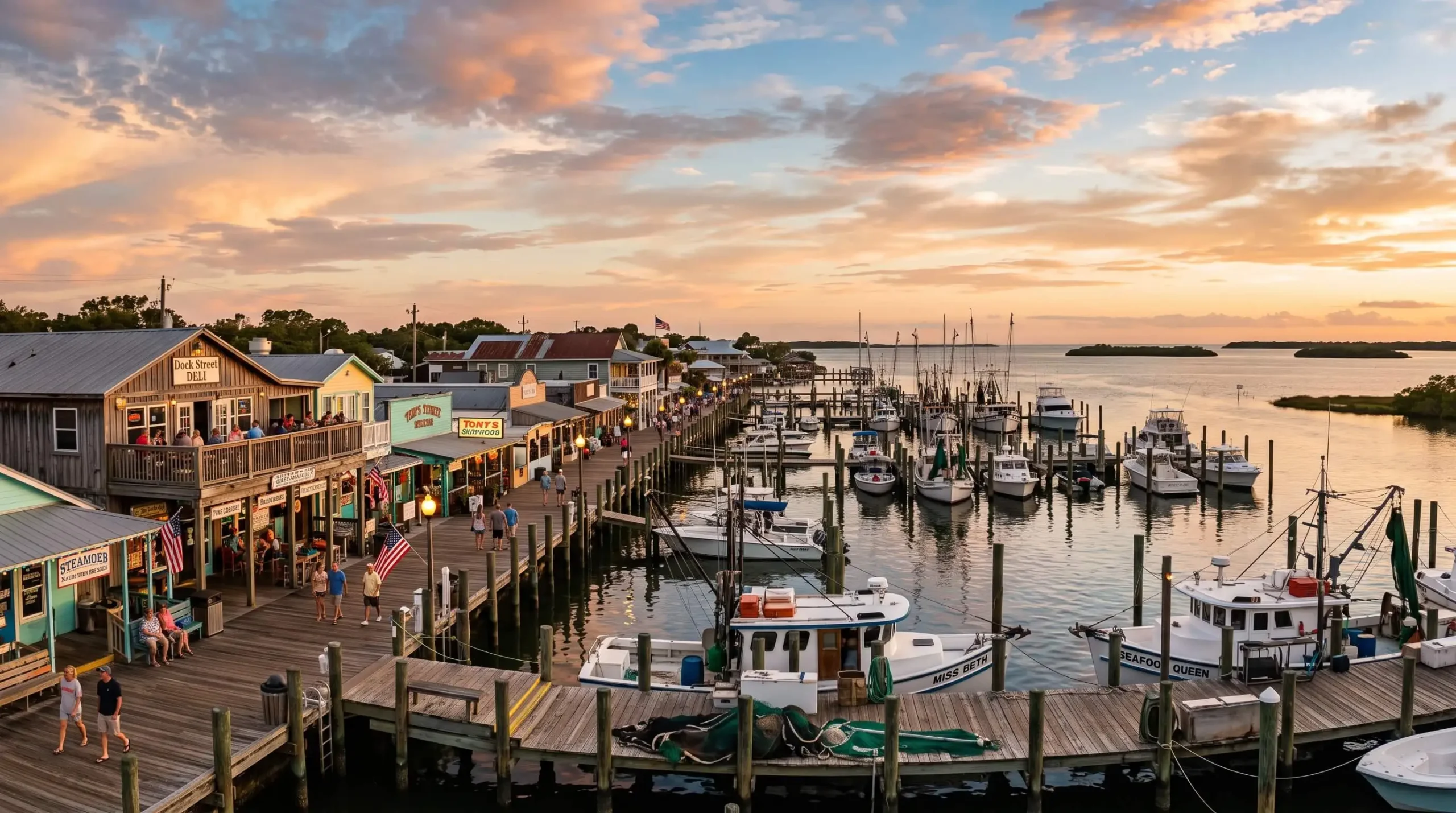
Fewer than 700 people live on this Gulf Coast island, and golf carts outnumber cars on Dock Street. That is exactly why people come.
Clams rebuilt the local economy and kayakers paddle out to a ghost town on a neighboring key. Add a wildlife refuge, a 1960s time capsule museum and a shell mound over a thousand years old, and a slow weekend fills up fast.
These are the things to do in Cedar Key, ordered so you can walk, paddle and eat without a car. The island is small, so a plan beats a checklist.
Exploring more of the continent? Browse our North America guides for more ideas.
First Impressions
| Category | Details |
|---|---|
| Location | Levy County, on the Gulf of Mexico |
| Population | About 687 (2020 census) |
| Known for | Fishing, clam farming and Old Florida charm |
| Best for | Kayaking, seafood, sunsets and slow weekends |
Wander Dock Street
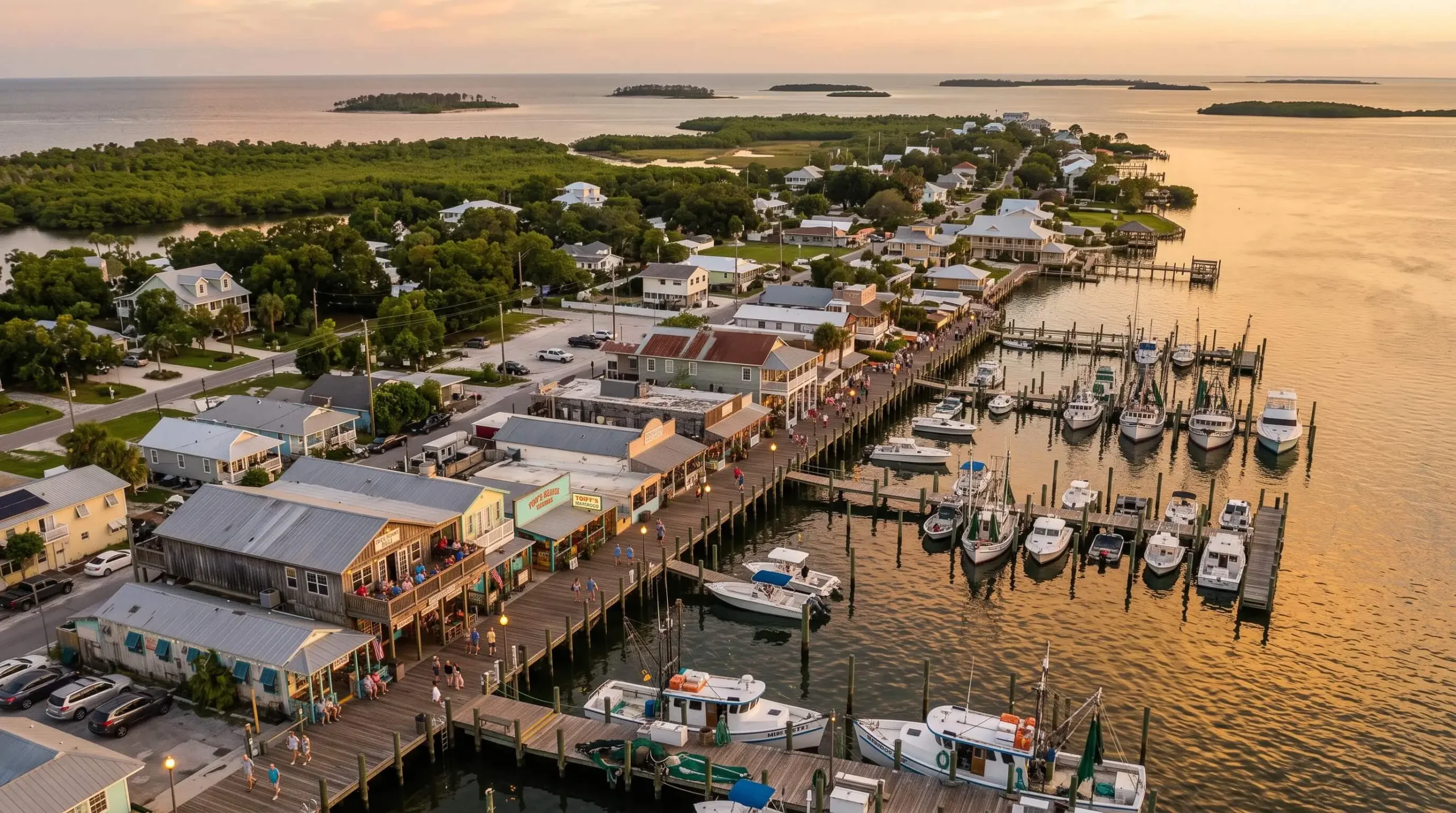
Raised buildings line the water here, holding restaurants, bars and shops that seem to float above the tide. It is the heart of Cedar Key. Most visits start and end on this one short stretch.
The Dock Street fishing pier reopened in late 2025 after storm damage closed it for a stretch. Entry is free and the pier is generally open from dawn until dusk.
Storm recovery is not finished. A local report about 19 months after Hurricane Helene said the island was still finding its footing, so call ahead about restaurant hours.
Paddle Out to a Ghost Town
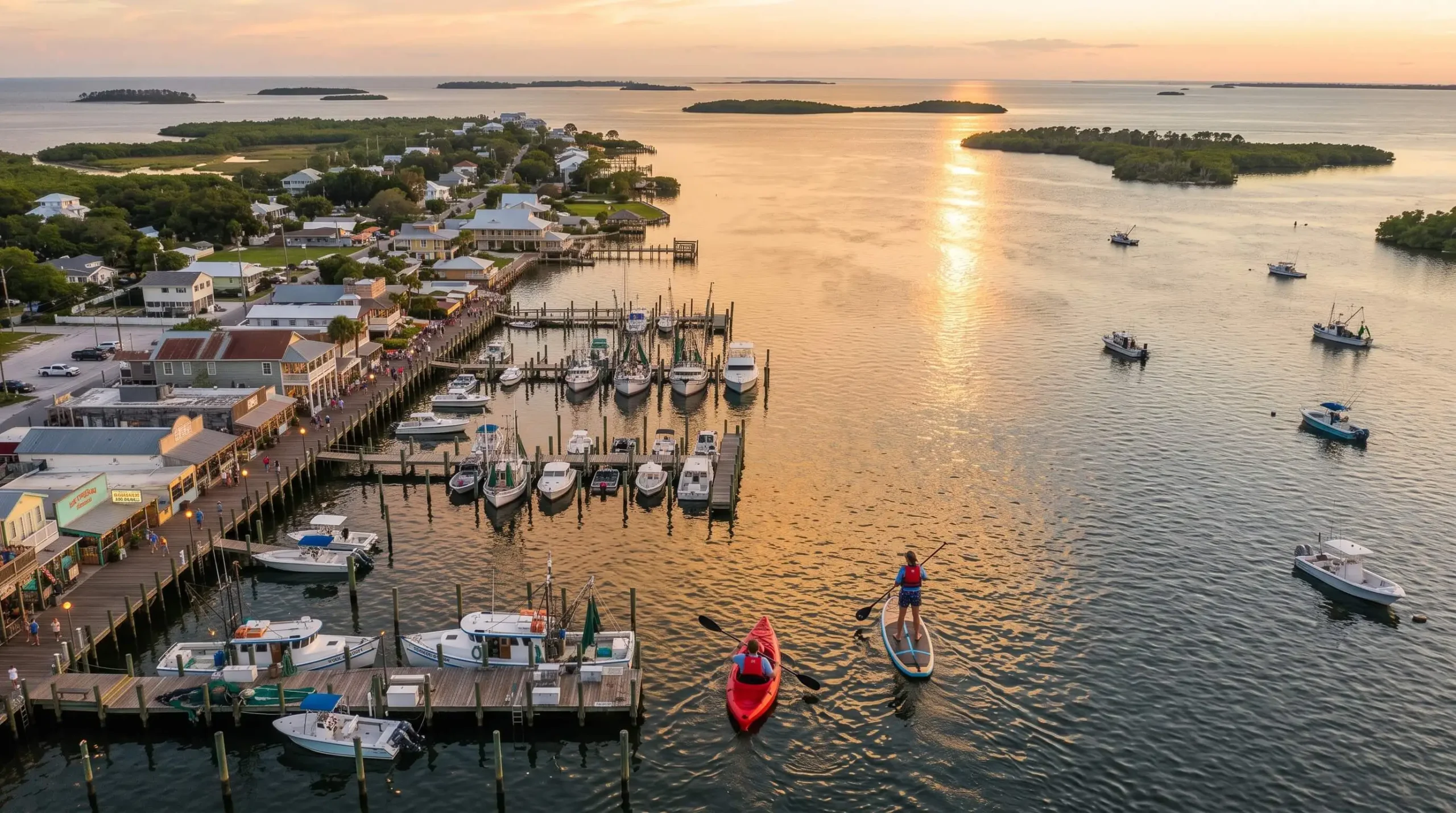
Atsena Otie Key sits just offshore and was once the original town site before Cedar Key moved to its current spot. Today it is quiet and mostly wild. It is reachable only by water.
Kayaks and paddleboards are the easiest way across. It is the single most popular paddling trip that locals point visitors toward. One guide also mentions a marked paddling trail from City Beach Park to Cemetery Point Park that opened this fall.
Fun Fact
The Cedar Keys once held nesting colonies of up to 200,000 birds, a number that has fallen closer to 20,000 today.
Spot Nesting Birds at the Wildlife Refuge
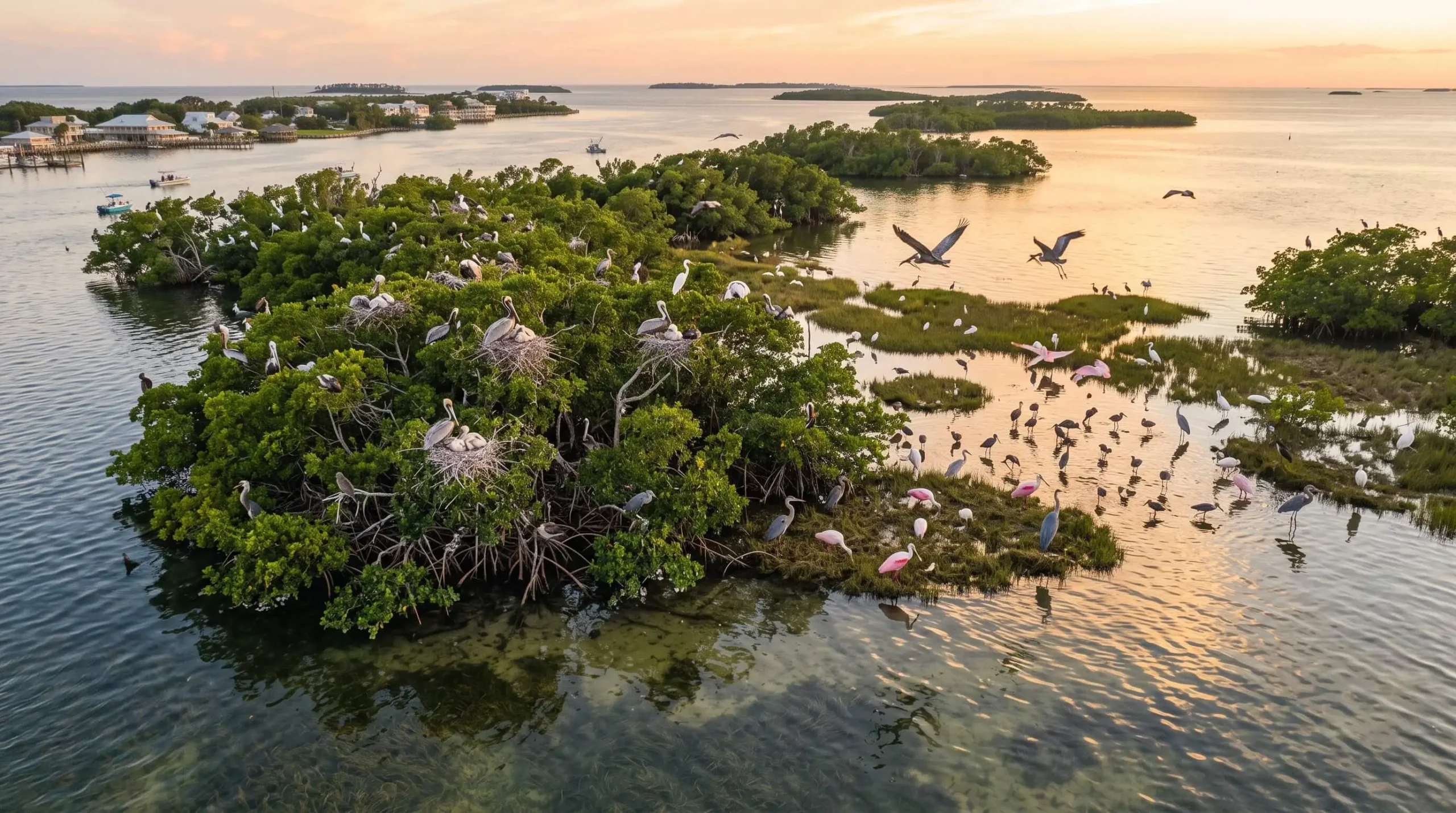
Thirteen islands make up the Cedar Keys National Wildlife Refuge, protecting nesting egrets, herons, pelicans and more. Seahorse Key holds the largest rookery and its own lighthouse station.
Public access covers all of Atsena Otie Key and the sandy beaches of other islands. The interior of most islands stays closed except by permit. Waters near Snake Key close seasonally from March through June. Check the refuge page before you plan a route.
Step Into a 1960s Time Capsule
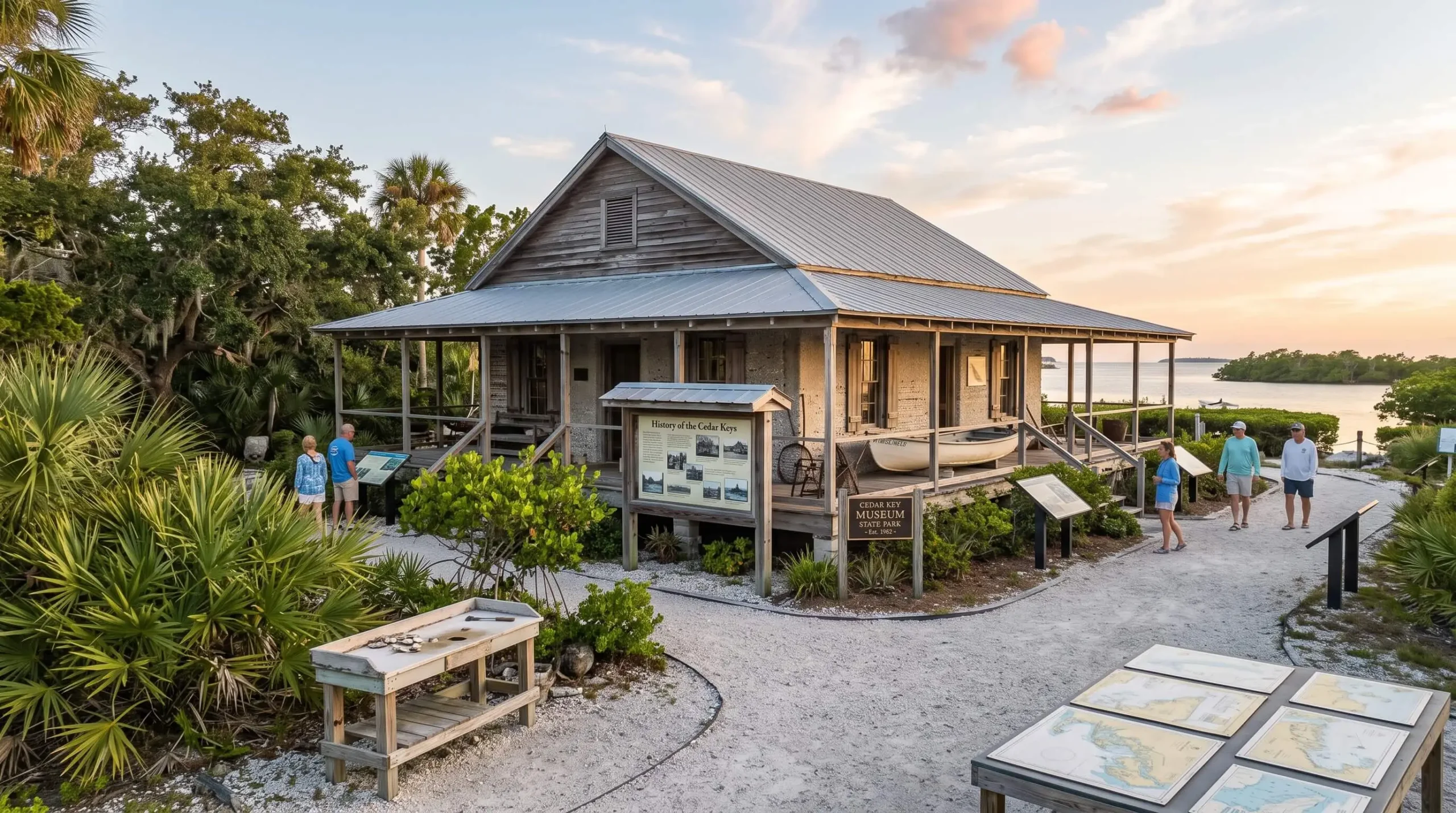
Cedar Key Museum State Park sits on 18 acres of salt marsh and tells the town’s story, from its earliest residents through the timber boom. The museum building itself, designed in 1961, is a small piece of mid-century architecture.
Next door, the Whitman House dates to 1880 and shows what life looked like in 1920s Cedar Key. Collector St. Clair Whitman’s donated collection started the whole museum in the first place.
Entry is low cost, with the state park museum listed near $2 and the Cedar Key Historical Society near $5. Other free stops include the railroad trestle nature trail, Cemetery Point boardwalk and Lil Shark Park.
Eat the Clams That Rebuilt the Town
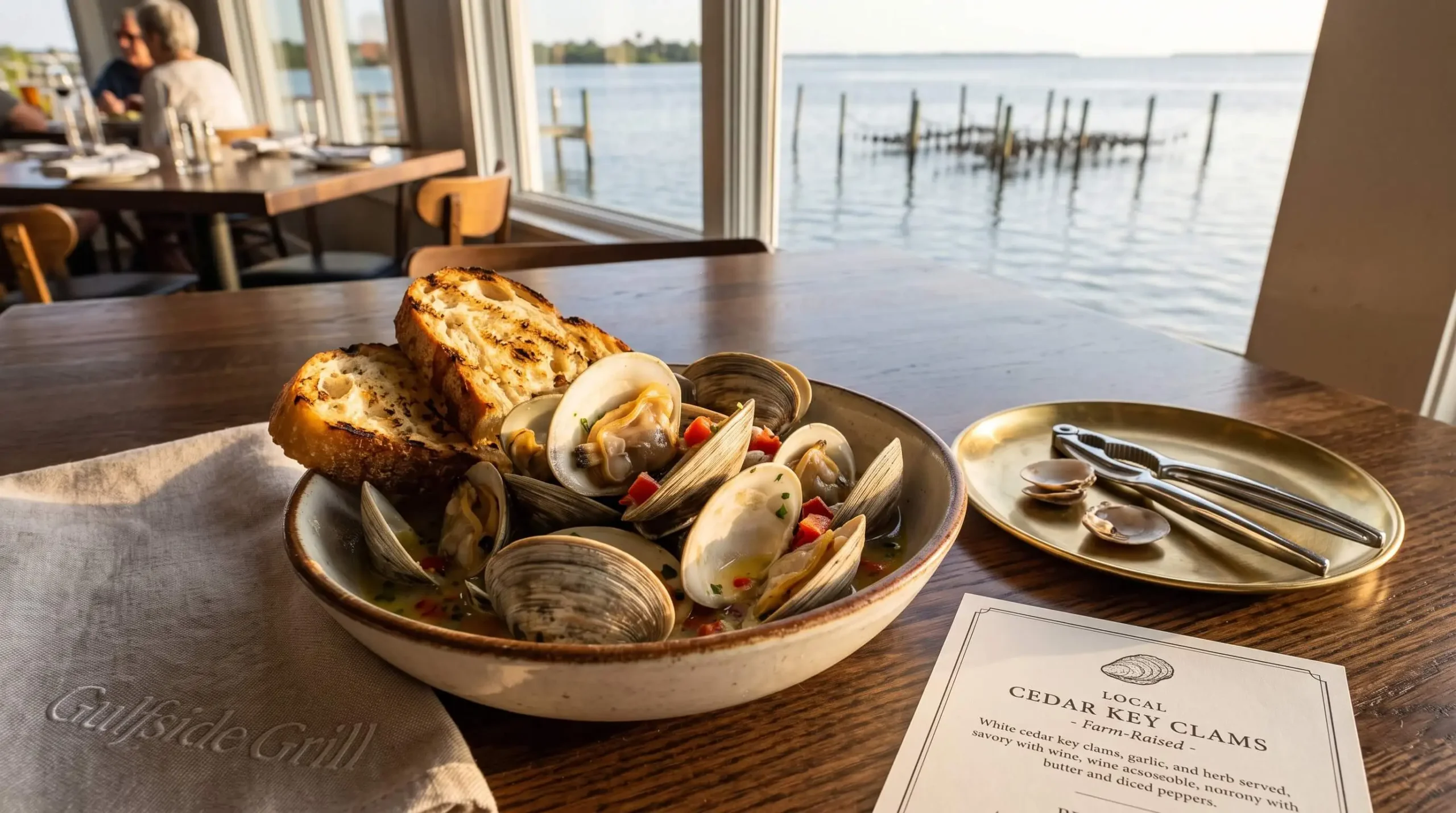
A 1994 net ban pushed local fishermen toward a new trade. Clam farming took over almost overnight. Cedar Key now produces more than 90 percent of Florida’s farmed clams, with around 200 million harvested every year.
Prefer a Caribbean island instead? See our guide to St Thomas.
Good to Know
The clam industry supports more than 500 local jobs and adds an estimated 45 million dollars a year to the town’s economy.
Order clams at nearly any restaurant on Dock Street and you are eating the local catch. It is often pulled from beds within sight of where you are sitting.
Bike the Nature Coast State Trail
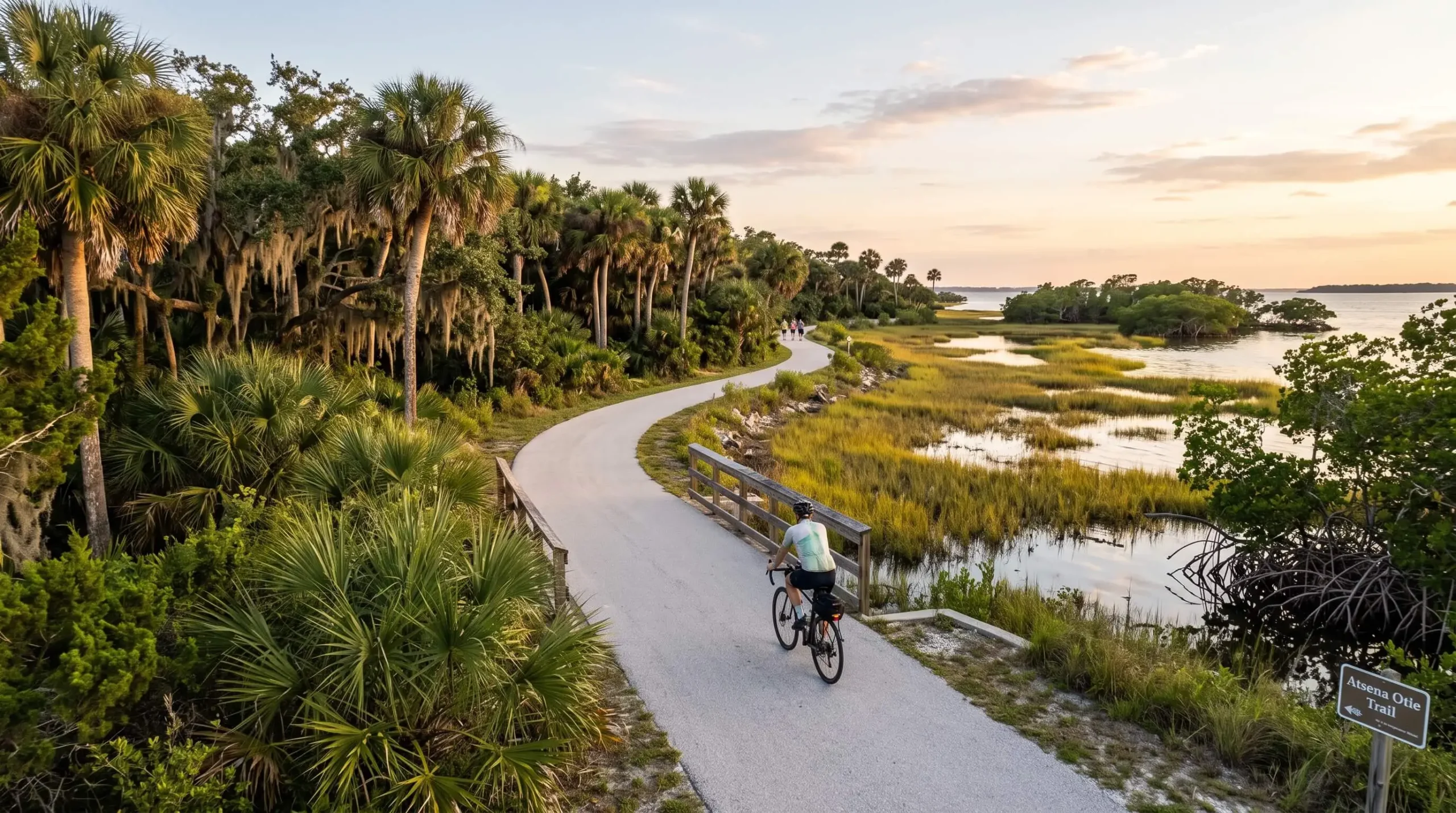
Cedar Key sits at the end of a 10.7-mile paved bike route that BikeFlorida.net ranks among the state’s top ten. The ride passes Piney Point, the fishing pier and Cedar Key Museum State Park on its way into town.
Riders coming off the longer Nature Coast State Trail often finish their trip here, then stay for dinner. Bike and golf cart rentals are both easy to find near Dock Street.
Walk Back 1,000 Years at Shell Mound
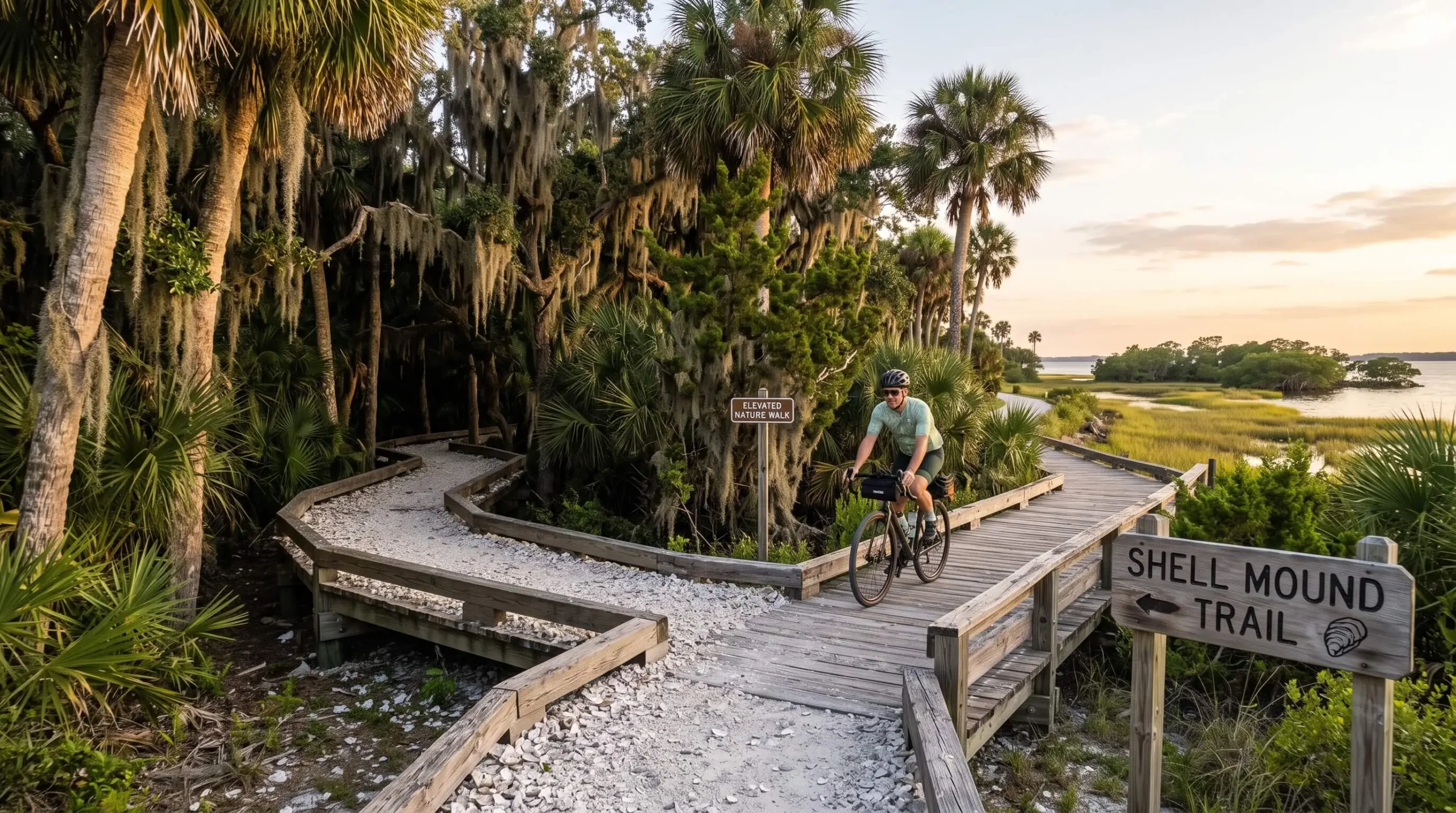
Six miles outside town, Shell Mound rises 20 feet from about 1.2 billion oyster shells. Native communities built it while gathering here around 400 to 650 CE. Archaeologists have found evidence of large feasts, likely tied to the summer solstice. A coastal North Carolina town with a historic riverfront is covered in our guide to Wilmington, NC.
A self-guided walking trail lets you see the mound up close. It sits inside the Lower Suwannee National Wildlife Refuge. Mining never touched it, so it stands close to its original form. If you prefer cool air and granite shores, our guide to Bar Harbor makes a good contrast.
Catch Sunset From G Street
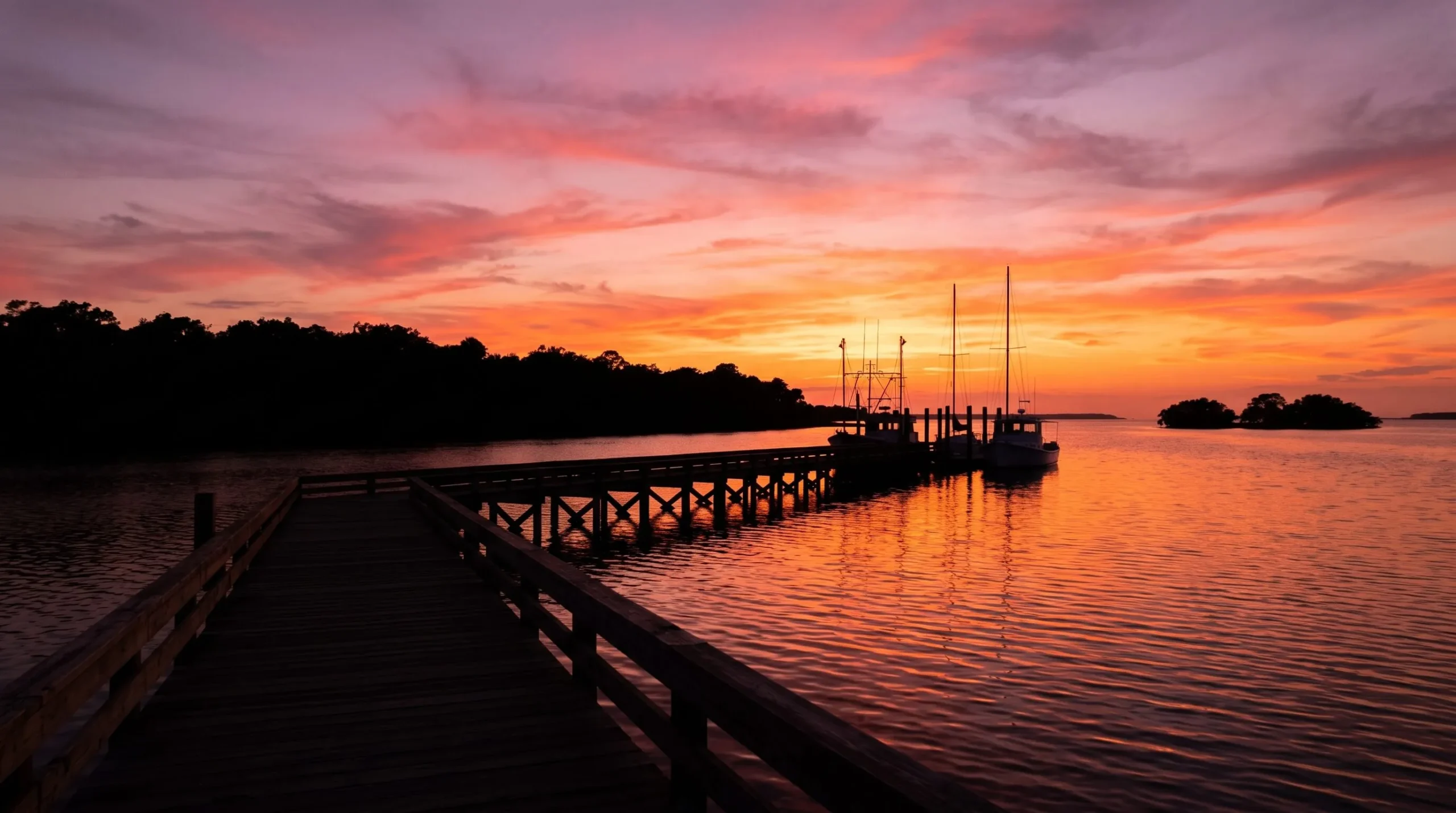
G Street is the spot locals point to for the best sunset in town. The view opens toward the water and the outer keys. The light turns everything gold before it fades.
Bring a chair or just find a spot on the dock. No ticket, no reservation, just timing.
Plan Around Scalloping Season
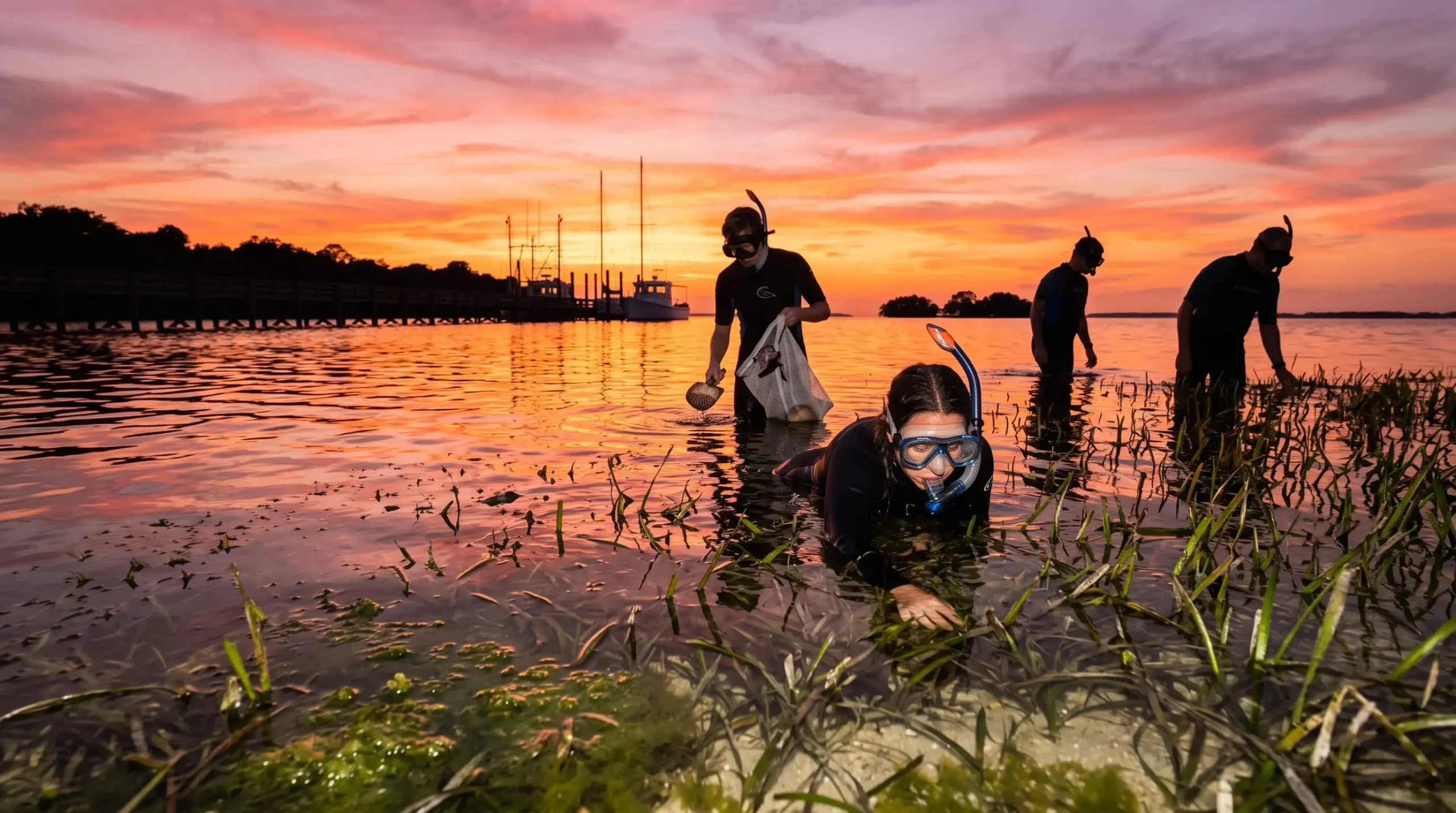
Bay scallop season around Cedar Key runs July 1 through September 24. Harvesters can take 2 gallons of whole scallops per person by hand or dip net, up to 10 gallons per boat, with no minimum size limit.
A Florida saltwater fishing license is required unless you are wading from shore on a no-cost shoreline license. Outfitters near Dock Street rent gear and run scalloping trips during the season.
Quick Tip
Shell disposal matters. Dump scallop shells in a trash bin or open water, never inshore, since piles can hurt seagrass and swimmers.
Explore a Town on the National Register
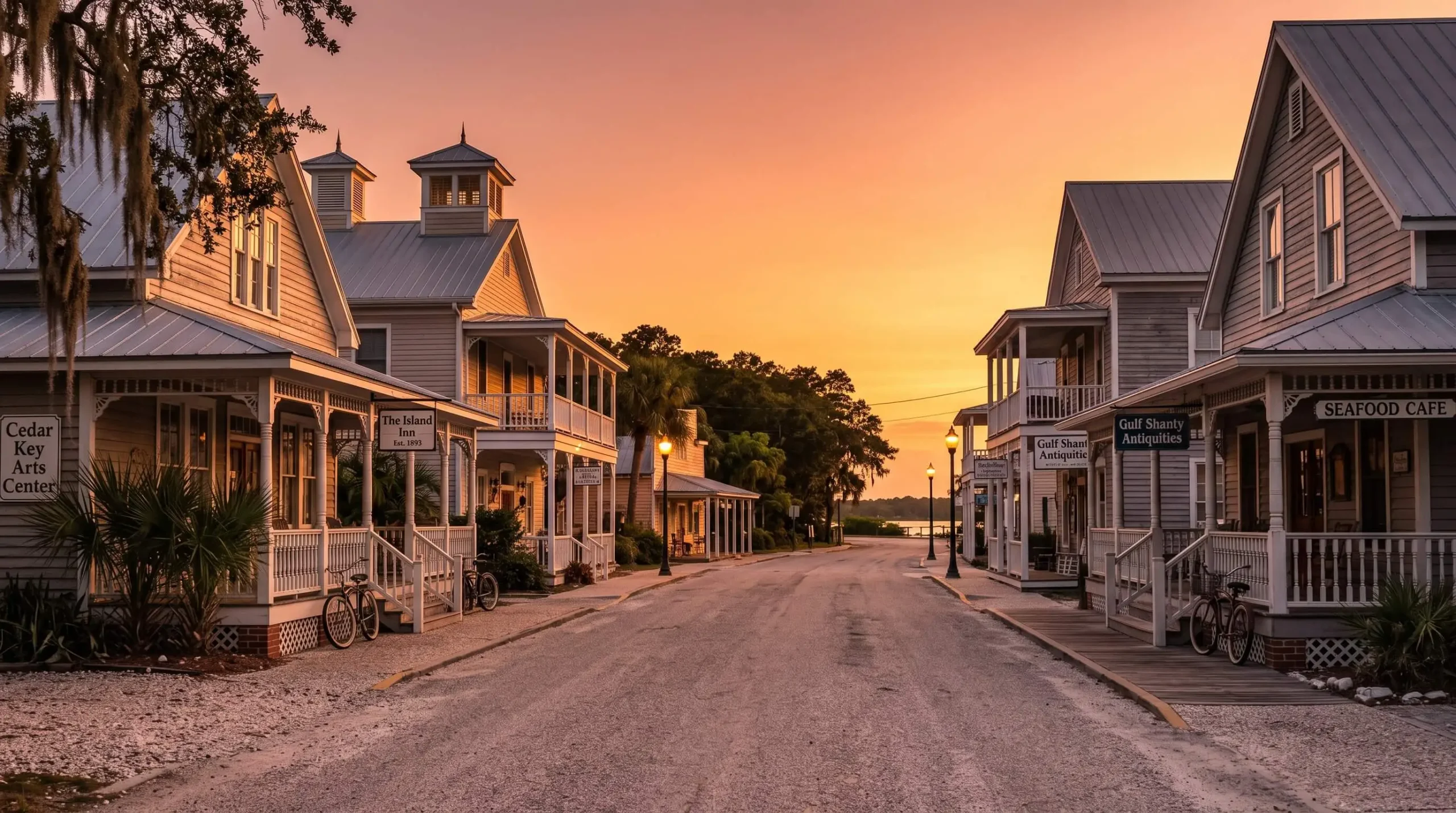
Cedar Key became the Florida Railroad’s western terminus in 1860, turning a small port into a shipping hub for lumber and, later, pencil slats. An 8,000-acre stretch in and around town joined the National Register of Historic Places in 1989 as the Cedar Keys Historic and Archeological District.
Evidence of settlement here goes back to around 1000 BC. Fishing eventually replaced timber. Clam farming replaced fishing, each layer building on the last.
Cedar Key got fresh recognition this spring. USA Today’s 10Best named two Florida towns among the nation’s best coastal small towns, and a Gulf storm earlier this fall is a reminder to check the forecast and any county notices before you drive out.
Getting Around and Getting Wet
Most visitors leave the car parked and get around by golf cart, bike or on foot. Kayaks and paddleboards are easy to rent near Dock Street for a trip to Atsena Otie Key or a slow paddle along the shore. Atsena Otie is the one refuge island open to visitors and nearby islands can close seasonally to protect nesting birds, as the refuge page explains.
Fishing works from the shore, the reopened Dock Street pier or a guided charter.
Choosing Your Season
| Season | What to Expect |
|---|---|
| Summer (June to September) | Scalloping season, warm water, busiest months |
| Fall (October to November) | Fall Seafood Festival, cooler air, fewer crowds |
| Winter (December to February) | Mild and quiet, good for birding at the refuge |
| Spring (March to May) | Spring Sidewalk Art Festival, comfortable weather |
A Simple Two-Day Plan
Day One in Town and on the Water
Walk Dock Street, then rent a kayak to paddle out to Atsena Otie Key. Finish with seafood and sunset from G Street.
Day Two for History and Nature
Visit Cedar Key Museum State Park and the Whitman House in the morning. Spend the afternoon exploring the wildlife refuge or biking a stretch of the Nature Coast State Trail.
Frequently Asked Questions
Cedar Key Is Ready When You Are
This is a town built for slowing down, from the docks to the sunset on G Street. Start with the water, save room for the clams and let the rest of the trip follow its own pace.
Head to North America or Things to Do for the next idea.


