
National Park Road Trip Through Utah’s Mighty 5 in 7 Days
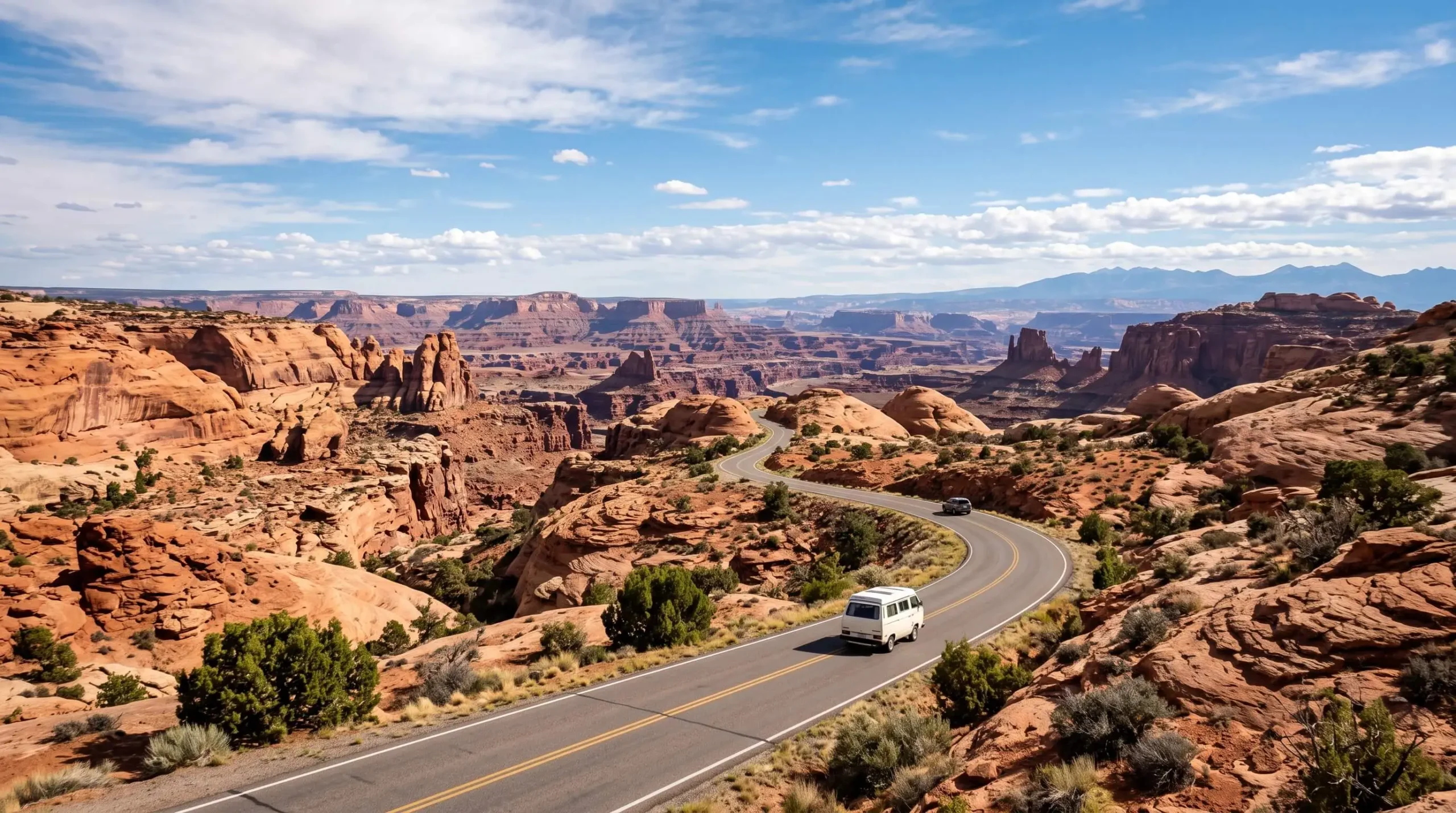
Eight hundred miles, five national parks and one rental car. That is the whole math of a Utah road trip. It works better than it has any right to.
The route runs from Las Vegas to Salt Lake City, with desert canyons first, then a high plateau of rock spires and a river-cut country of arches. Drives between stops stay short, mostly two to three hours, so the parks stay the main event.
Here is the route that keeps the miles easy. This national park road trip links Zion, Bryce Canyon, Capitol Reef, Canyonlands and Arches without a single punishing drive day.
The Route in One Look
| Stop | Known For |
|---|---|
| Zion | Shuttle-served canyon walls |
| Bryce Canyon | The densest collection of hoodoos on Earth |
| Capitol Reef | A 100-mile buckle in the Earth’s crust |
| Canyonlands | Overlooks above a maze of canyons |
| Arches | More than 2,000 natural stone arches |
Las Vegas to Zion Is a Short First Leg

The drive from Las Vegas to Zion takes about two and a half to three hours, which leaves most of the first day free. That is the main reason this route starts in Nevada rather than Utah.
From roughly March to November, private cars are not allowed into Zion Canyon itself unless you are staying at the lodge. Park shuttles run along the Zion Canyon Scenic Drive instead, so plan to park at the visitor center and ride in. Hiking Angels Landing still needs a permit won through lotteries on Recreation.gov.
Good to Know
Park reservation and shuttle rules change from year to year. Check the National Park Service page for each park before you lock in dates.
Zion to Bryce Where Walls Give Way to Spires

Bryce Canyon sits about two hours from Zion. The landscape changes completely on the way. The Bryce Amphitheater holds the densest collection of hoodoos, the tall rock spires that give the park its look, found anywhere on Earth.
Bryce does not use a timed entry system. A seasonal shuttle helps with parking near the amphitheater when lots fill up.
Want to push the trip further west? Our guide to the best time to visit Death Valley covers another desert park within reach of Las Vegas.
Scenic Byway 12 Is the Detour Worth Taking

Utah Scenic Byway 12 links Bryce Canyon to Capitol Reef. The road earned an All-American Road designation and cuts 124 miles through Garfield and Wayne counties.
Plan for a slow day on this stretch. Pull-offs, overlooks and small towns make it hard to cover the miles quickly. That is part of the appeal.
Capitol Reef Hides Behind a 100-Mile Wrinkle

Capitol Reef is built around the Waterpocket Fold, a buckle in the Earth’s crust that extends for more than 100 miles. Towering cliffs, sculpted canyons and hidden arches line the fold.
It is also the quietest park on the loop. Crowds here run thinner than at Zion or Arches, which makes it a good place to slow down. The developed Fruita Campground takes reservations from March through October.
Canyonlands and Arches Share a Base in Moab

Canyonlands and Arches sit close enough to Moab that most travelers cover both from one hotel. The National Park Service counts more than 2,000 natural stone arches inside Arches alone. Canyonlands charges $30 per private vehicle, valid for seven days, according to a 2026 guide.
Delicate Arch spans 52 feet and is reached by a 3-mile round trip hike. Arches lifted its timed entry requirement for the 2026 season, though rules can shift again, so confirm before you go. The park still suggests arriving before 8 AM or after 3 PM on busy days, and Fiery Furnace hikes need a reservation.
Three big parks, including Arches, dropped timed entry for 2026, while Rocky Mountain kept its system. Policy has changed quickly this year, so confirm the rule again the week you travel.
Planning Notes Before You Book

The loop works best in warmer months, when the days run long. Winter daylight is short and can make a seven-day schedule hard to finish.
Five parks in a week make an annual pass worth pricing. The National Park Service lists the America the Beautiful annual pass at $80 for U.S. residents and $250 for non-residents, and it covers entry to all five. Compare that with five separate vehicle fees, and note that news reports this fall describe an extra $100 fee for international visitors at about eleven popular parks, so foreign guests should check each park’s fee page.
Winter storms can close mountain passes, so check closures and conditions for Utah Scenic Byway 12 before driving between Bryce and Capitol Reef.
Frequently Asked Questions
The Road Does Half the Work
Few road trips line up this many headline landscapes this close together. Pick the dates, book the first night in Springdale and let the route carry you.
Plenty more routes and ideas wait in North America and Things to Do.


