
Beach Shells Guide for Finding, Cleaning and Keeping Them Legally
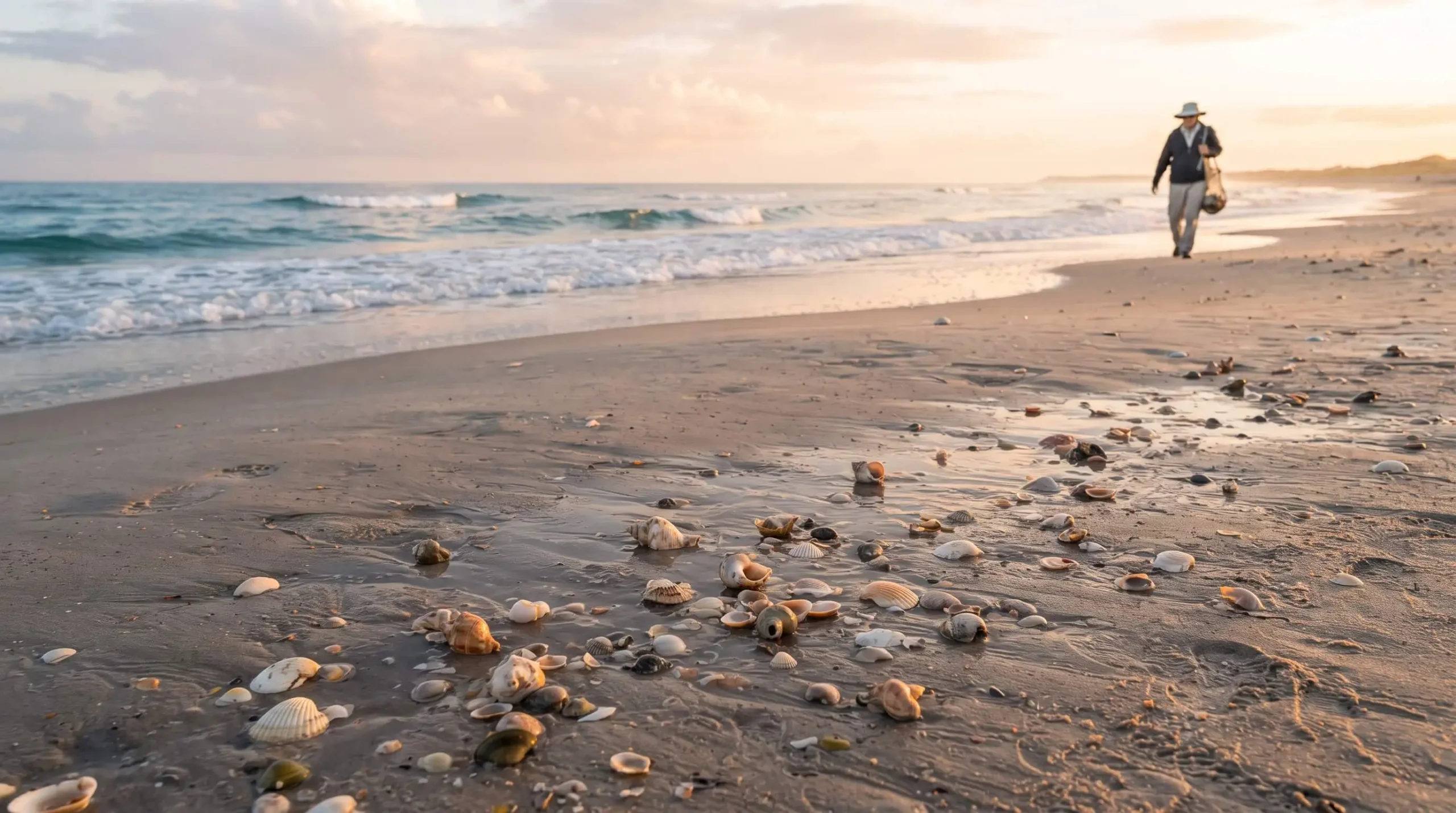
Shelling looks effortless until you stand on a beach covered in broken pieces.
Tides, storms and the shape of the coast decide what you find, and local rules decide what you can keep. Taking live shells is banned in some places.
This is where to find beach shells in Florida and the Carolinas, when to walk the tide and how to clean your haul.
Beach Shells by Region and What You Can Expect
| Region | Beach examples | What to expect |
|---|---|---|
| Southwest Florida Gulf coast | Sanibel, Captiva and Marco Island | The widest variety with big finds after storms |
| Tampa Bay area | Fort De Soto and St Pete Beach | Scallops, sand dollars and whelks |
| The Carolinas | Myrtle Beach area and Holden Beach | Smaller shells plus sea biscuits at Holden Beach |
Florida’s Gulf coast leads the list for variety. The sections below start there and move north.
Sanibel and Captiva Are the Classic Shelling Islands
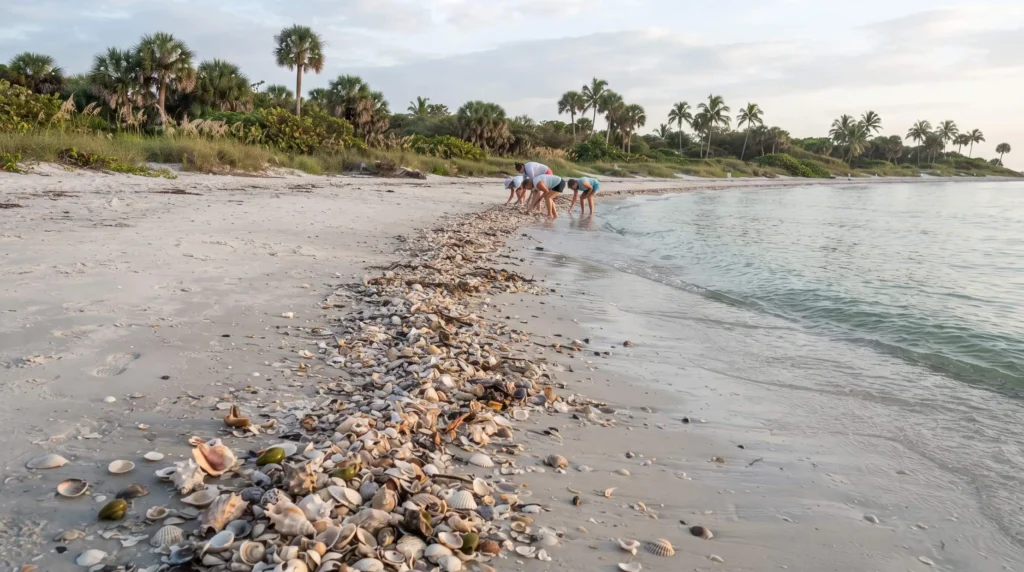
Sanibel faces the Gulf with a curved shoreline that funnels shells onto the sand. The stretch toward Captiva often yields larger finds while the southern end tends to give smaller ones. Blind Pass and Bowman’s Beach are two popular spots.
The City of Sanibel runs seven public beach parks and its site covers parking and park information. Parking is limited at Blind Pass, so arrive early or visit on a weekday.
Bowman’s Beach is often named the most practical first stop because of its parking and amenities. Shelling is banned in the waters of J.N. Ding Darling National Wildlife Refuge.
Marco Island and Tigertail Beach
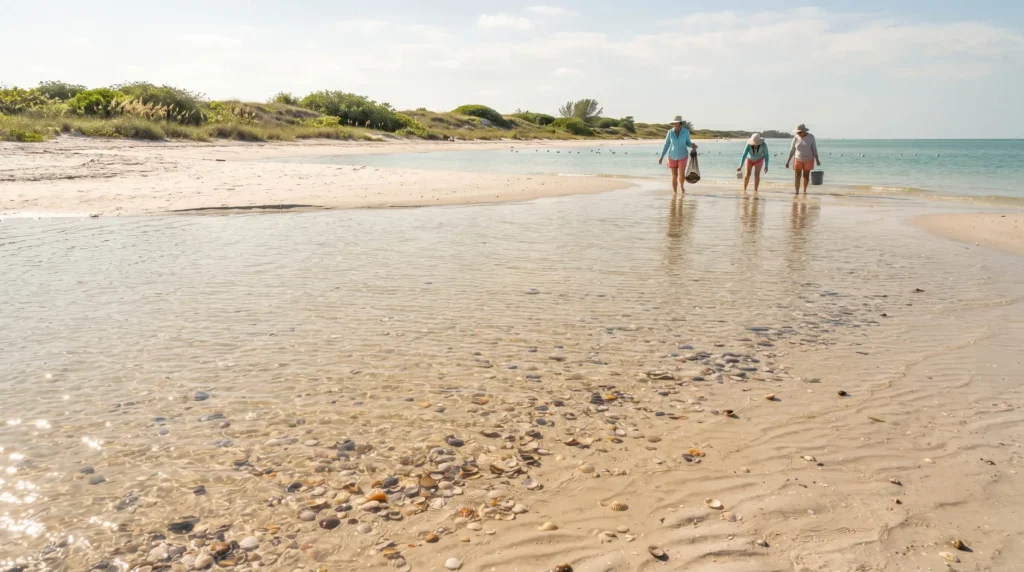
Tigertail Beach is widely seen as the best shelling spot on Marco Island. A sandbar just offshore creates a tidal pool that works well at low tide. Parking has a fee, so plan for it.
South Beach is the other main public beach. It is easier for sunbathing than for serious shelling.
Fort De Soto and St Pete Beach
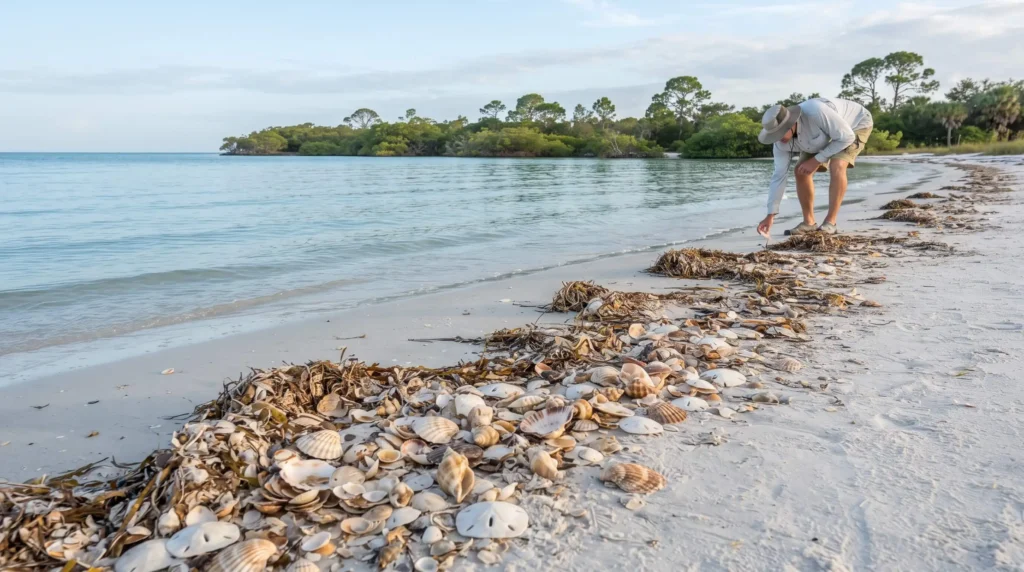
Fort De Soto spreads across five connected islands and offers a mix of scallops, conchs and sand dollars. St Pete Beach is known for scallops, sand dollars and whelks. Both are easier to reach for visitors based around Tampa Bay.
Walk the wrack line where the tide leaves seaweed and shells together. Early morning usually gives you the best pick. Another Gulf coast town with a quiet shoreline is covered in our guide to Cedar Key.
Myrtle Beach and Holden Beach in the Carolinas
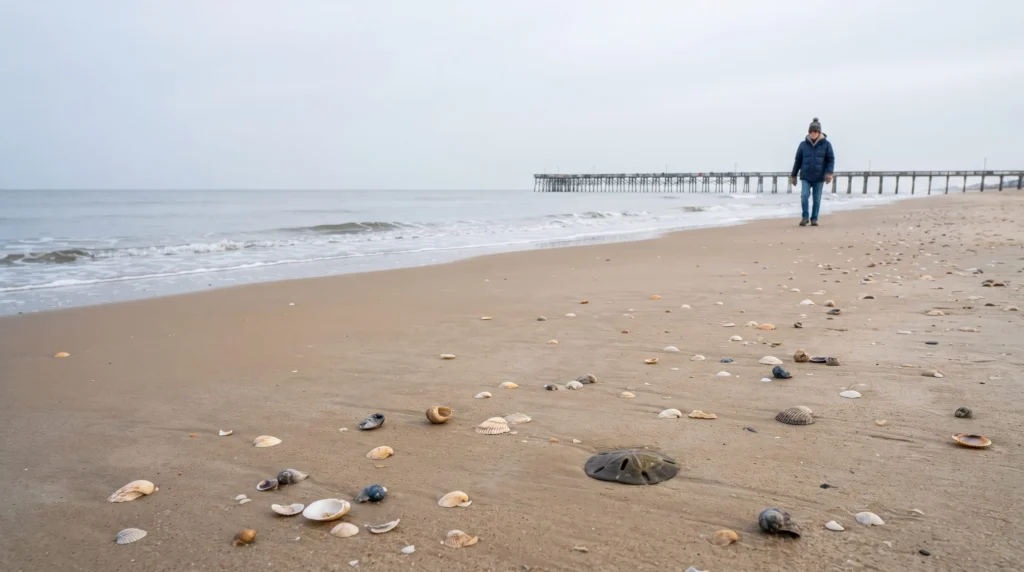
Shelling around Myrtle Beach is best in the off-season from fall to spring. Litchfield has been recommended because dredging brings up shells for a while afterward. Holden Beach, about an hour away, is known for sea biscuits, which are fossil sand dollars.
Expect smaller shells than in Florida. A calm winter morning can still give you a very good bag. Farther north on the coast, our guide to Wilmington, North Carolina covers another beach town.
Timing Your Walk Around the Tide
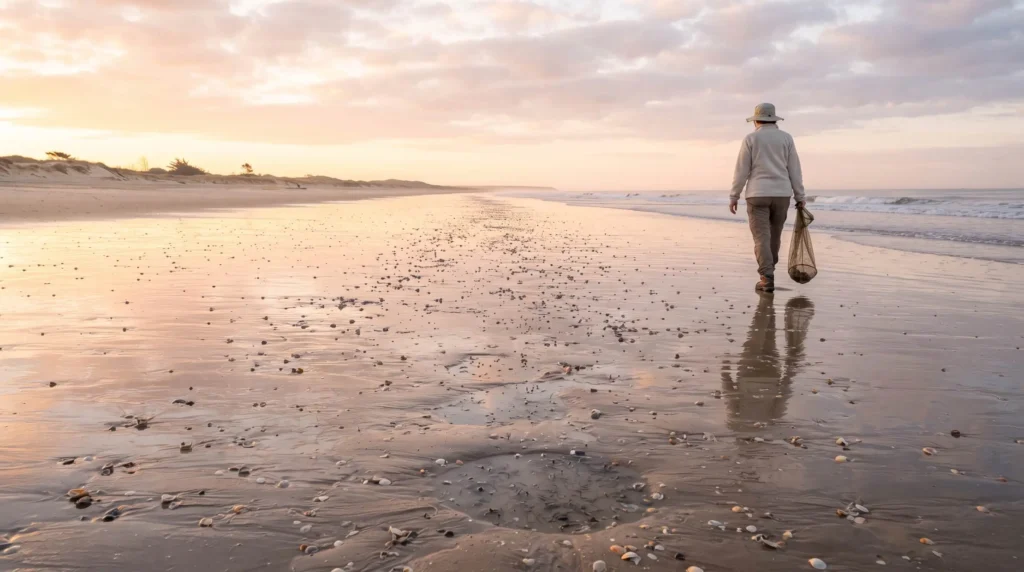
Go about an hour before and after low tide, especially when it is a very low tide. Storms push new shells onto the beach, so the days after a storm are often best. Minus tides tend to be biggest in late fall and winter.
Always check the edge of the wet sand, because that line marks how far the last waves carried shells. Rocky coves and tide pools also hold finds, and on driftwood beaches shells can hide under the logs. If low tide falls long after sunset and the crowds are gone, a headlamp turns it into a quiet night walk.
One guide suggests arriving about an hour before low tide on a winter morning, often after a cold front.
Tide charts for nearby stations can disagree, so compare two sources before you drive over. Early starts also help you find parking. Texas has its own shelling spots, as our guide to South Padre Island shows.
Leave Occupied Shells Behind
If a shell has an animal inside or a hermit crab, put it back. Taking live shells is banned in some places and can bring a fine.
Cleaning Shells So They Last
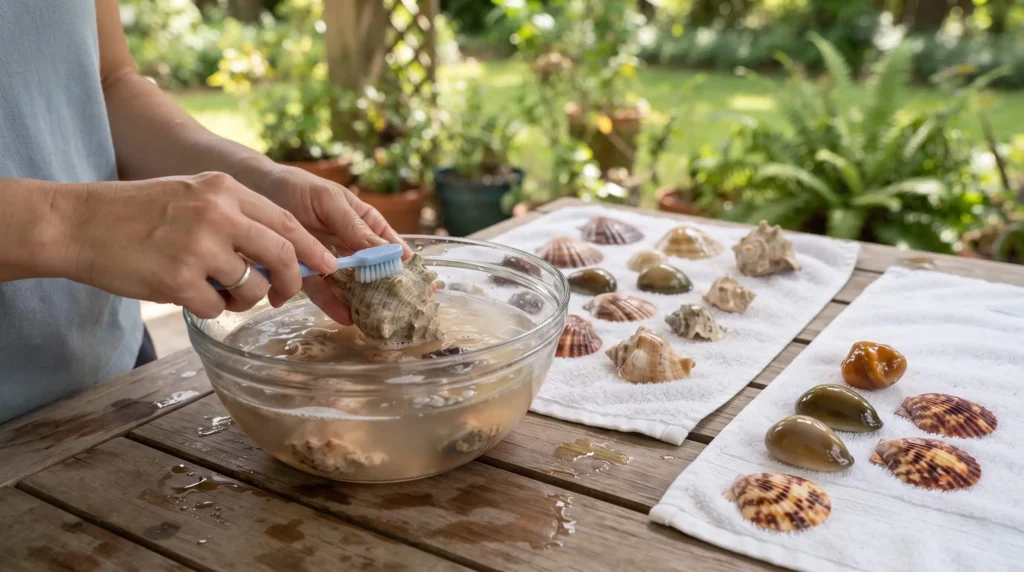
Scrub off sand, mud and algae with a toothbrush. Soak sturdy shells in warm soapy water first. A half and half mix of bleach and water for about thirty minutes whitens many shells, but check them often.
Glossy shells such as cowries can be dulled by bleach, so use soap and water for them. Never mix bleach with vinegar. Rinse well with plain water. Dry shells in the shade and add a thin coat of mineral oil if you like a sheen.
Is It Legal to Take Shells Home
Many places ban taking live shells. Sanibel protects all of its beaches and the nearshore waters out to half a mile, and taking a living shell is a misdemeanor with reported fines up to $500 and up to 60 days in jail. Sand dollars, starfish and sea urchins are protected while alive in many areas. Queen conch is banned even when dead under Florida law according to guides.
Rules differ by state and by beach and some sources disagree on details. When in doubt, leave occupied shells and anything alive on the beach and check local signs.
Not every state is strict. An August 2026 report said New Jersey has no law banning taking empty seashells from its beaches, though shell fans should still follow local rules on sand and protected areas. A lot of crowded beaches also see more broken shells at midday, which is another reason to go early.
What to Bring and How to Stay Safe
A mesh bag, a small scoop, sturdy shoes and a hat are enough for most trips. A tide chart helps you plan. Bending for hours is hard on your back, so take breaks.
Some spots such as Blind Pass have strong currents, so keep children close and avoid swimming there. Pack water because shade is scarce on many beaches. Live shells are protected and the city’s beach parks page explains what you can keep.
Beach Art Ideas for Your Finds
Shells work well in shadow boxes, glass jars and simple frames. Combine them with smooth stones for table displays or hang them as a mobile. Clean them first so they do not smell.
Small broken pieces are still useful for mosaics. Keep a separate bag for the tiny ones.
Frequently Asked Questions
Shell Smart and Leave the Living Behind
Good shelling comes from timing, patience and respect for local rules. Pick one beach, check the tide and take only what is empty.
Browse North America or Things to Do when you want a second trip on the list.


