
Beach Wall Art Ideas for Every Room From Canvas to Metal
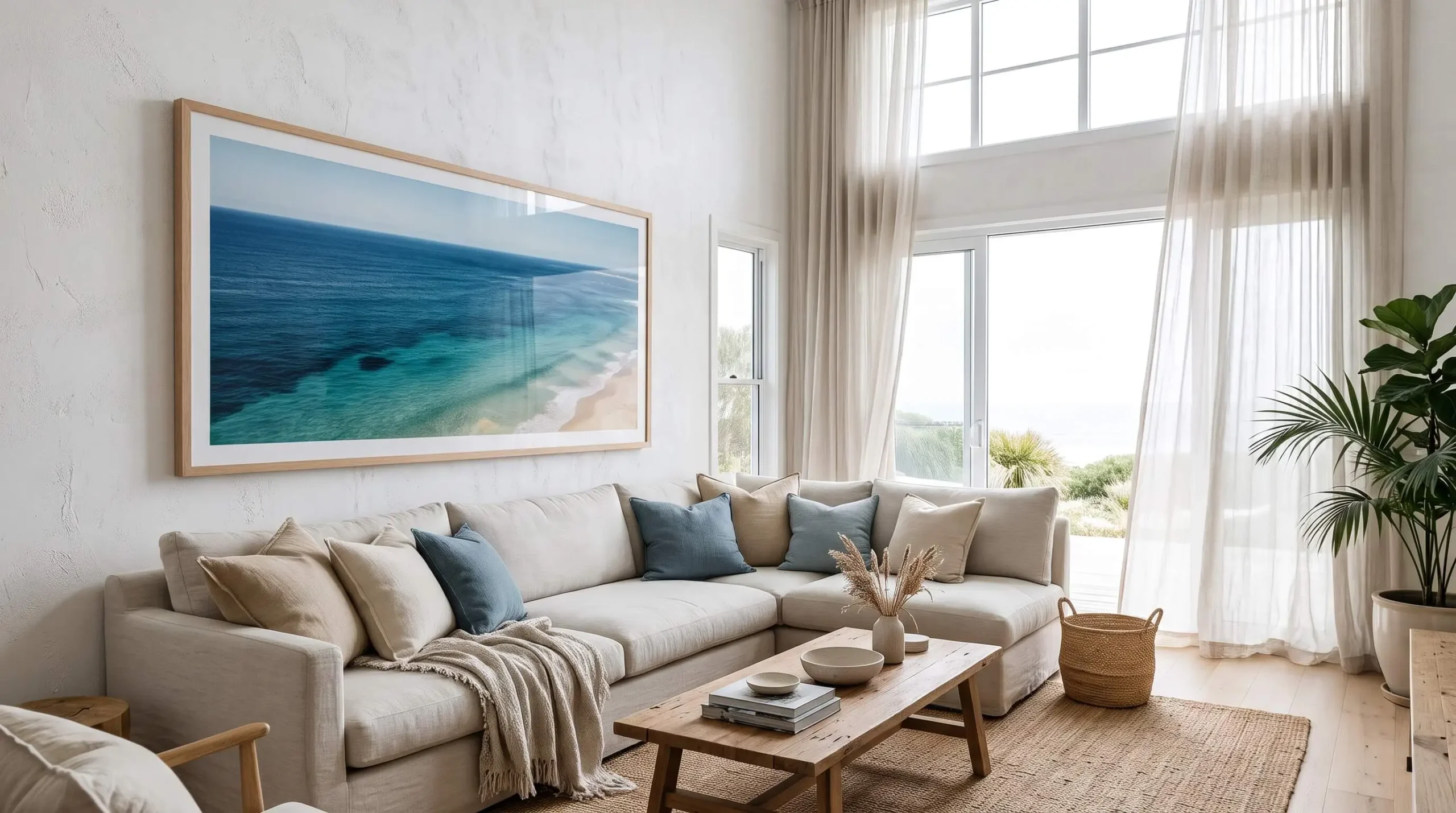
The print arrives, the blue fights the sofa and the canvas looks tiny above a seven foot couch. I read a lot of these regrets while researching.
Size is the first mistake and a gift shop look is the second. A steamy bathroom or a sunny window finishes off prints that were never made for them.
So this plan for beach wall art goes room by room, with sizes, materials and care so the piece still looks right in a year.
Pick the Room First and the Print Second
| Room | Best format | Size to aim for |
|---|---|---|
| Living room | Wide horizontal canvas or a three panel set | About two thirds of the sofa width |
| Bedroom | One calm horizontal print or a matching pair | Two thirds of the headboard width |
| Bathroom | Aluminum metal print or sealed canvas | Small to mid sized and away from splashes |
| Hallway | Tall vertical prints in a row | Narrow pieces at one repeated spacing |
| Kitchen or dining | A small framed set | Compact pieces away from the stove |
Start by naming the room and the job the art has to do. A living room wants a focal point while a bedroom wants calm. The sections below follow the order most people decorate in.
Beach Wall Art for the Living Room Sofa Wall
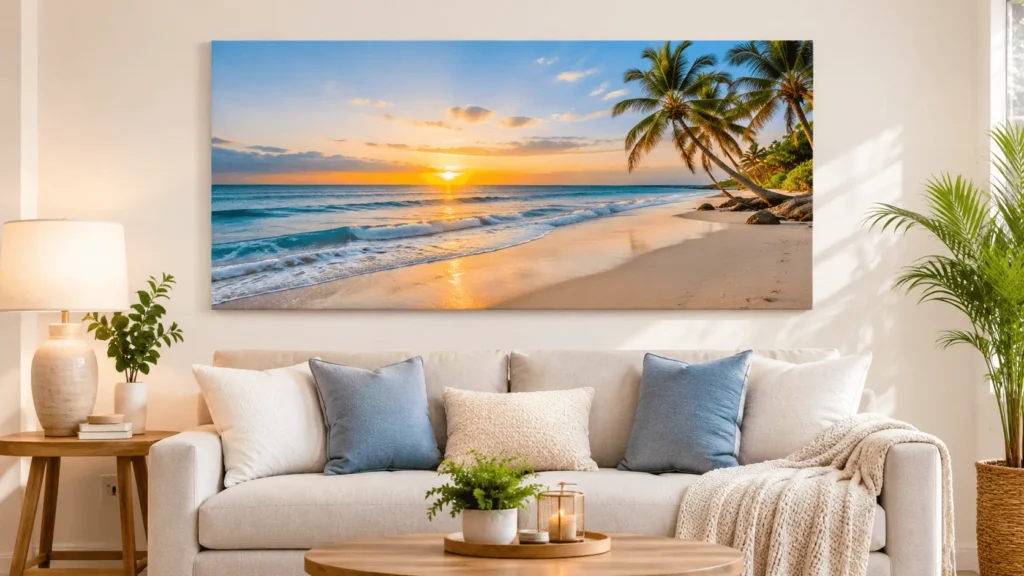
The sofa wall is where most buyers start. It is also where most of them go too small. A common rule is to make the art about two thirds as wide as the sofa. Three quarters can work for a bolder look.
Height trips people up next. Hang the center of the piece at about 57 inches from the floor. If the sofa back is tall, leave six to ten inches between the cushions and the bottom edge instead. Outline the size on the wall with painter’s tape before you drill.
A wide horizontal canvas or a three panel set suits this wall because a shoreline already reads left to right. Keep the gap between panels the same on every side. Two to three inches is common.
Soft Horizons for the Bedroom
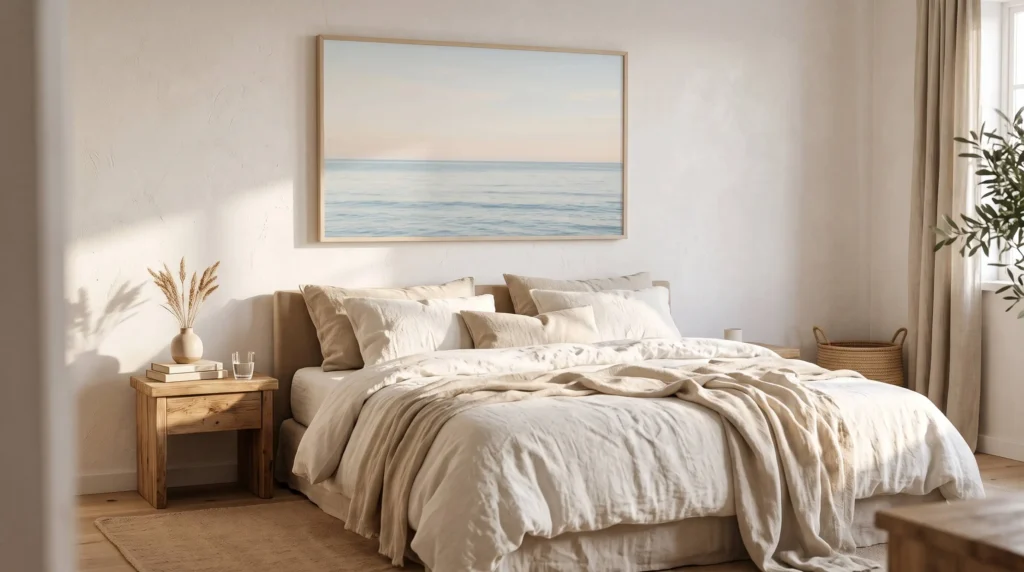
Bedrooms do better with quiet pictures. Think calm water, a misty shoreline or sand lit by low sun. Strong crashing surf is exciting in a living room but it can feel loud next to a pillow.
One canvas above the bed is enough. A matching pair on either side of a window also works. Match the undertone of the art to your bedding. Warm sand and cream suit warm linens while soft blue and gray suit cool ones.
Avoid the Theme Park Look
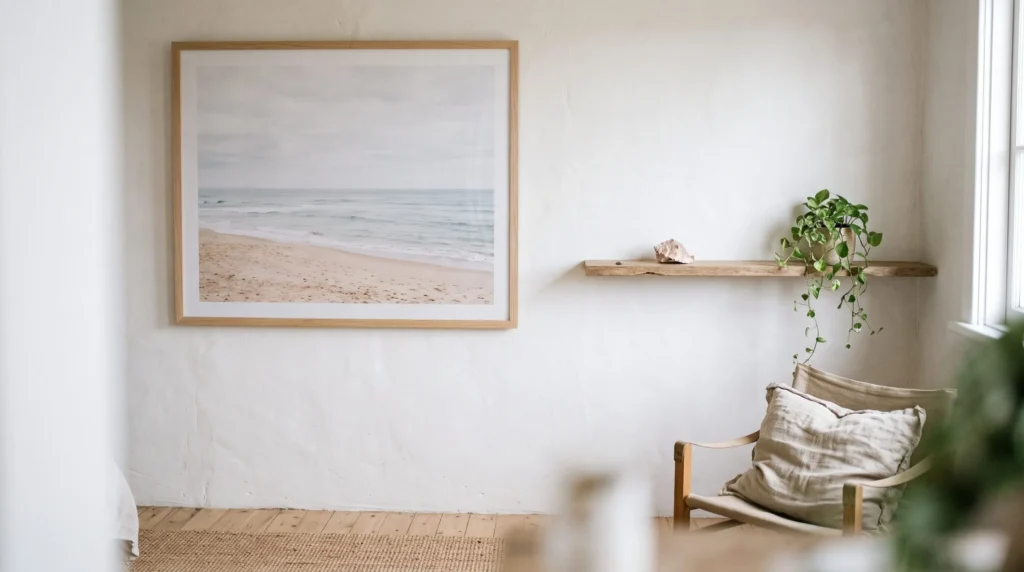
The fear most readers share is a house that looks like a souvenir shop. That outcome usually comes from too many pieces and too much blue. Choose two or three pieces and leave bare wall around them. Washed blue, warm white, sand and seafoam keep things calm.
Designers are moving the same way in 2026. A May 2026 trend piece says literal beach looks such as starfish signs, anchors, stripes and driftwood art feel dated. Instead they favor richer wood tones, fresh palettes beyond navy and white, and handmade or one of a kind pieces.
Mix in something unexpected. A set of vintage postcards, a length of sail cloth or an old oar looks more personal than another sunset. If you pick up shells on your trips, our guide to beach shells covers cleaning them and keeping the best ones.
If a window already frames a real view then let it win. Keep the art on that wall simple and quiet.
If you still want shells in the room, treat them as craft, not clutter. Interior designers point to handmade coquillage panels and shell mirrors as the upscale take. A framed vintage map of a favorite coastline or a shadow box of a family beach day does the same job for less money.
Turn Your Own Trip Photos Into Prints
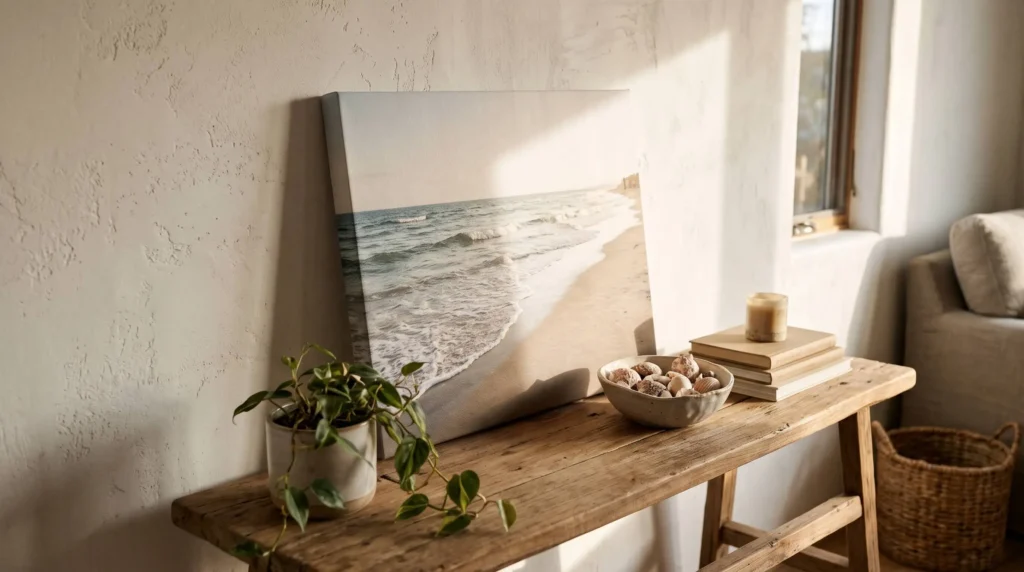
Your own photos solve the cliché problem fast. A sunrise from a trip means more than a stock sunset. Our guide to South Padre Island lists beaches worth carrying a camera to.
Resolution is more forgiving than most people fear. A modern phone photo can print sharply at 150 pixels per inch for a large piece seen from across the room. Use 240 for pieces at eye level and save 300 for small prints viewed up close. Keep the main subject away from the edges because labs trim and canvas wraps fold.
Panoramic crops suit a beach better than a standard rectangle. A narrow shape such as 8 by 24 inches follows the horizon nicely. Check the lab’s low resolution warning before you pay.
No good photo yet? The Library of Congress shares rights free coastal images through its Free to Use and Reuse sets and the Smithsonian offers millions of CC0 items through Open Access. Check each item page for credit details before you print.
Bathroom Walls Need Metal or Sealed Canvas
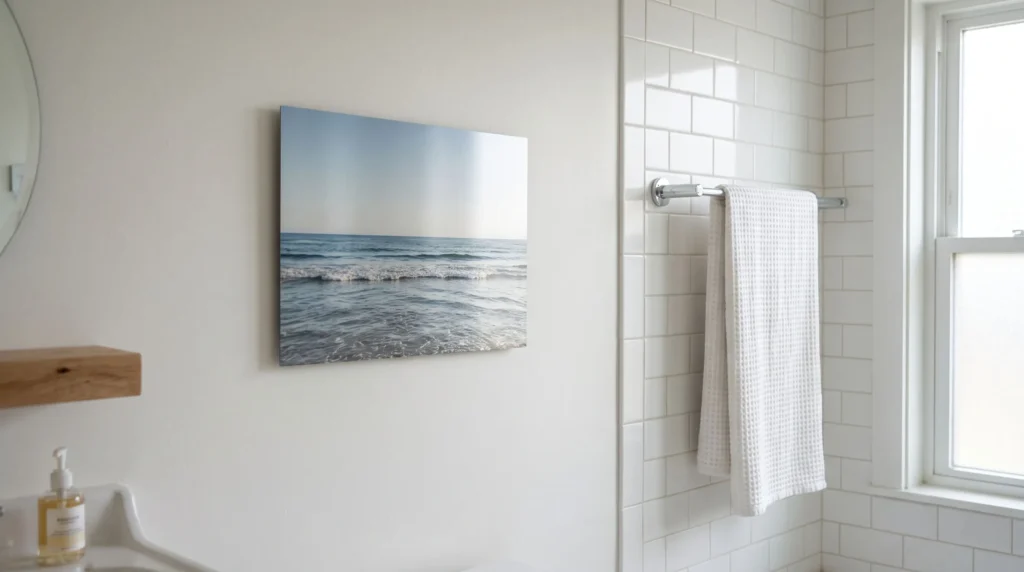
Steam is the enemy of paper. Unsealed prints and posters can wrinkle and spot within a season. Aluminum metal prints shrug off humidity because they do not absorb water. A coated canvas is the softer option if you hang it away from the shower and the sink.
Frames matter as much as the picture. Wood frames can warp in damp rooms so choose aluminum or plastic instead. Seal the edges of any canvas and run the fan after showers.
Fade Check
UV glass blocks around 70 percent of fading light while museum glass reaches about 99 percent. Plain acrylic blocks none unless the label says UV filtering.
Canvas Metal and Framed Prints Compared
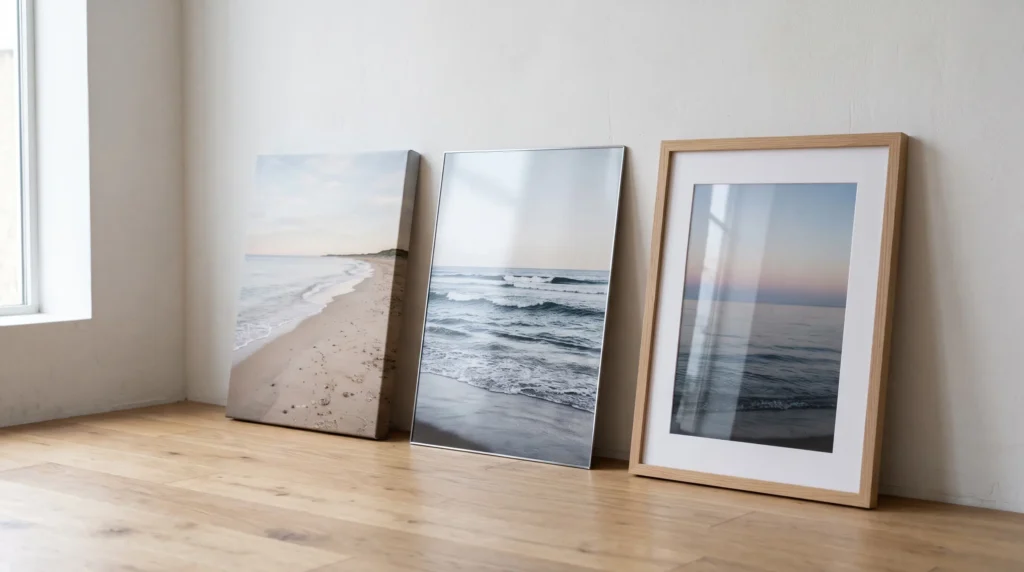
Canvas gives a soft texture and no glare. It suits bedrooms and living rooms where lamps bounce off glass. Metal gives crisp color and a glossy finish and it handles humidity. Framed paper under glass looks formal and works best in dry rooms away from direct sun.
Seller blogs say metal resists humidity and fades less in strong light, while stretched canvas can absorb moisture in damp rooms. Their lifespan claims, such as 65 years for a metal print, are marketing estimates.
Large and extra large pieces need a stronger plan. Find studs or use wall anchors rated well above the weight of the piece. Two hooks hold a heavy panel level better than one. Lay a set out in tape first.
Prices follow the same split. Single canvas prints and posters often sit under $50, framed sets and multi panel prints land around $50 to $150, and designer or large scale pieces start near $150 and climb past $500. Set the budget before you pick the size, because large pieces cost much more than the print itself once framing and shipping are added.
Frequently Asked Questions
Start With One Wall and One Strong Piece
Pick the room first then decide on size and material. One well sized piece beats a wall of small souvenirs.
Browse more ideas in Things to Do for beach gear, shells and coastal planning.


