
Best Beach Umbrellas and How to Choose One That Stays Put
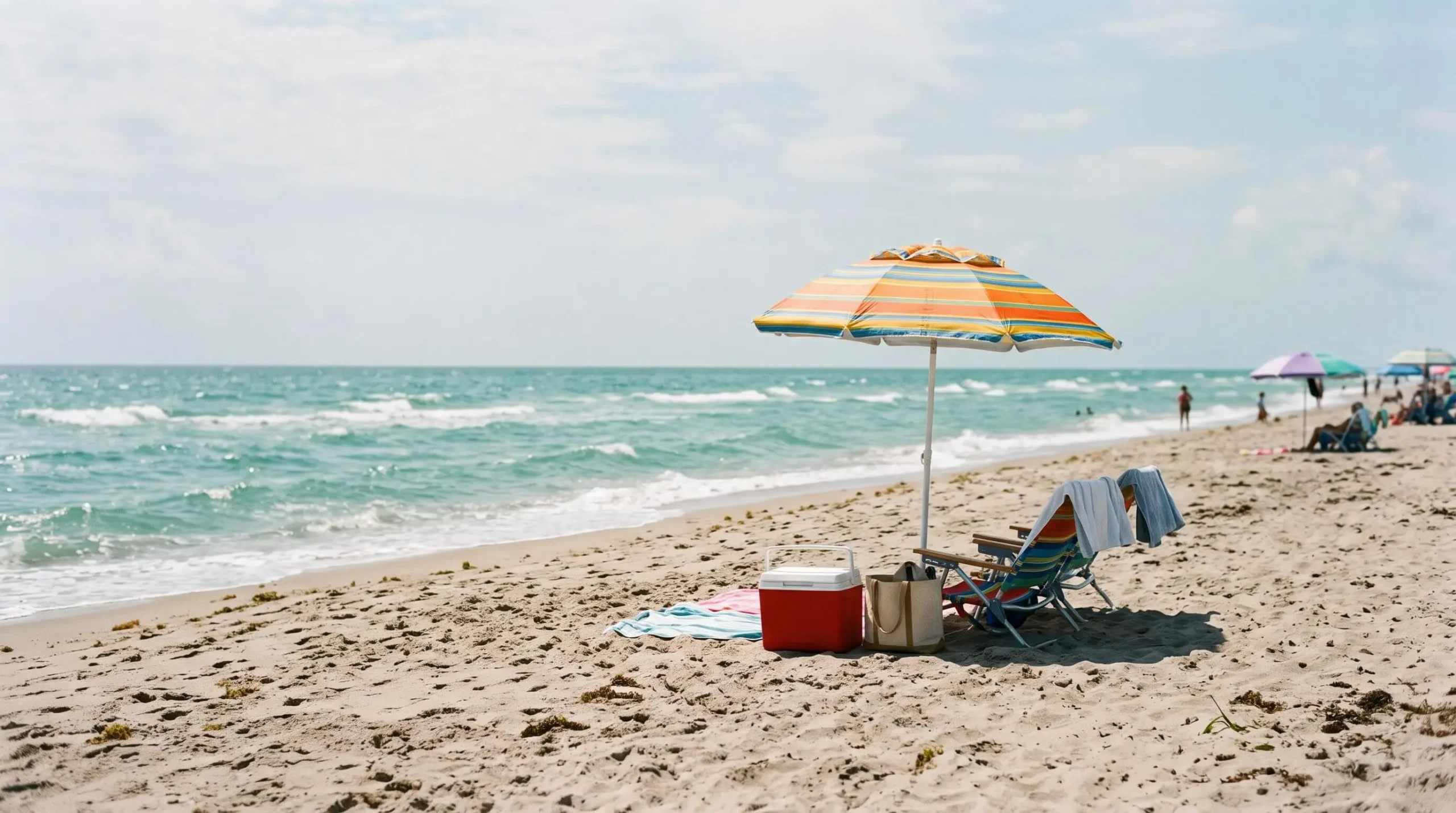
The canopy flips inside out, the anchor pulls free and sunburn sneaks in anyway. Wind is the main reason people hate their beach umbrella.
Vents, fiberglass ribs and the right sand anchor beat price almost every time. Size and fabric cause more trouble than buyers expect.
I compare the best beach umbrellas by beach type, from windy coasts to sheltered bays.
Match the Umbrella to Your Beach Day
| Beach day | Umbrella to look for | Check first |
|---|---|---|
| Windy open coast | Vented canopy with fiberglass ribs | ASTM F3681 label and a weighted anchor |
| Family with kids | Seven foot canopy with push button tilt | UPF 50 plus fabric |
| Couple or solo day | Compact 6.5 foot canopy | Weight in the carry bag |
| Big group | Eight foot canopy with a heavy anchor | Wind limits before you set up |
| Sheltered bay | Standard canopy with a screw in anchor | Posted beach rules |
Most shoppers start with color and end up regretting it. Start with wind and group size instead. Everything else is easier to fix.
Best Beach Umbrellas for Windy Days Start With a Vent
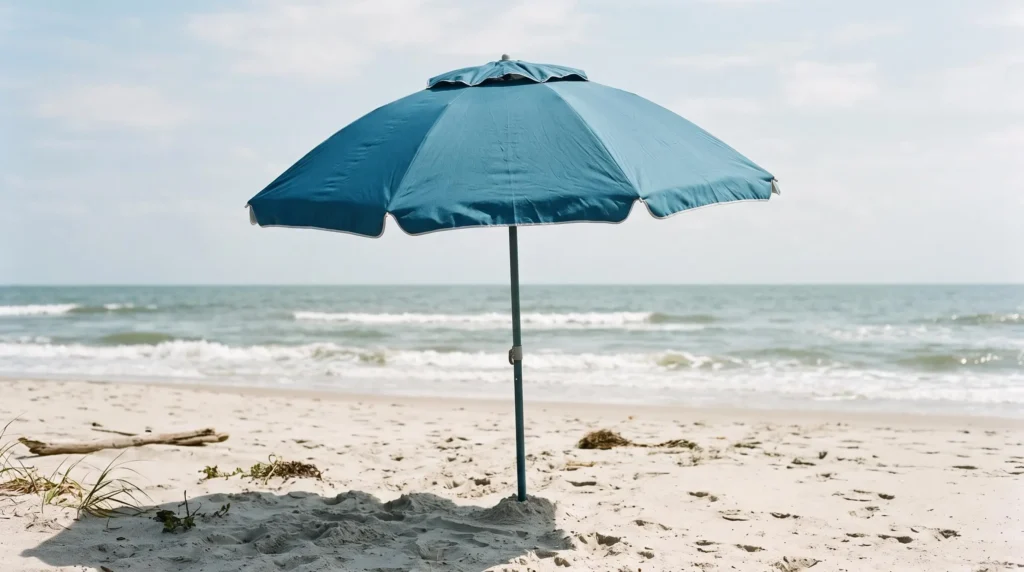
A vent at the top of the canopy lets wind pass through instead of loading the whole fabric like a sail. Fiberglass ribs flex where thin metal ribs bend and snap. An aluminum or steel pole completes a frame that survives a gust. Treat these three as the minimum.
Size matters as much as build. A 6.5 or 7 foot canopy shades two or three people without turning into a big sail. Eight feet gives more shade but catches more wind.
Consider a sunshade if your beach allows one. Wirecutter’s 2026 update says more families on Hawaii and East Coast beaches are swapping umbrellas for shelters. A pole and fabric shade such as the Shibumi works only with steady wind and the maker advises against using it above 20 miles per hour, while a stretch tent shrugs off breezes but can wobble in stronger gusts.
Trade wind islands show the problem well and our guide to the best time to travel to Aruba covers which coast stays calmer.
Pick the Sand Anchor Before the Canopy
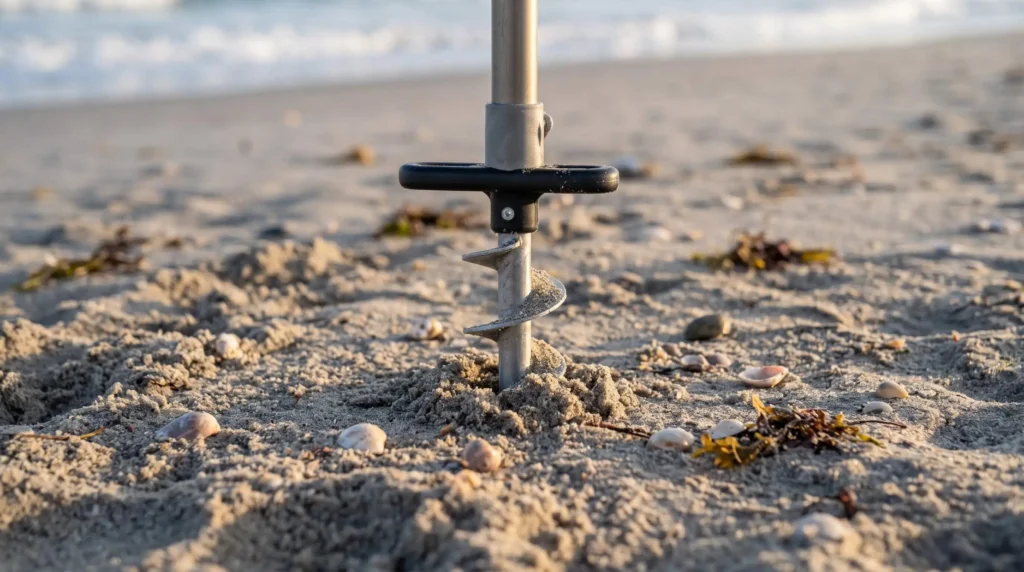
A pole pushed into loose sand is not a plan. Federal safety staff say most umbrellas on their own do not meet the current standard. Weight based anchors lost the least strength in their testing.
Corkscrew anchors bite well in firm sand. Sand filled bases and weight bags add holding power when the beach is soft. Whatever you choose it has to suit the size of your canopy.
Anchors and canopies are heavy so plan how to carry them. A wide wheeled cart like the ones in our beach fishing cart guide saves your back on the walk to the water.
Features Worth Paying For and Ones to Skip
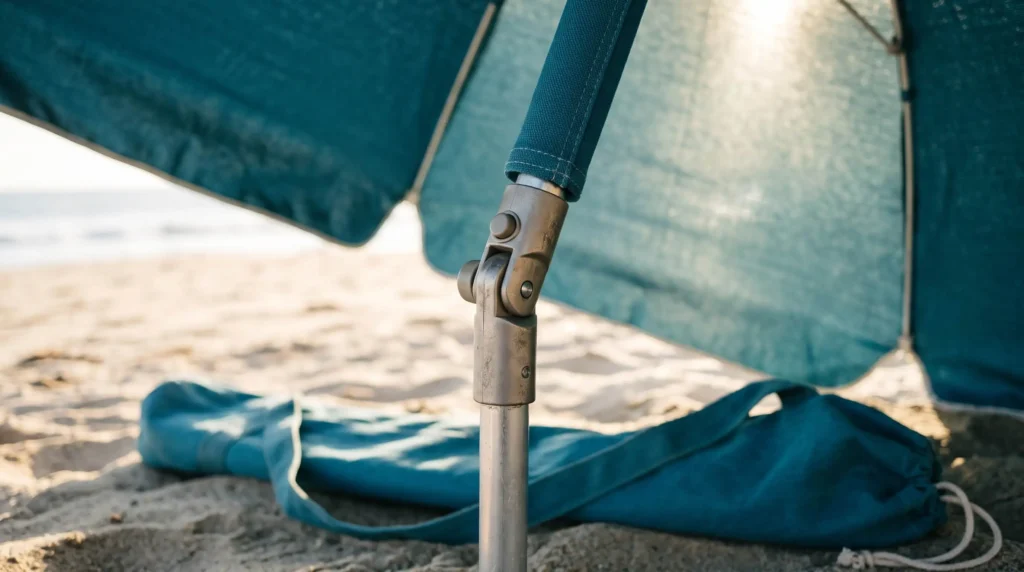
Push button tilt beats a stiff crank because you adjust it with one hand. A sleeve or carry bag keeps sand out of the mechanism. Thick polyester or Oxford fabric outlasts thin nylon.
Be wary of wind ratings. Many listings show none and the figures that do appear are not independent tests. The label on the pole tells you more than the marketing text.
Weight and price land in predictable ranges. A comfortable carry is about 6 to 9 pounds, and budget picks with anchors start near $29 to $65 while the heavy duty wind models sit around $150 to $160. Testers also noted that a fiberglass rib umbrella with a screw base held better than cheaper plastic rib models in the same wind.
Review roundups name the beachBUB All-in-One as a top wind pick, with its base listed as compliant with ASTM F3681-24 and wind tested to 44 miles per hour. Many of these roundups are affiliate driven, so check the maker’s documentation.
Set It Up Without Becoming the Hazard
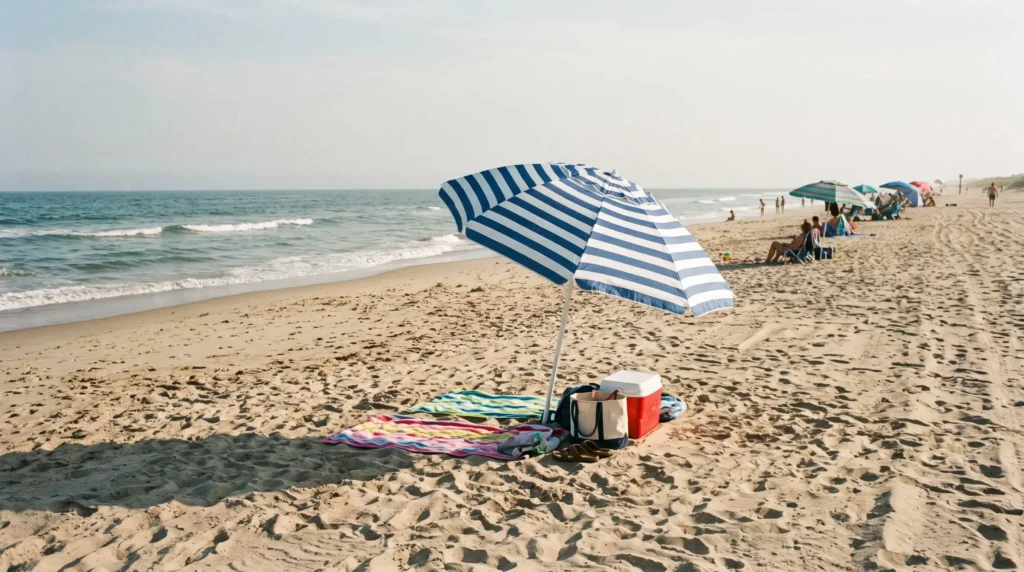
Pick a spot with open space around you because a loose umbrella travels fast. Bury the pole deep. Guides range from 16 inches to about two feet and deeper is safer. Rock it back and forth as you push and pack the sand tight around it.
Tilt the top into the wind so gusts push the pole further in. Check the angle after every shift in wind direction. Close the canopy the moment it looks unstable. The federal consumer safety agency explains the current beach umbrella standard on its site.
Label Check
Look for wording that says the product meets ASTM F3681 for wind speeds up to 30 miles per hour. Most umbrellas only qualify when paired with a compliant anchor.
Sun Protection Beyond the Canopy
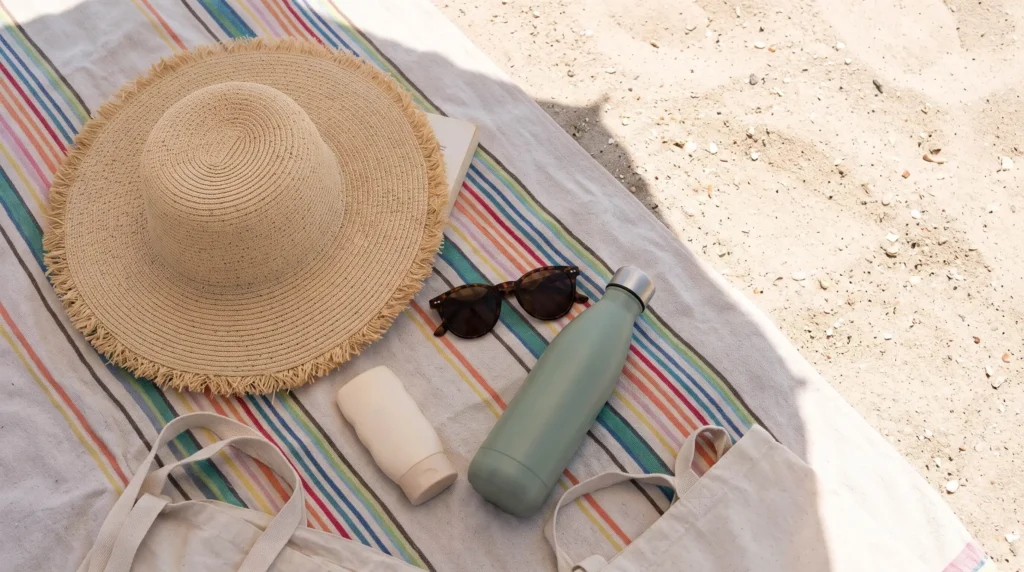
A UPF 50 rating means about one fiftieth of UV passes through, which is roughly 98 percent blocked. That sounds complete but sand and water bounce light back under the canopy. Shade lowers exposure and does not remove it.
Pair the umbrella with a wide brim hat and wraparound sunglasses plus broad spectrum sunscreen. The CDC lists these sun safety steps for days when the UV index is 3 or higher.
Rentals Travel Gear and Local Rules
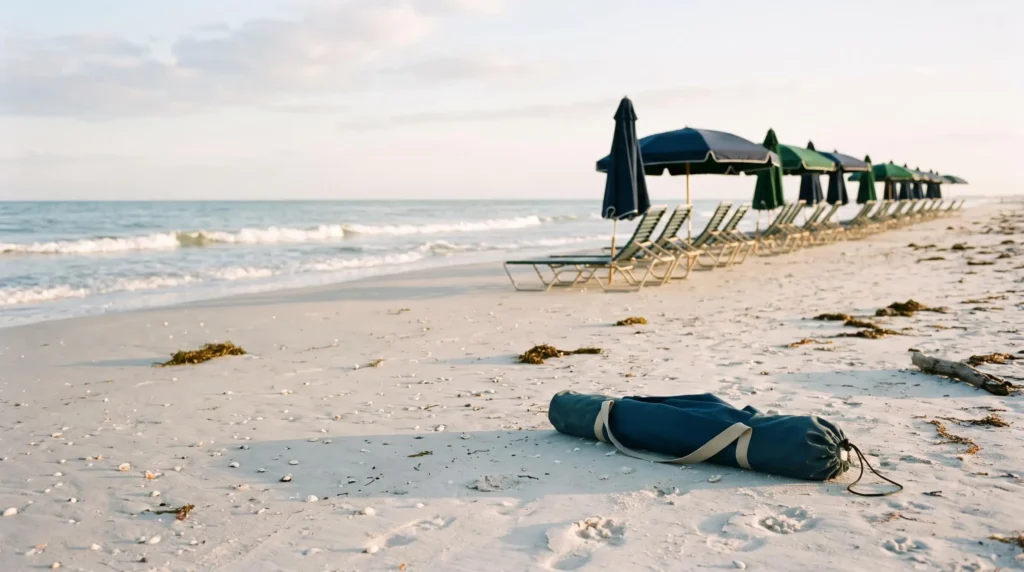
Some beaches rent umbrellas that are already anchored and that works for a short trip. Ask staff how the pole is secured. Some beaches set their own rules so check the signs too.
Many beaches allow umbrellas only with limits. A common rule is one anchor point and a canopy no wider than about 8 feet, and some beaches ban umbrellas outright on windy days. Read the posted rules before you pay a fine.
Flying with your own gear is easier with a compact collapsible model in a padded bag. A long pole is awkward to carry. Buy a heavy anchor at your destination to save weight.
Frequently Asked Questions
Choose for Wind First and Shade Second
A steady umbrella with a good anchor beats a fancy one that lifts off. Match the size to your group and check the label before you buy.
Your next trip is probably hiding in Things to Do for beach gear and shore planning.


