
Best Time to Travel to Aruba Month by Month for Weather, Crowds and Prices
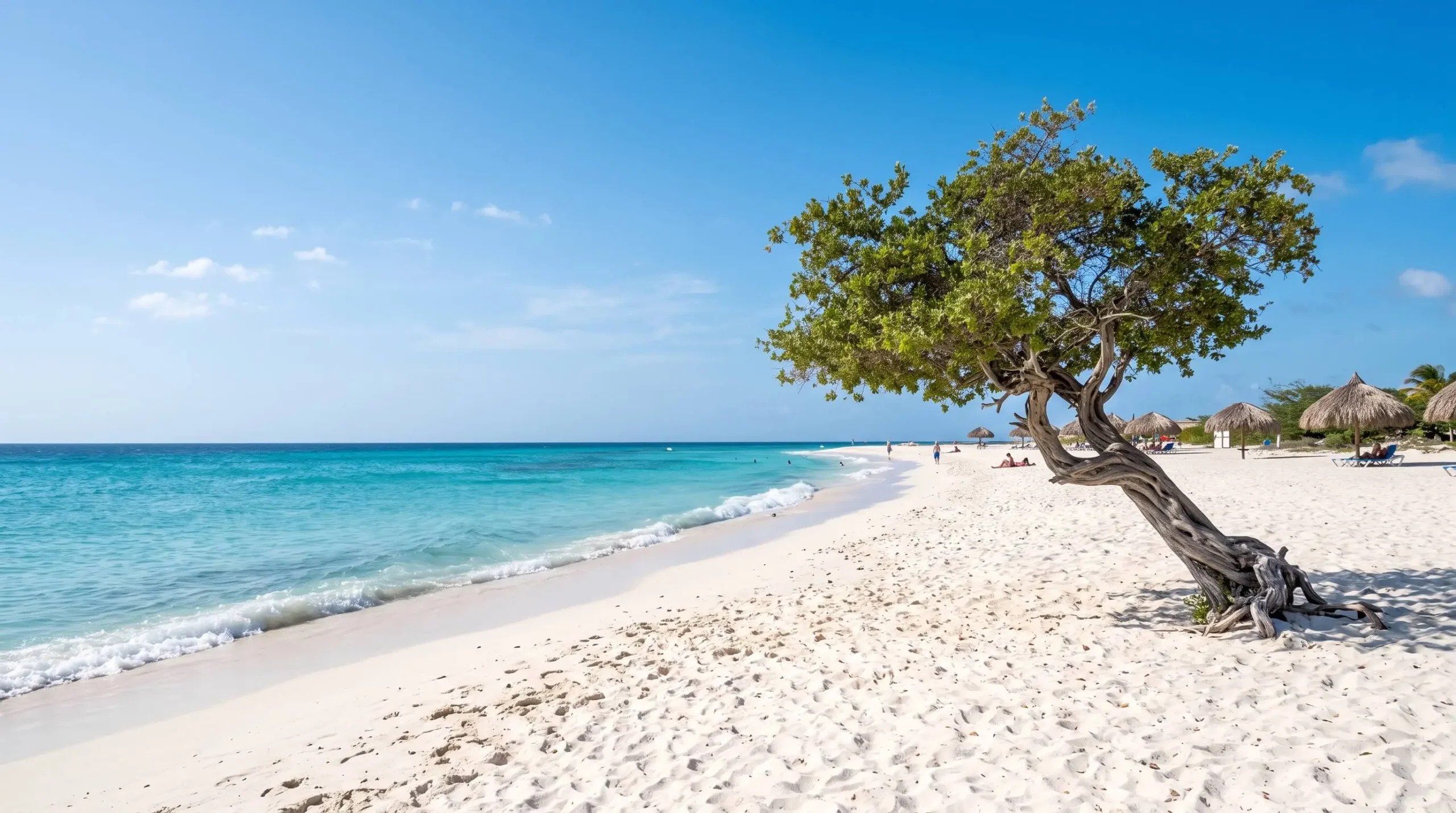
Does October ruin an Aruba trip? Is hurricane season a real threat? Does peak winter pricing buy better weather?
The answers are kinder than most people expect. Aruba sits just south of the main Caribbean hurricane belt, the temperature barely leaves the low 80s Fahrenheit and the island gets only about 16 inches of rain a year.
I broke the best time to travel to Aruba into four windows with value and weather for each, plus Carnival timing. Travel insurance is worth a look for the October to December stretch.
The Best Time to Travel to Aruba Depends on Three Things
| Window | Months | What to expect |
|---|---|---|
| Peak comfort | January to March | Slightly cooler air, low rainfall and moderate winds with the highest prices |
| Best value | April to June | Dry and comfortable weather with fewer crowds and lower rates |
| Hot and breezy | July to September | The warmest stretch with steady trade winds and a hurricane season that rarely reaches the island |
| Showery | October to December | The most rain in short bursts with thin crowds and softer prices |
Weather barely separates the windows, so your choice comes down to crowds and cost. Read the season that matches your priorities below.
January to March Brings Peak Comfort at Peak Prices
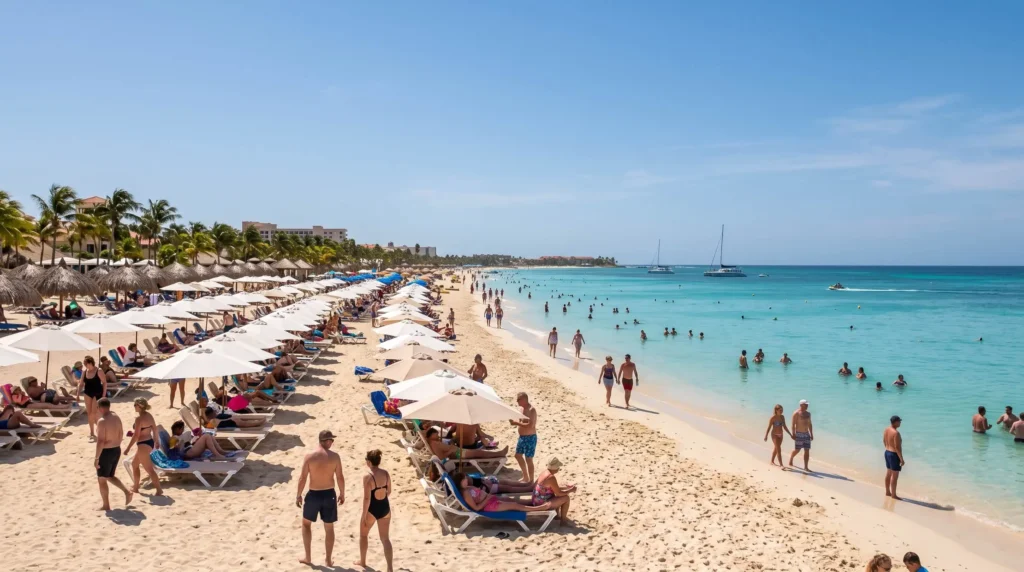
This stretch brings the most comfortable weather of the year. Temperatures run slightly lower, rainfall is low and the winds are moderate. It is also peak season, which runs from about December 15 to April 30, so expect the highest hotel rates and the busiest beaches.
Book flights and rooms early if you want a beachfront stay. Midday sun is still strong, so plan beach time for mornings and late afternoons.
April to June Is the Sweet Spot for Value Hunters

April through June suits travelers who want dry comfortable weather without the winter crowds. Hotel and flight prices usually drop and the trade winds keep snorkeling and diving pleasant. Many repeat visitors quietly prefer this window.
Temperatures climb as May arrives because May through September is the hottest stretch. Soul Beach Music Festival takes place in May, so rooms near the action can tighten that week.
July to September Means Hot Days and a Hurricane Season That Rarely Arrives
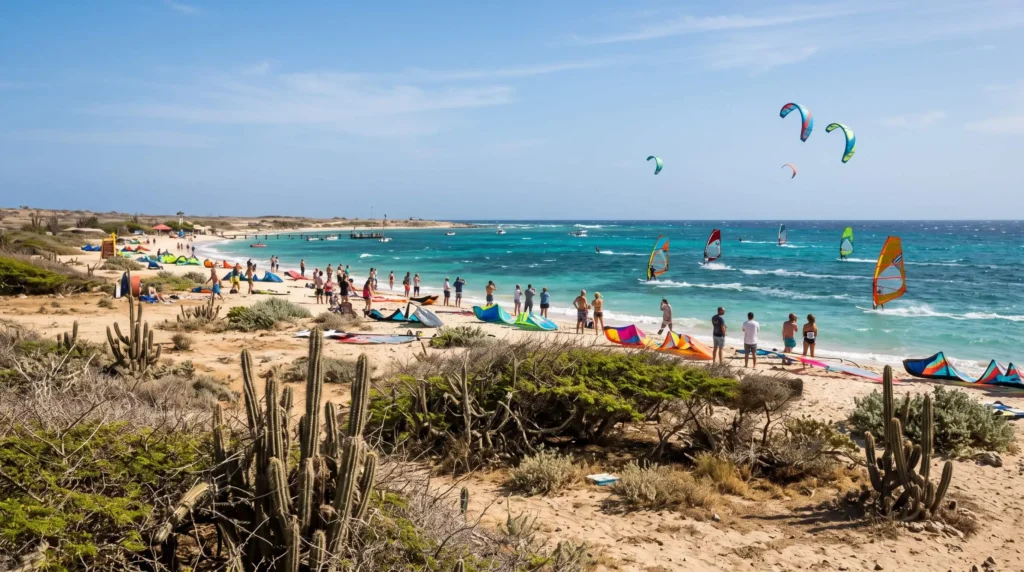
The summer months are hot but breezy. The trade winds make the heat easier to handle and the sea stays warm all day. Aruba Hi-Winds brings windsurfers and kiteboarders to Hadicurari Beach and Boca Grandi in July.
These months fall inside hurricane season. The National Hurricane Center notes that the Atlantic season runs from June 1 to November 30 with a peak around September 10. Aruba sits south of the main belt, so the usual risk is a passing shower and not a storm.
October to December Pits Rain Fears Against Reality
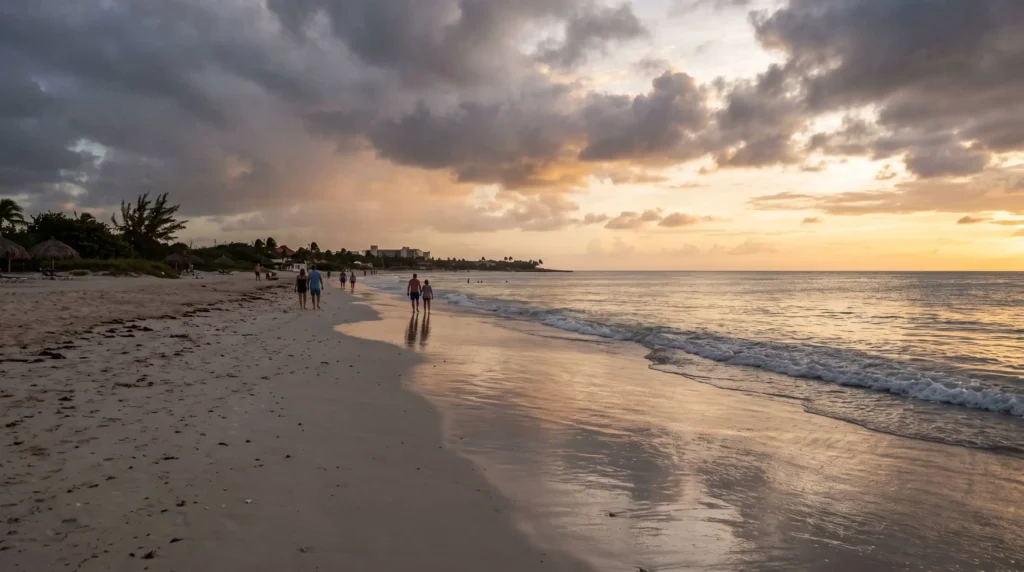
This is where the rain worries peak. Rain is most likely between October and January but showers are usually brief and sunshine tends to return quickly. Many visitors find the rain falls overnight or early in the morning and leaves warm breezy days behind. A Mexican Caribbean port is described in our guide to Costa Maya.
One guide puts October and November rainfall at 70 to 88 millimeters across 14 to 19 rain days, while April and May are the driest.
Crowds thin out and rates soften, so flexible planners find good deals. One guide says hotel rates can run 30 to 50 percent lower in September through November than from December through April. Pack a light jacket and keep one afternoon open for a shower.
Safety news is reassuring for fall planners. The State Department reissued Aruba’s advisory on August 20, 2026 at Level 1, which means normal precautions. Aruba sits close to Venezuela, and early January 2026 saw hundreds of Caribbean flights canceled during an American military operation there, so keep spare days and flexible tickets if you travel at a busy holiday time.
Insurance for Fall Trips
Travel insurance gives peace of mind if you book between October and December. Check that the policy covers weather related delays before you pay.
Carnival and Festivals That Change the Price of a Week

Carnival runs through January and February with parades in Oranjestad. It ends with the Grand Parade on the Sunday before Ash Wednesday. The date moves each year, so check it before you book flights. Another Caribbean island with a cruise port is covered in our guide to St Thomas.
The 2026 Grand Parade was held on February 15, and the 2027 dates had not been announced when this was written.
Soul Beach Music Festival in May and Aruba Hi-Winds in July also pull visitors in. Rooms near those events cost more, but the rest of the island stays calm.
Trade Winds Decide Which Beach You Pick

Aruba is known for steady trade winds from the northeast and southeast that peak around midday. They keep the island cool but can whip sand on open stretches. The leeward west coast with Eagle Beach and Palm Beach is generally calmer than the rugged Atlantic side. Aruba lies south of the usual hurricane tracks and the National Hurricane Center follows any storm that does form nearby.
Windsurfers and kiteboarders should chase the breeze at Hadicurari and Boca Grandi. Everyone else can lean on morning swims and afternoon shade.
Match the Month to Your Trip Style
Couples who want calm evenings and dependable weather do well in January and March. Families on school breaks find the best weather at peak prices, so April and May can stretch a budget. Snorkelers and divers should aim for April to June when the trade winds are refreshing.
Budget travelers should look at the fall shoulder with insurance in hand. Anyone sensitive to heat should lean toward December through March.
Book a buffer day at both ends of a holiday trip, since the same news cycle showed that one regional event can strand travelers for days. Read the airline rebooking rules before you pay for the cheapest fare.
Frequently Asked Questions
Choose Your Window and Book With Confidence
Aruba rewards almost any month once you know what to expect. Pick the season that fits your budget and tolerance for crowds then lock in flights early.
Head to North America or Things to Do for the next idea.


