
Things to Do in Eureka Springs Among Springs, Stairways and Ozark Views
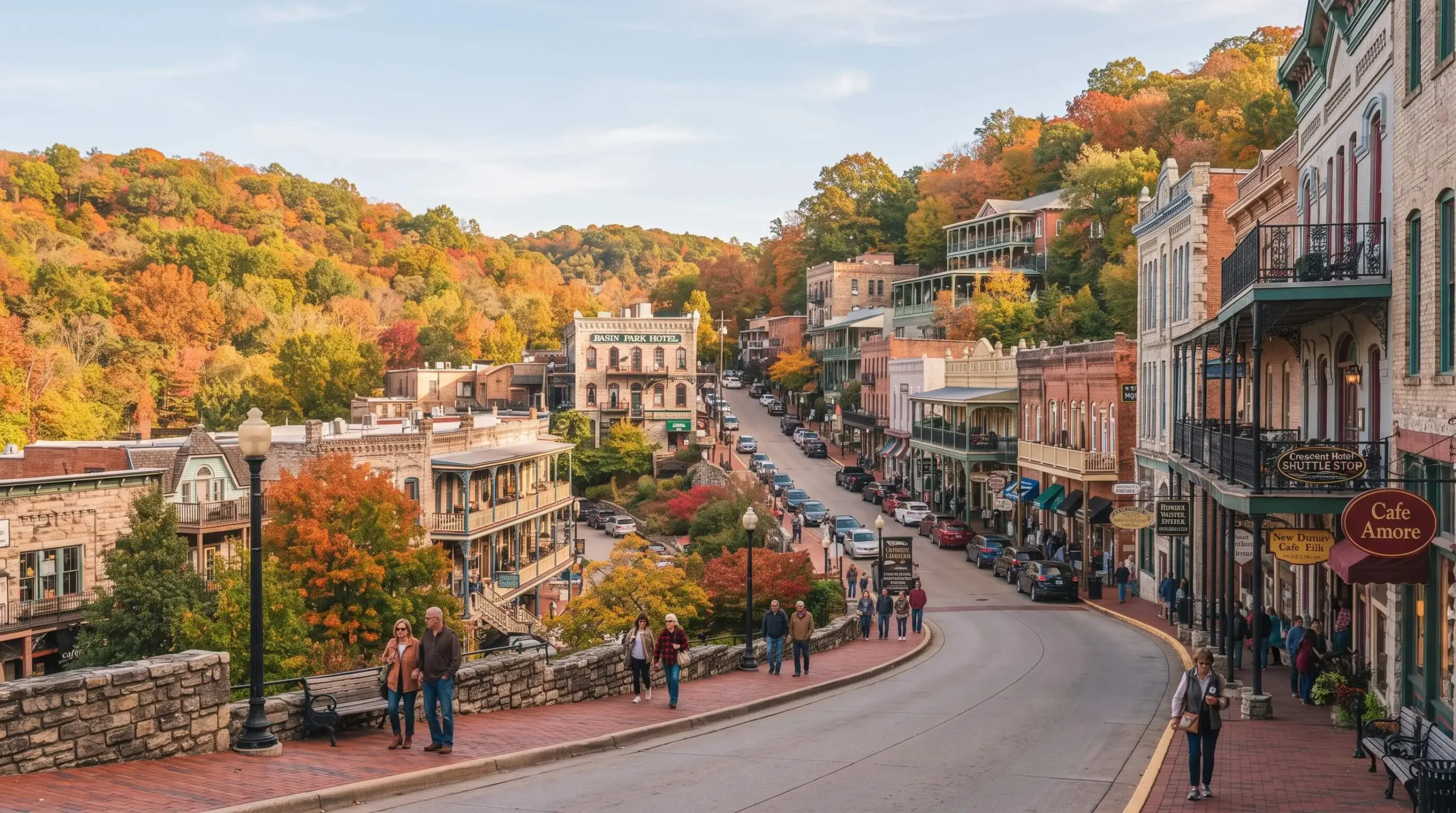
How do you plan a town that is one big attraction? Eureka Springs puzzles first timers for exactly that reason.
Two days is the short answer, with good shoes, because the streets climb and many shortcuts are stairs. The town sits in the Ozarks with Victorian buildings and more than 60 natural springs inside the city.
Use these things to do in Eureka Springs as a one, two or three day plan. Thorncrown Chapel, the Crescent Hotel and the wildlife refuge anchor the list.
Things to Do in Eureka Springs for One, Two or Three Days
| Time | Plan | Why it works |
|---|---|---|
| One day | Downtown, Basin Spring Park and Thorncrown Chapel | The classic highlights with the trolley doing the hills |
| Two days | Add the Crescent Hotel and Christ of the Ozarks | Landmarks and a quiet evening in town |
| Three days | Add the wildlife refuge and a spring hike | A slower pace with room for the Ozark scenery |
Choose the row that matches your time and add stops in the order shown. The sections below follow the same order.
Historic Downtown and Basin Spring Park
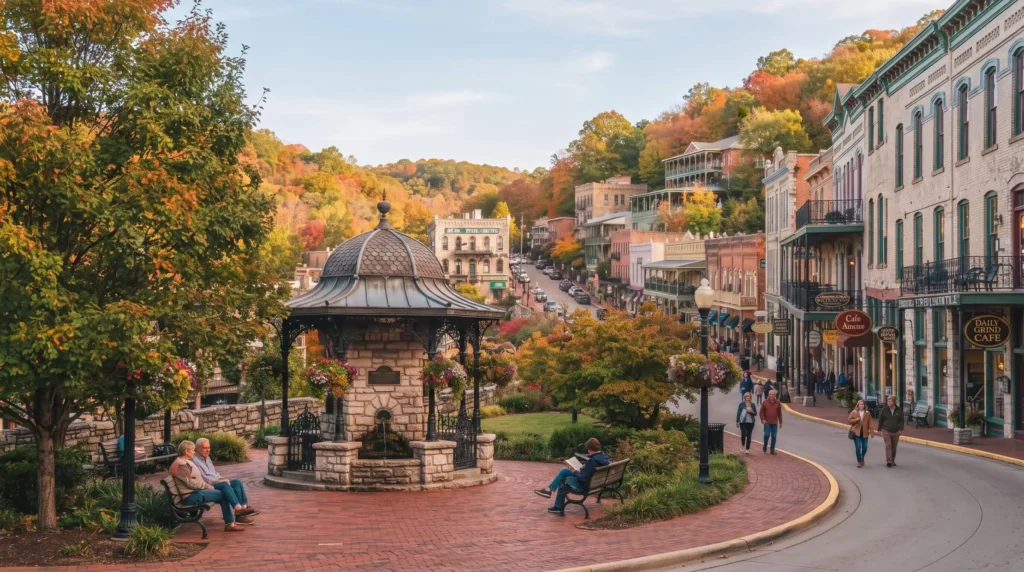
Basin Spring Park is the centerpiece of the historic downtown and the story of the town starts here. The city was founded in 1879 and grew fast around its springs. Today the streets around the park hold Victorian buildings, small museums, galleries and boutiques.
The official city site notes that the whole city of about two square miles became the first historic district in Arkansas on the National Register in 1970. The Historic District Commission explains how that status protects the look of the town. Walk slowly and look up because the architecture is the attraction.
The Eureka Springs Historical Museum sells a $5 day pass for a self-guided tour of the 1889 Calif House, according to a visitor guide.
Thorncrown Chapel in Wood, Glass and Trees
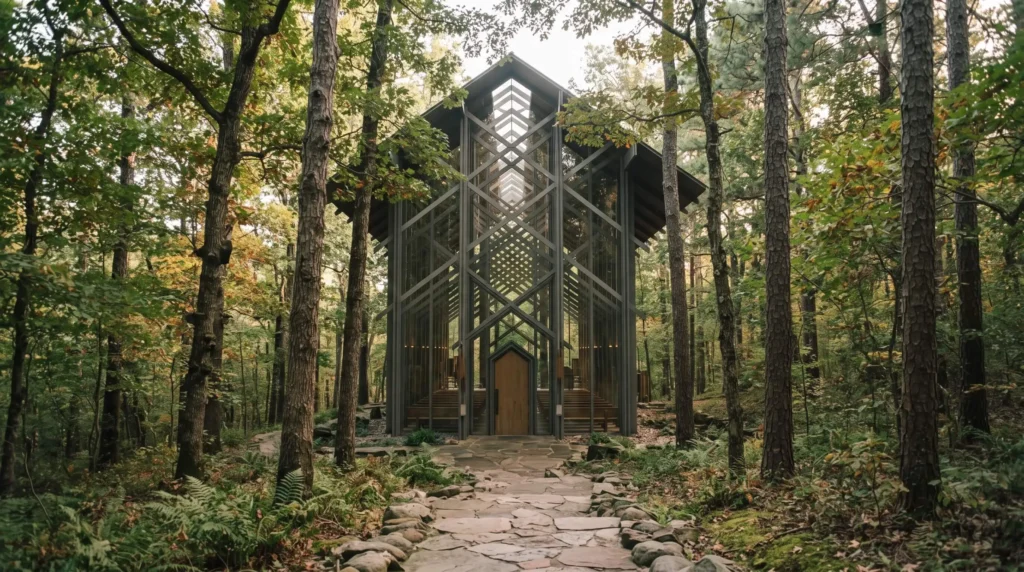
Thorncrown Chapel sits on a wooded hilltop and was designed by E. Fay Jones. It opened in 1980 and rises about 48 feet. The structure is built almost entirely of wood and glass so the forest becomes the wall.
Visit when the light is soft because the glass changes with the time of day. Keep voices low since it is a working chapel.
The Crescent Hotel and the Town’s Ghost Stories
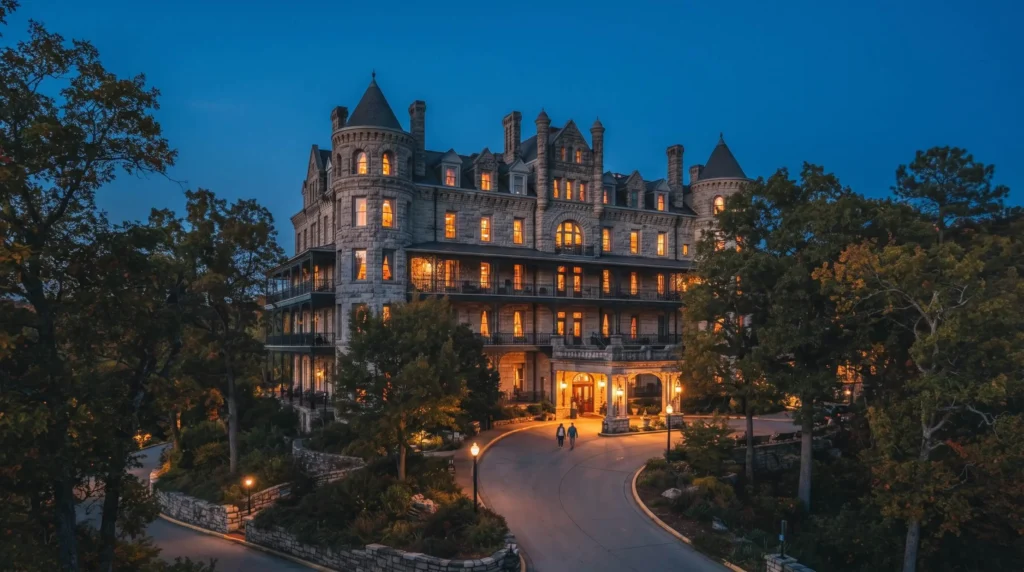
The Crescent Hotel opened in 1886 and still stands on a hill above downtown. It is known for ghost stories and offers ghost tours for visitors who like a little spookiness. Even skeptics enjoy the building and the view from the grounds.
Tours often sell out on weekends, so book ahead. Dress for stairs and uneven floors.
Wear Real Shoes
Streets are steep and many shortcuts are stairs. Comfortable walking shoes matter more here than almost anywhere.
Christ of the Ozarks on the Hillside
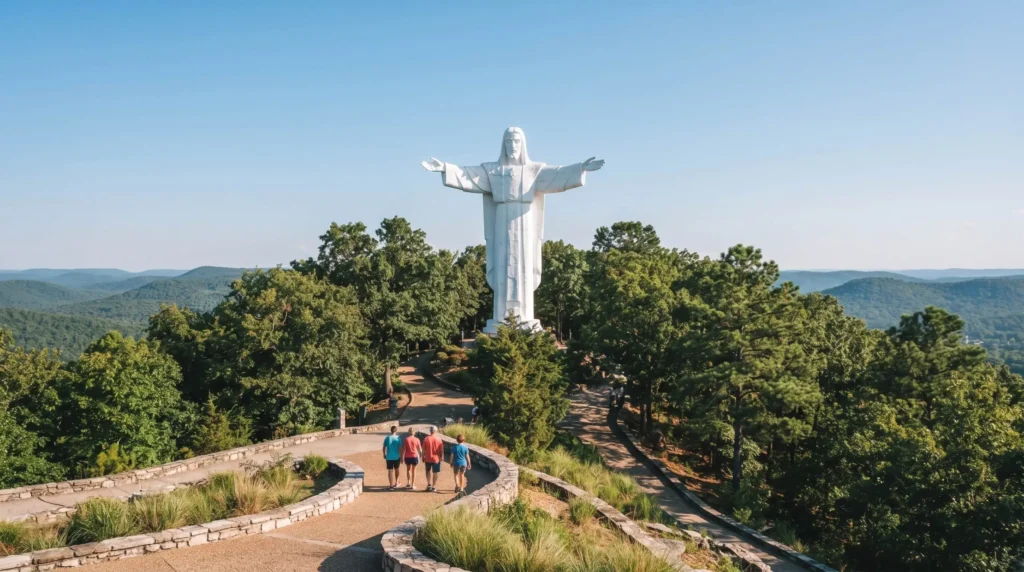
The Christ of the Ozarks statue rises roughly 65 feet on the side of Magnetic Mountain. It is one of the largest statues of its kind in the country and you can see it from several points around town. Most visitors stop for photos and a short look around the grounds.
Plan this stop for a clear afternoon. It pairs well with the evening return to downtown.
Turpentine Creek Wildlife Refuge
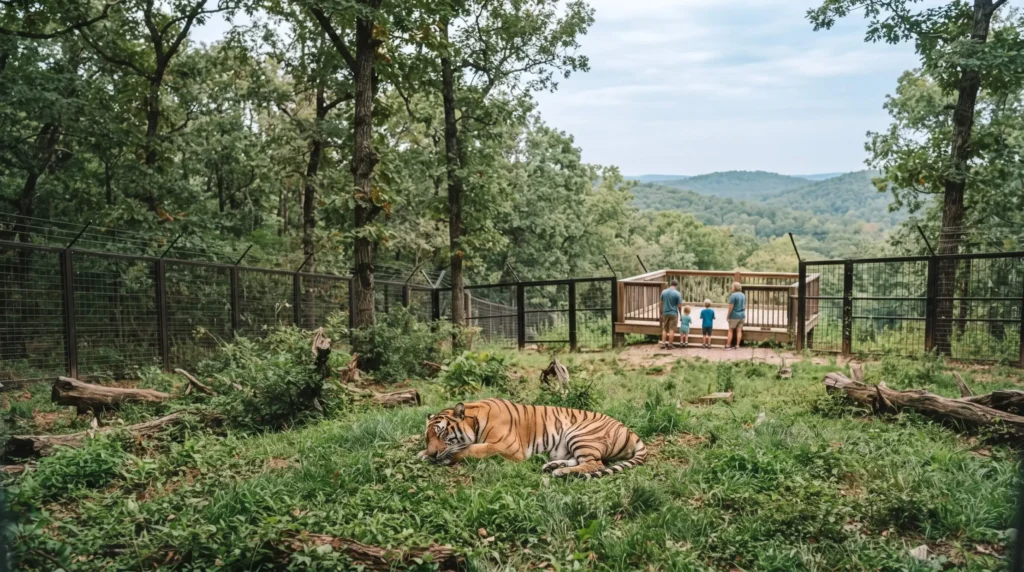
Turpentine Creek rescues big cats and other animals and opens to visitors on guided tours. It sits outside the historic core, so allow a half day with the drive. Check tour times and any age rules before you go. Another mountain region is covered in the Great Smoky Mountains guide.
The refuge covers 459 acres, and its tours are livelier in cooler weather when the animals are more active.
The visit gives a quieter counterpoint to the shops downtown. Bring water and a hat because much of the route is outdoors.
Costs add up, so plan the paid stops. Search listings show about $32 for Turpentine Creek, $59 for the Ozark Mountain Ziplines, $21 for the heritage railway, $19 for a tram tour and roughly $16 for Onyx Cave. Quigley’s Castle is listed near $10, and the Historical Museum day pass is $5.
The Trolley, Parking and Staying Close
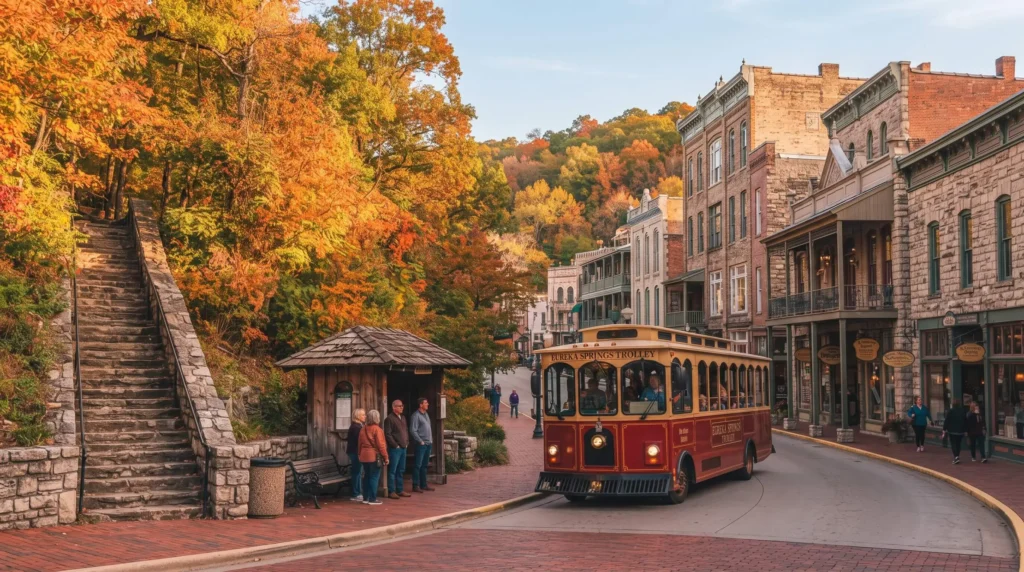
Parking is limited in the historic core and the hills make driving between stops slow. The city trolley links the main areas and lets you ride from stop to stop without moving your car. Routes and hours change by season with fewer routes in winter, so check the current schedule. A Texas town with historic charm is covered in our guide to Waco, Texas.
Some visitors stay a few miles outside town to avoid the crowds, while others book a room within walking distance of downtown. Walkers can reach most shops and springs without a car.
Springs, Stairways and Hidden Corners
The springs give the town its name and many sit in small parks tucked along the streets. Stairways connect upper and lower levels and make short cuts between shops and cafes. Follow one and you often find a view or a quiet bench.
Take a slow loop in the morning before the crowds arrive. Bring a refillable bottle and drink at a safe fountain if one is marked.
Lake Leatherwood Park offers hiking, picnicking, fishing and paddleboats, and it is a good foliage stop in October.
A recent travel feature suggests exploring the two mile downtown core on foot, including the rainbow staircase and the Flatiron Building. Local events run all year too, from the Zombie Crawl parade in late October to a New Year’s Eve party.
When to Visit and What to Expect
Spring and fall are the most comfortable seasons and mid-October often brings strong color. Summer is warm and busy while winter is quiet with reduced trolley service. Weekends in peak season fill up fast, so book rooms and tours early.
Weekday mornings are calm in every season. Pack layers because evenings cool quickly in the hills.
Couples, Families and Evenings
Couples can fill a weekend with dinners, a chapel visit and a ghost tour. Families can mix the wildlife refuge with short walks and ice cream stops. Teens usually enjoy the stairways, the statue and the ghost stories. The stairways and Victorian streets sit in a protected historic district managed through the Historic District Commission.
Evenings are for slow dinners and lit streets. The pace stays relaxed even on busy nights.
Frequently Asked Questions
Slow Down and Let the Town Set the Pace
Eureka Springs works best when you pick a few landmarks and leave the rest to wandering. Ride the trolley, wear good shoes and book the tours you care about.
Pick your next destination from North America and Things to Do.


