
Things to Do in Rio de Janeiro, Brazil

Cidade Maravilhosa is not a modest nickname, and Rio de Janeiro keeps earning it. Granite peaks drop straight into the Atlantic and a city of about 6.7 million wraps around them.
Visitors often squeeze Christ the Redeemer, Sugarloaf and the beaches into one day and end up tired. Rio rewards a slower order, with the mountain views early and the sand in the afternoon.
Here are the best things to do in Rio de Janeiro in an order that works on the ground, from Corcovado to the Selarón Steps in Lapa. UNESCO listed the city’s landscapes in 2012, so the views are part of the point.
Exploring more of the continent? Browse our South America guides for more ideas.
Quick Orientation
| Category | Details |
|---|---|
| Location | Southeast Brazil, on the Atlantic coast |
| Known as | Cidade Maravilhosa, the Marvelous City |
| Population | About 6.7 million in the city proper |
| UNESCO status | Listed in 2012 as Rio de Janeiro: Carioca Landscapes Between the Mountain and the Sea |
| Best for | Beaches, mountain views, history and Carnival season |
See Christ the Redeemer on Corcovado

The statue stands 30 meters tall on top of the 700-meter Corcovado mountain, with a pedestal that adds another 8 meters. Its arms stretch 28 meters wide over the city below.
Built between 1922 and 1931, it was dedicated in October 1931 and voted one of the New Seven Wonders of the World in 2007. Most visitors reach the top by the Corcovado train, a van or on foot, so check the current options before you go. Buy tickets on the official site because guides say slots sell out two to five days ahead in busy months. Listings range from about R$87 to R$195 depending on transport and package, so confirm the current price.
Arrive before 9 AM for clearer skies and thinner crowds, and check the webcam first because clouds can hide the statue. One guide warns that muggings happen on the walking trail up the mountain, so most visitors take the train or a van instead.
Fun Fact
Christ the Redeemer is considered the largest Art Deco sculpture in the world.
Rio is having a record year for foreign visitors, according to the Washington Post, so book Corcovado and Sugarloaf slots early. Americans also need an e-visa to enter Brazil, so apply online well before your flight and confirm the current rule on the official government site.
Ride the Cable Car up Sugarloaf Mountain

Sugarloaf rises 396 meters straight out of the harbor. Getting to the top takes two cable cars, the first to Morro da Urca and the second on to the summit.
The glass-walled cars hold 65 people and run about every 20 minutes. The ride takes roughly three minutes each way and opens up a 360-degree view of the city and bay. Many guides suggest riding up near sunset.
Fun Fact
The Sugarloaf cableway opened in 1912 and was the first of its kind in Brazil.
Relax on Copacabana and Ipanema Beaches

Copacabana stretches about 4 kilometers along the Atlantic, its black and white wave-pattern promenade designed by Roberto Burle Marx. On New Year’s Eve, an estimated 2 million people gather here for fireworks.
Next door, Ipanema is famous the world over thanks to the bossa nova song The Girl from Ipanema. The beach sits between the Dois Irmãos mountains and the neighborhood of Leblon. Locals fill it daily for football, volleyball and footvolley.
Climb the Selarón Steps in Lapa
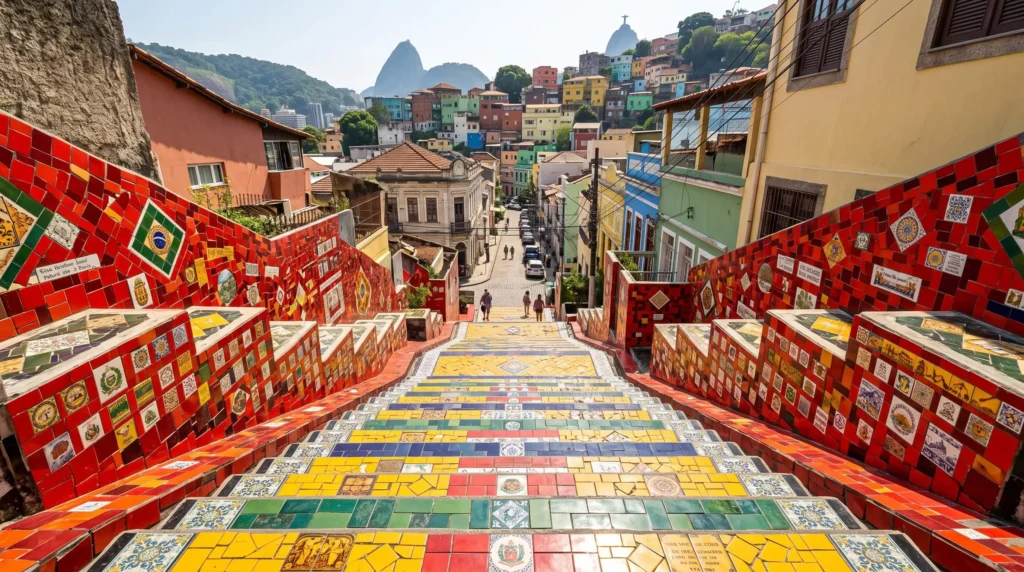
Chilean artist Jorge Selarón began covering these steps in colorful tiles in 1990, right outside his own house. Over more than 20 years he added more than 2,000 tiles from over 60 countries, most of them gifts from visitors.
The 215-step staircase is now a cultural landmark of Rio. Selarón passed away in 2013. The steps remain one of the city’s most photographed spots.
Good to Know
The Lapa district around the steps is known for nightlife, with samba clubs and bars filling the streets under the old Arcos da Lapa aqueduct after dark.
Ride the Tram Through Santa Teresa
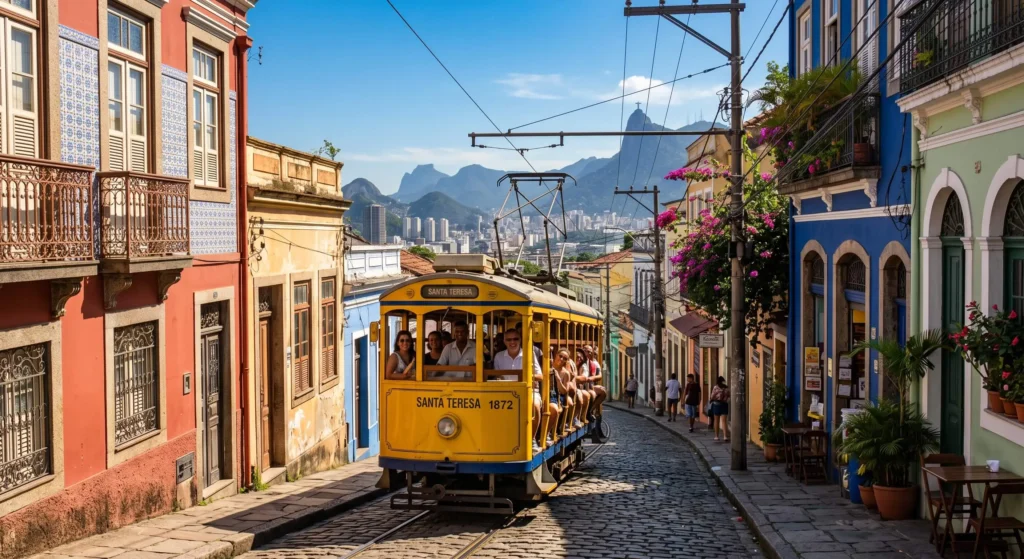
Santa Teresa sits on a hillside above downtown, its narrow streets lined with colonial houses, galleries and studios. It has been called Rio’s Montmartre for its bohemian, artistic feel.
The neighborhood’s yellow tram, known as the bonde, has run since 1872 and switched to electric power in 1896. After years of repair work it now runs the full historic route again, crossing the old Carioca Aqueduct on the way.
Explore Tijuca National Park
Take helicopter tours seriously. In August 2026 a tourist helicopter crashed on the forested slope of Tijuca National Park and four people died, including three Colombian visitors. Choose a licensed operator with a clear safety record, and check weather before you fly.

Tijuca is one of the largest urban forests in the world, spread across nearly 4,000 hectares of mountains above the city. It was replanted with more than 100,000 trees in the 1800s after the original forest was cleared for coffee farming.
The park holds about 30 waterfalls and peaks including Pedra da Gávea and Pico da Tijuca. It became a national park in 1961 and joined Rio’s UNESCO World Heritage listing in 2012.
Good to Know
The park is managed by Brazil’s federal park agency, ICMBio. Check the official ICMBio page for current trail conditions before you hike.
Visit the Museum of Tomorrow

Spanish architect Santiago Calatrava designed this striking science museum on Pier Maua, right on the waterfront. It opened in December 2015 as part of the port area renewal ahead of the 2016 Olympics.
Inside, the main exhibition walks you through five themes: Cosmos, Earth, Anthropocene, Tomorrow and Us. It is one of the more thoughtful stops in the city for anyone curious about sustainability and the future.
Catch a Match at Maracanã Stadium

Maracanã opened in 1950 for that year’s World Cup. The final match between Brazil and Uruguay drew an estimated 210,000 fans. Renovations since then have brought capacity down to a still massive 73,139 seats. Many travelers continue south to Uruguay, so check our Uruguay guide before booking flights.
The stadium hosted the 2014 World Cup final and the opening and closing ceremonies of the 2016 Olympics. A match day here, with the crowd in full voice, is unlike anything else in the city.
Wander the Botanical Garden
Listing prices help with a budget. Christ the Redeemer is about $17, the Museum of Tomorrow about $8, the Botanical Garden about $16, AquaRio about $33 and Copacabana Fort about $2. The Selarón Steps, Parque Lage and the cathedral are free.
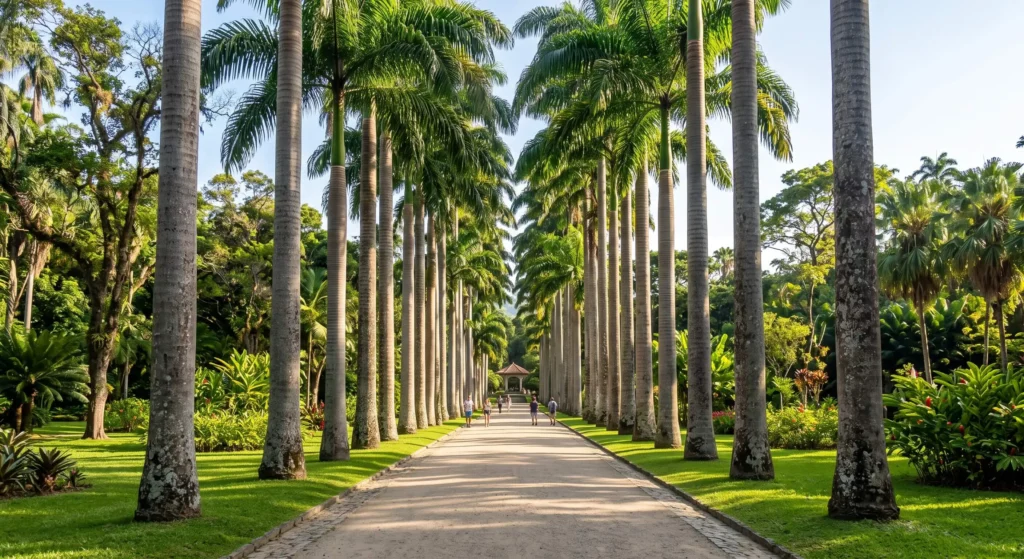
Rio’s Jardim Botânico was founded in 1808 by King John VI of Portugal. It began as a place to grow spices like nutmeg and pepper before opening to the public in 1822.
Today the cultivated grounds cover 54 hectares with around 6,500 plant species. UNESCO named the garden a biosphere reserve in 1992. Paths wind under royal palms planted more than two centuries ago. Tijuca National Park borders the garden and its trail hours are listed on the official ICMBio page.
Unwind in Flamengo Park

Flamengo Park runs along the bay between downtown and the beach neighborhoods, with wide lawns, bike paths and views of Sugarloaf across the water. It is one of the easiest places in Rio to slow down for an hour.
On Sundays the lanes beside Flamengo Park close to cars, and the large Feira da Glória market runs nearby with more than 150 vendors and samba. Humpback whales are also returning to Rio’s waters, a sign of recovery that the Guardian says tourism could help or hurt.
Locals come here to run, cycle and picnic. The park connects easily to the Museum of Tomorrow and the old city center on foot or by bike.
Catching Carnival Season
Rio Carnival begins the Friday before Lent and runs through Ash Wednesday, which puts it in February or early March depending on the year. Two million people fill the streets each day. The Sambadrome, designed by architect Oscar Niemeyer, seats 72,500 spectators for the main parades.
The first Rio Carnival dates back to 1723. If you want to see it, book accommodation early, since the whole city fills up.
Who This City Suits Best
Rio With Little Ones
Families do well at Sugarloaf, the beaches and the hands-on exhibits at the Museum of Tomorrow. Flamengo Park has open lawns where kids can run freely after a morning of sightseeing.
Rio for Two
A cable car ride at sunset, a walk along Ipanema and dinner in Santa Teresa make for a romantic day. Copacabana’s beachfront at golden hour is hard to beat.
Rio in a Crew
Groups can build a day around Lapa’s nightlife, a stadium visit at Maracanã and beach time on Copacabana. Split the group between an easy morning and an active afternoon, since the heat builds fast.
Rio on a Shoestring
Rio’s beaches cost nothing to enjoy. Flamengo Park and the Botanical Garden are both low-cost or free ways to spend an afternoon. Walking through Santa Teresa and Lapa during the day costs nothing but your time.
Rio Through the Year
| Season | What to Expect |
|---|---|
| December to February | Summer, hot and busy, New Year’s Eve crowds on Copacabana |
| February or March | Carnival season, the city’s biggest celebration |
| April to June | Cooler and quieter, good for hiking Tijuca |
| July to September | Mild and dry, a comfortable time to sightsee |
Two Days, Mountains to Sea
Day One Across Peaks and Coastline
Start early at Christ the Redeemer to beat the crowds, then head to Sugarloaf Mountain in the afternoon. Finish with sunset on Copacabana or Ipanema beach.
Day Two for Steps and Stories
Spend the morning climbing the Selarón Steps and wandering Lapa and Santa Teresa. In the afternoon, visit the Museum of Tomorrow or the Botanical Garden, then relax in Flamengo Park before dinner.
Frequently Asked Questions
Rio Is Waiting
Rio rewards travelers who mix the icons with a little wandering. See Christ the Redeemer and Sugarloaf, then leave room for a slow afternoon in Santa Teresa or Flamengo Park.
Pick your next destination from South America or Things to Do.


