
Best Time to Visit Death Valley National Park
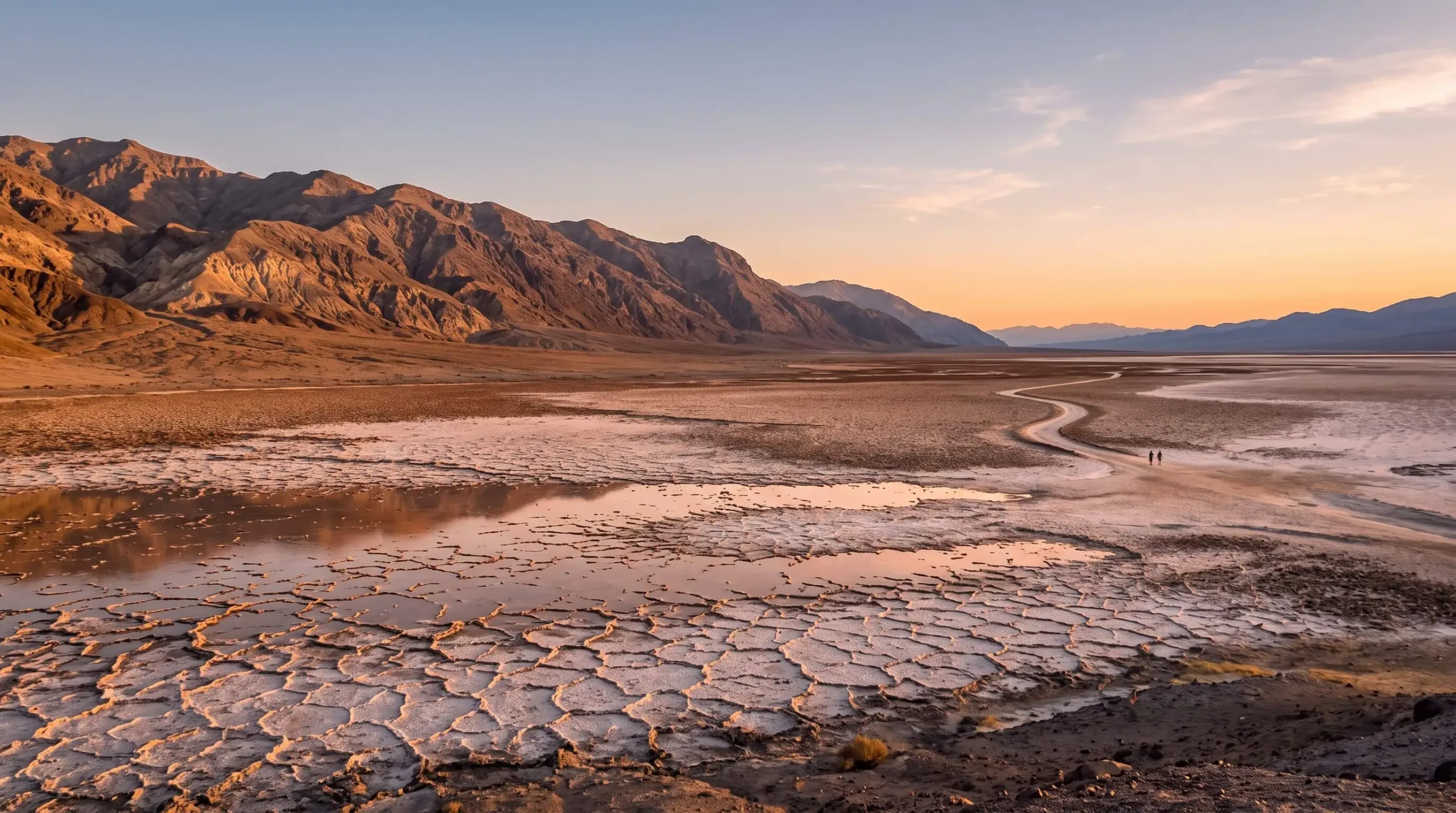
Death Valley holds the record for the hottest air temperature ever reliably measured on Earth, 134 degrees Fahrenheit, set on July 10, 1913. That single number scares off more visitors than it should.
Most of the year, Death Valley looks nothing like that day. Winter highs sit in the 60s, spring brings wildflowers when the rain cooperates and the desert floor holds the lowest point in North America.
So when is the right moment? The answer to the best time to visit Death Valley changes with what you want, from comfortable winter hikes to a rare superbloom. The season table below shows each window.
Picking Your Window
| Season | Months | What to Expect |
|---|---|---|
| Winter | December to February | Coolest temperatures, the best hiking window |
| Spring | March to April | Peak season, possible wildflower blooms |
| Fall | October to November | Cooling down, thinner crowds |
| Summer | May to September | Extreme heat, fewest visitors |
Winter Is When Death Valley Actually Feels Comfortable

Winter is by far the most comfortable season here. Average highs in January sit in the mid-60s, with lows in the low 40s at night.
November through March is also the only stretch when hiking the canyons and salt flats on foot is genuinely safe. Pack a layer for the evening, since desert nights cool off fast.
Spring Draws the Biggest Crowds for a Reason

March is the single most popular month at Death Valley, with highs near 74 degrees and lows around 48. Golden Canyon, Natural Bridge and the Badwater salt flats are all comfortable to hike at that temperature.
Wildflowers show up in good years, though never on a fixed schedule. A bloom needs well-spaced rain through fall and winter, enough warmth and no drying wind to strip the flowers early.
Fun Fact
Death Valley’s 2026 superbloom, its first since 2016, followed more than a year’s worth of rain between November 2025 and January 2026. One guide says low elevation blooms peaked in March while higher ground bloomed into early summer.
Summer Turns the Valley Into a Furnace

Afternoon temperatures routinely climb past 120 degrees Fahrenheit from June through August. The World Meteorological Organization certified the park’s 134-degree reading from July 10, 1913, as the hottest air temperature ever reliably recorded on Earth. The West Coast pairs well with a stop in San Francisco, covered in our San Francisco guide.
Fewer crowds in summer are not an invitation, they are a warning. Stick to short visits at Furnace Creek’s air-conditioned stops rather than hiking in the afternoon heat. One guide notes that heat-related deaths happen in some summers.
The danger is not a theory this year. In August 2026 a 68 year old tourist died after his car got stuck in mud on a remote road in 116 degree heat. Stay on paved roads in summer, carry extra water and tell someone your route, because cell service is poor.
Fall Is the Quiet Middle Ground

Temperatures start dropping in October, enough to make short walks comfortable again by late morning. Crowds stay thinner than spring. Hotel rates often follow. A longer loop through several landscapes works well as a national park road trip.
By November, the park is back in its safe hiking window, the same stretch that runs through winter and into early spring.
Entry is free for everyone on the National Park Service fee free days left in 2026, October 27 and November 11. Strong winds are common in fall, and one October 2026 advisory warned of gusts near 50 miles per hour.
Time Your Trip Around Badwater Basin and Lake Manly

Badwater Basin sits 282 feet below sea level, the lowest point in North America. Most of the year it is a cracked white salt flat that stretches to the mountains on either side.
After heavy rain, the ancient Lake Manly can reappear across the basin floor. The February 2024 flood, fed by a winter of atmospheric river storms, brought over a foot of water back to a lakebed last full more than 100,000 years ago.
Catch the Colors at Artist’s Palette and Dante’s View

Artist’s Palette gets its blues, greens, pinks and lavender from oxidized minerals in volcanic rock roughly 5,000 feet thick. Iron oxide produces the reds and pinks, manganese the purples and decomposing mica and chlorite the greens.
Dante’s View sits roughly 5,475 feet up in the Black Mountains, looking straight down on Badwater Basin below. The drive up is paved the whole way, a rare thing in this park.
Death Valley After Dark

Death Valley became an International Dark Sky Park in 2013, earning the top gold-tier rating and the title of the largest dark sky park in the world. Light pollution from nearby cities barely reaches this far into the desert.
Winter and fall nights tend to offer the clearest skies. Check the moon phase before planning a stargazing trip, since a full moon washes out all but the brightest stars.
Check the National Park Service conditions page before you drive. Flood damage still closes some roads and campgrounds, and sources disagree on whether Scotty’s Castle has reopened.
Two closures matter for planning. Titus Canyon Road, one of the most popular backcountry drives, closed on October 2, 2026 for flood repairs and is expected to stay shut into 2027. The park also broke ground on October 21 on a $69.5 million Furnace Creek water system project, so expect some construction near the main visitor area.
Frequently Asked Questions
Death Valley Rewards Good Timing
The same park that set a world heat record also delivers some of the most comfortable desert hiking weather in the country, just a few months apart.
Keep exploring through North America or Things to Do.


