
Mexico City Itinerary for 3 Days
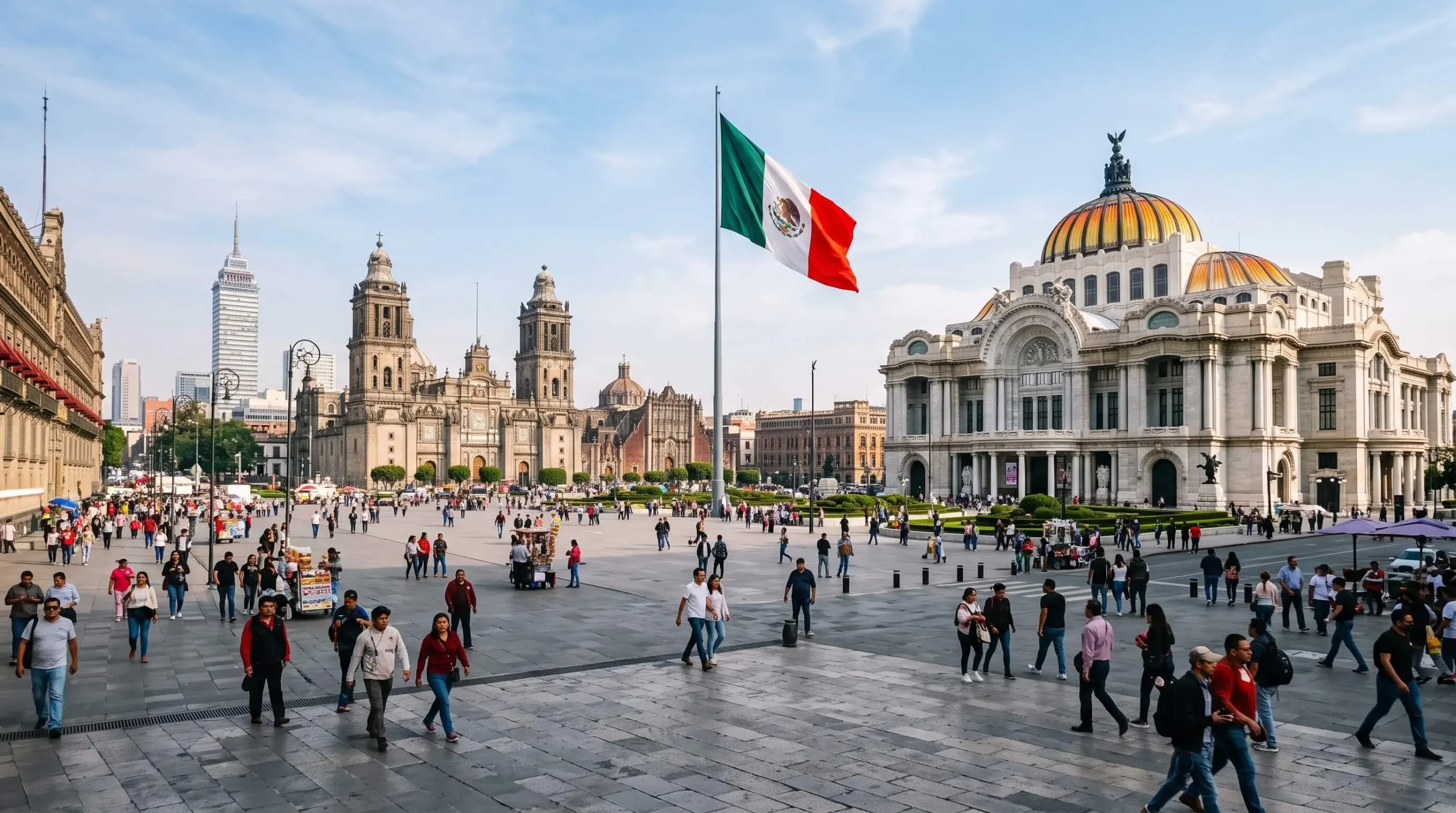
Mexico City’s metro area holds more than 21 million people, one of the largest urban populations on the planet. Three days sounds like nothing against a number that size.
It works anyway, because the best of the city clusters into a few walkable pockets: a historic center built over an Aztec capital, a castle that housed an actual emperor and a floating network of canals older than the Spanish conquest.
Three days is enough if you cluster them. This Mexico City itinerary spends day one in the historic center, day two on the castle, Frida Kahlo and Xochimilco, and day three at the pyramids of Teotihuacán.
How the Three Days Break Down
| Day | Focus |
|---|---|
| Day One | Historic Center and the Zócalo |
| Day Two | Chapultepec Castle, Frida Kahlo and Xochimilco |
| Day Three | Teotihuacán Pyramids |
Day One Covers the Historic Center and the Zócalo

The Zócalo ranks among the largest public squares in the world, built on ceremonial ground the Aztecs used long before the Spanish arrived. The plaza’s current form came together under colonial architect Alonso García Bravo. The name itself traces back to a monument base that was never finished.
The Metropolitan Cathedral and the National Palace both sit on the square’s edges, an easy starting point for a first morning in the city. Save energy for wandering the surrounding streets, since the historic center holds more museums and old buildings than one day can cover.
Fun Fact
The Zócalo covers roughly 57,600 square feet of open space, kept intentionally free of statues or monuments.
Day Two Brings a Castle, a Painter and a Neighborhood of Canals

Chapultepec Castle is the only true castle in North America that ever housed a reigning monarch. Emperor Maximilian I and Empress Carlota turned it into their imperial residence in the 1860s. It later served as the presidential home until 1939.
The Frida Kahlo Museum occupies Casa Azul, the house where she was born, worked and died. Original artwork and personal belongings fill the rooms, alongside a collection of Mexican folk art she and Diego Rivera gathered over the years. The same country has a beach side too, which you can see in our guide to Costa Maya.
Casa Azul sells timed tickets, and walk-up tickets often sell out on weekends, so book days ahead on the museum’s own site.
Listing prices help you plan: Chapultepec Castle is about $11 and the Palacio de Bellas Artes museum about $5. Book popular restaurants such as Máximo Bistrot and Contramar early, because tables fill days ahead.
Xochimilco’s canals, a UNESCO World Heritage site since 1987, run through what was once a pre-Columbian farming system built on floating gardens called chinampas. Colorful trajinera boats still carry visitors along the water, much as they carried farmers centuries ago. If Latin America stays on your list, our guide to Rio de Janeiro offers a very different city.
Day Three Reaches the Pyramids at Teotihuacán

Teotihuacán’s Avenue of the Dead runs 1.5 miles through the heart of the ancient city, angled to point at the nearby extinct volcano Cerro Gordo. At its peak, the city covered more than 20 square kilometers and likely held around 200,000 residents, bigger than Paris or Lisbon at the time.
The Pyramid of the Sun rises 216 feet, the largest structure on the site. The smaller Pyramid of the Moon, at 140 feet, anchors the avenue’s northern end. Climbing the pyramids has been banned since 2023, so you walk to the base and along the avenue instead.
The site sits about 50 km north of the city, and many tours leave between 7 and 8 a.m. Some travelers add an early hot air balloon ride over the valley, which is booked separately.
After a shooting at the site in April 2026, officials added National Guard patrols and bag checks at major archaeological sites. Expect screening at the gate and carry only a small bag.
Where to Stay and How to Get Around

Roma and Condesa are the two neighborhoods most first-time visitors end up in, both walkable, central and full of cafes. Roma leans a little more bohemian and affordable, while Condesa runs slightly more polished and upscale.
The Metro and Metrobus cover most of the city cheaply. Uber or Didi work well for anything the trains do not reach.
Frequently Asked Questions
Three Days Is a Start, Not the Whole Story
Mexico City holds enough neighborhoods, museums and day trips to fill weeks, not days. Three days just gets a first look at what keeps pulling people back.
The rest of our library lives in North America and Things to Do.


